American agriculture is entering a period where data management is becoming as important as traditional field knowledge. Farmers across the United States are increasing their use of satellite imagery, GPS systems, sensors, and digital platforms to improve planting decisions, monitor crop conditions, and manage resources more efficiently.
The U.S. Department of Agriculture (USDA) continues expanding digital agriculture efforts through programs focused on improving farm data collection, accessibility, and decision-making. These initiatives connect producers with technology systems that can analyze field conditions and support more accurate agricultural planning.
From large corn operations in Iowa and Illinois to specialty crop farms in California, precision agriculture tools are becoming part of daily farm management. Producers are using digital information to evaluate soil conditions, track crop development, improve irrigation schedules, and reduce unnecessary input applications.
The growth of agricultural data systems represents a major shift in how farms operate. Instead of relying only on seasonal observations, producers can combine experience with detailed measurements collected throughout the growing cycle.
USDA Digital Agriculture Programs Expand Farm Data Access
The USDA has increased efforts to modernize agricultural data systems through agencies including the Farm Service Agency (FSA), Natural Resources Conservation Service (NRCS), and National Agricultural Statistics Service (NASS).
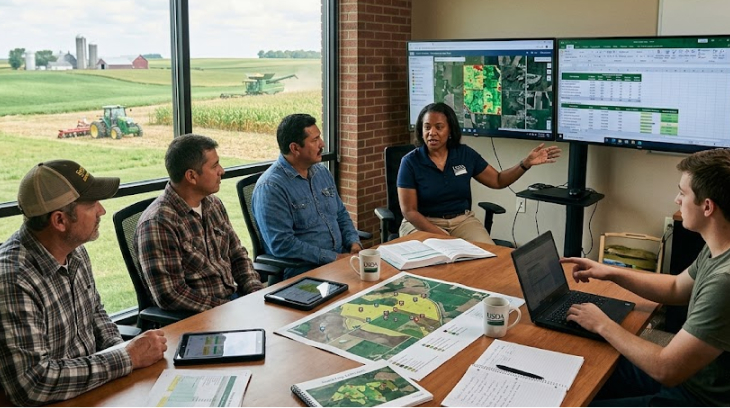
These programs focus on improving how agricultural information is collected, processed, and delivered to farmers. Digital tools help producers complete reporting requirements, access conservation programs, and make better management decisions.
The USDA’s One Farmer, One File initiative represents one example of this modernization effort. The program aims to create a more connected record system for producers by reducing duplicate information requirements and improving access to agricultural services.
The move toward connected agricultural records supports a larger trend across the industry. Farms increasingly depend on accurate information systems to manage complex operations involving multiple fields, crop varieties, equipment platforms, and environmental conditions.
Midwest Farms Adopt Data Systems For Corn And Soybean Production
The Midwest remains one of the largest adoption areas for precision agriculture because of its extensive corn and soybean production.
States including Iowa, Illinois, Indiana, Minnesota, and Nebraska have thousands of large-scale farming operations where small efficiency improvements can create significant economic impacts.
Corn and soybean producers use digital tools to evaluate planting conditions, monitor crop health, and manage fertilizer applications. Variable-rate technology allows equipment to apply inputs based on field-specific requirements.
This approach can reduce unnecessary applications while improving crop performance. Farmers can analyze historical field data and compare results across different seasons to improve future decisions.
The availability of detailed agricultural data also helps producers respond to changing weather conditions. Drought periods, excessive rainfall, and temperature changes can create uneven field conditions that require faster responses.
California Growers Use Data Tools For Water Management
Precision agriculture adoption extends beyond Midwest grain farms. California Department of Water Resources growers are increasingly using digital systems to manage water resources in regions where irrigation efficiency remains a major concern.
Central Valley farmers producing almonds, pistachios, grapes, and vegetables use soil sensors, satellite imagery, and automated irrigation systems to monitor field conditions.
Water availability has become a major operational factor for California agriculture. Producers need accurate information about crop water requirements to maintain productivity while managing limited resources.
Digital monitoring systems allow growers to identify areas where crops may experience stress and adjust irrigation schedules based on actual field conditions.
This data-driven approach supports more efficient resource management and helps farmers maintain production during periods of environmental pressure.
Artificial Intelligence Expands Agricultural Data Analysis
Artificial intelligence is becoming an important component of precision agriculture systems because farms generate large amounts of information.
AI platforms can analyze satellite images, weather records, sensor readings, and historical production data to identify patterns that may not be visible through manual observation.
For example, AI models can detect early signs of crop stress, predict irrigation needs, and identify areas requiring additional field inspections.
The technology is becoming especially valuable for large agricultural operations managing thousands of acres. Instead of reviewing every section manually, farmers can prioritize locations where data indicates potential issues.
Machine learning systems continue improving as they process more agricultural information. This allows technology providers to develop more accurate recommendations for different crops, regions, and production methods.
Precision Agriculture Connects Field Data With Farm Decisions
Precision agriculture systems collect information from multiple sources, including satellites, drones, soil sensors, weather stations, and farm machinery.
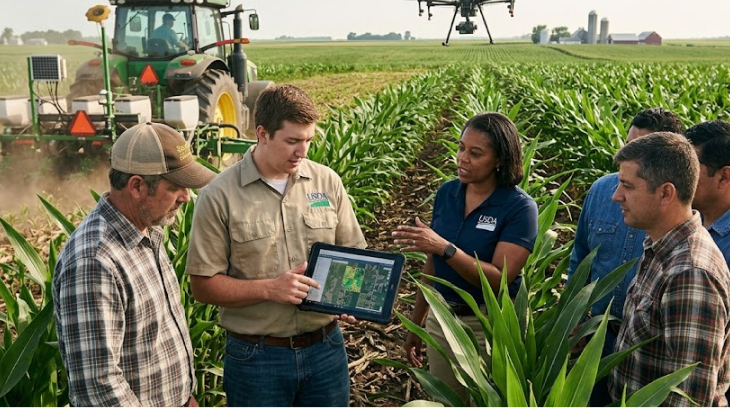
These technologies allow farmers to create detailed maps of their fields and identify differences in soil quality, moisture levels, crop growth, and nutrient requirements.
A single field can contain significant variations. Some areas may hold more moisture, require different fertilizer rates, or produce different yields because of soil characteristics. Precision agriculture allows farmers to recognize these differences instead of treating every acre the same.
| Precision Agriculture Technology | Primary Function | Farm Management Impact |
|---|---|---|
| Satellite Imaging | Tracks crop conditions across large areas | Identifies changes in plant health |
| Soil Sensors | Measures moisture and nutrient conditions | Improves irrigation and input decisions |
| GPS Equipment | Guides machinery movement | Reduces overlap and improves accuracy |
| Farm Data Platforms | Organizes agricultural information | Supports long-term planning |
Farmers using these systems can make adjustments throughout the growing season rather than waiting until harvest results reveal problems.
Data Security And Ownership Become Important Farm Issues
As agricultural data systems expand, questions about ownership, privacy, and security are becoming more relevant.
Farm data can include information about yields, soil conditions, planting strategies, and operational decisions. Producers want control over how this information is collected and shared.
Agricultural technology companies continue developing platforms that provide useful analysis while maintaining producer control over important information.
The USDA’s role in digital agriculture includes improving access to reliable information while supporting farmers through government programs and research initiatives.
Data management will continue becoming a larger part of agricultural operations as technology adoption increases.
Precision Agriculture Supports Sustainable Production Goals
Digital agriculture systems are also connected to sustainability efforts across the United States.
Farmers can use precision tools to apply fertilizers more accurately, reduce water waste, and improve soil management practices. These improvements support both economic performance and environmental goals.
Conservation programs from the USDA Natural Resources Conservation Service. increasingly incorporate data collection and measurement methods to evaluate agricultural practices.
For example, producers participating in conservation programs may use soil data, field mapping, and monitoring systems to measure improvements over time.
The combination of technology and conservation practices creates new opportunities for farmers to manage resources more efficiently.
Digital Farm Management Becomes A Core Agricultural Practice
The USDA’s continued investment in precision agriculture data initiatives reflects a broader transformation across American farming. Digital information systems are becoming a standard part of modern agricultural operations.
Farmers are using technology to understand field conditions, improve resource management, and make production decisions based on measurable information.
From Midwest grain operations to California specialty crop farms, precision agriculture provides producers with tools that connect traditional farming knowledge with advanced data analysis.
The future of American agriculture will depend on the ability to manage information effectively while maintaining the practical expertise that defines successful farming operations.