The U.S. Department of Agriculture has launched a new package of initiatives aimed at rebuilding the nation’s cattle herd, strengthening regional beef-processing capacity and giving ranchers additional tools to manage the economics of retaining breeding animals. Agriculture Secretary Brooke L. Rollins announced the Ranchers First Initiative on August 31, 2026, describing it as a broad effort to put U.S. ranchers at the center of the domestic beef supply chain. The announcement comes as the national cattle herd sits at a 75-year low, while tight supplies continue to influence beef prices and livestock markets.
The initiative is significant because rebuilding a cattle herd cannot happen as quickly as increasing crop acreage or adjusting grain production. Expanding the breeding herd requires producers to retain heifers, maintain cows through multiple production cycles and invest in pasture, infrastructure, feed and risk management. USDA’s new strategy therefore combines livestock insurance, conservation flexibility, processing investment and federal purchasing priorities rather than relying on a single incentive.
The timing also creates a complicated market environment. USDA’s August cattle outlook projected 24.967 billion pounds of U.S. beef production for 2026, down from the previous month’s forecast because of expectations for slower slaughter during the second half of the year. At the same time, the agency expects cattle supplies to remain tight enough to support prices into 2027.
For ranchers, the central question is whether the new programs can make retaining breeding animals more financially attractive while improving the infrastructure needed to process a larger herd.
Why USDA Is Targeting Herd Rebuilding Now
The U.S. cattle industry is operating under a supply constraint that has developed over several years.
Drought, wildfires, elevated production costs and difficult pasture conditions have encouraged ranchers to reduce herd sizes in several major cattle-producing regions. Once cows and heifers leave the breeding herd, replacing them requires time. A producer cannot immediately convert a newly retained heifer into a mature breeding cow capable of supporting a stable calf crop.
That biological limitation is one reason USDA’s new policy focuses specifically on heifer retention.
The department’s newly announced Beef Retention and National Development, or BRAND, endorsement for Livestock Risk Protection is designed to allow producers to insure the economic value of retaining a heifer for breeding over a two-year period. USDA says the endorsement would establish a protected value based on the expected slaughter value of the heifer at enrollment. If the projected or realized slaughter value becomes greater than the economic value of retaining her for breeding, the policy would provide for the difference.
That mechanism addresses one of the central economic problems facing ranchers.
A heifer sent to slaughter generates revenue relatively quickly. A heifer retained for breeding represents an investment whose return comes later through future calves and eventual culling value. When cattle prices are high, the opportunity cost of keeping that animal in the breeding herd can become substantial.
The BRAND endorsement is intended to reduce that financial barrier.
Heifer Retention Could Become The Key Herd-Building Tool
The economics of cattle expansion are different from those of most row crops.
A farmer can plant more corn next spring if land, seed, fertilizer and machinery are available. A rancher needs breeding animals, pasture capacity, water, labor and time. Herd expansion therefore requires a long planning horizon.
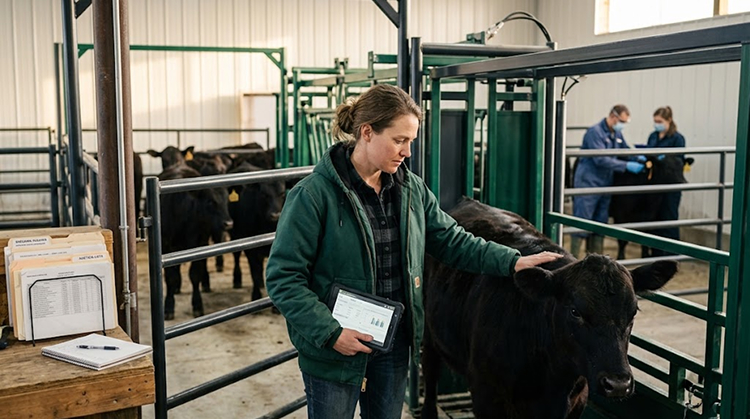
USDA’s new insurance tool recognizes that problem by addressing the value of the heifer during the period when the producer is effectively choosing future production over immediate slaughter revenue.
| Ranchers First Component | Primary Objective | Potential Market Effect |
|---|---|---|
| BRAND LRP endorsement | Support heifer retention | Encourage rebuilding of breeding inventories |
| ECP flexibility on Grassland CRP | Accelerate disaster recovery | Restore grazing infrastructure faster |
| SPUR Guaranteed Loan Program | Expand regional processing | Increase independent processing capacity |
| Regional Processor Continuity Effort | Protect processing availability | Improve supply-chain resilience |
| Federal purchasing priority | Increase demand for local beef | Support regional processors and ranchers |
The policy does not guarantee that ranchers will retain more heifers. Producers will still evaluate pasture availability, feed costs, cattle prices, interest rates and weather risk before making that decision.
But it changes the financial calculation.
The value of a breeding heifer is not simply what she could bring at an auction today. Her economic value also includes the calves she may produce over several years. Risk management becomes particularly important because the market value of cattle can change substantially during that period.
That is why the USDA’s attempt to connect herd rebuilding with livestock insurance is one of the most important components of the new initiative.
Tight Cattle Supplies Are Already Affecting Beef Production
The Ranchers First announcement arrives while USDA forecasts show continued pressure from limited cattle supplies.
The agency’s August 19 cattle outlook reduced its 2026 beef production forecast to 24.967 billion pounds, citing a slower expected slaughter pace in the second half of the year. The 2027 forecast is 24.980 billion pounds, only slightly higher despite expectations for some improvement in cattle availability.
Those numbers demonstrate the difficulty of rebuilding the industry quickly.
Even if ranchers begin retaining more heifers immediately, those animals cannot instantly increase beef production. The first objective is to expand the breeding base. The resulting increase in calves eventually moves through backgrounding and feedlot systems before reaching slaughter.
This creates a potential tension between short-term and long-term market objectives.
Consumers are facing elevated beef prices and policymakers want to improve affordability. Ranchers, meanwhile, need economic conditions that make it worthwhile to expand the herd. Increasing slaughter in the short term can provide more beef but may work against herd rebuilding if too many potential breeding animals are removed from production.
The USDA strategy is therefore attempting to address both sides of the equation.
The department is supporting measures intended to rebuild cattle numbers while also expanding processing infrastructure and improving market access for U.S. producers.
Regional Processing Is The Other Half Of The Strategy
A larger cattle herd will eventually require sufficient processing capacity.
USDA announced that the Ranchers First Initiative will create a SPUR Guaranteed Loan Program to support regional processing, including processor cooperatives, small-business expansion and greater diversity in animal-protein processing. The agency is also establishing a Regional Processor Continuity Effort to improve the resilience of regional processing businesses.
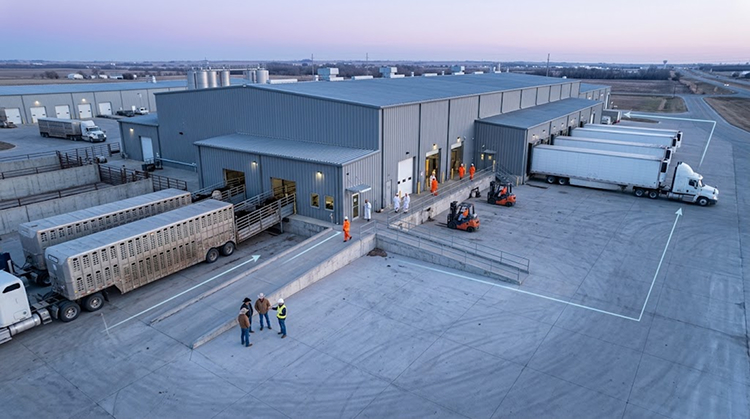
This follows earlier action.
In June 2026, USDA announced the SPUR Program with up to $500 million available to independent and regional beef slaughter facilities. USDA also launched a fourth round of the Meat and Poultry Processing Expansion Program with $60 million intended to expand American processing capacity.
The reasoning is straightforward: rebuilding cattle numbers without sufficient processing capacity would create another bottleneck.
The U.S. beef industry has historically depended heavily on a relatively concentrated processing structure. If additional cattle enter the system while slaughter capacity remains constrained, ranchers could face fewer marketing options and processors could face greater operational pressure.
Regional facilities can potentially provide an alternative.
Smaller processors do not necessarily replace large-scale plants, particularly when handling national volumes. Instead, a more diversified processing network can give producers additional channels for marketing cattle and can keep more economic activity within regional agricultural communities.
USDA Wants More American Beef In Public Purchasing
Another part of Ranchers First focuses on demand.
USDA says it will prioritize procurement of locally processed American beef and encourage federal and state institutions, including prisons, hospitals and related facilities, to purchase locally processed beef.
This is a different type of cattle-market intervention because it targets the buyer rather than the producer.
Government purchasing represents a relatively predictable source of demand. If institutions increase purchases from regional processors, those facilities may have stronger incentives to expand capacity and establish longer-term relationships with nearby cattle producers.
The approach also aligns with USDA’s broader efforts to promote the Product of USA label and increase consumer awareness of beef that is born, raised, harvested and processed in the United States.
For ranchers, stronger domestic demand does not automatically solve the supply problem. But it can contribute to a market environment in which investment in herd expansion becomes more attractive.
Conservation Programs Could Help Ranchers Recover Faster
The Ranchers First Initiative also connects cattle production with conservation policy.
USDA will allow producers to use the Emergency Conservation Program, or ECP, on Grassland Conservation Reserve Program acres to accelerate recovery following wildfires and other natural disasters. The agency says the flexibility is intended to help ranchers rebuild critical infrastructure and reduce longer-term losses.
That provision is particularly relevant because pasture and infrastructure are fundamental constraints on cattle expansion.
A ranch cannot increase its cow inventory simply because cattle prices are attractive. It needs adequate forage, water systems, fencing, handling facilities and grazing access.
Wildfires can damage multiple parts of that system simultaneously.
Fencing may need replacement. Water infrastructure can be destroyed or contaminated. Grazing areas may require rehabilitation. Roads and access points can become unusable. Those expenses can prevent a rancher from rebuilding inventory even after the immediate disaster has passed.
By connecting ECP flexibility with Grassland CRP acreage, USDA is attempting to reduce the time between disaster damage and restoration of productive grazing capacity.
That could become increasingly important in regions where drought and wildfire have already contributed to herd liquidation.
Beginning Ranchers Are Another Long-Term Priority
The initiative also recognizes that rebuilding the cattle herd requires producers capable of maintaining it over decades.
USDA says it will establish an initiative focused on Beginning and Veteran Farmers and Ranchers Affairs and work with federal agencies to connect departing military personnel with farming and ranching opportunities.
Generational transition is a significant structural issue in American agriculture.
A ranch can have productive land and healthy cattle but still face uncertainty if there is no next generation prepared to take over the operation. New producers also face high barriers to entry because purchasing land, cattle and equipment requires substantial capital.
Supporting beginning ranchers therefore serves two objectives.
First, it can help maintain existing agricultural operations. Second, it can create a larger pool of producers capable of expanding the national cattle herd over time.
The impact will not be immediate. Training a new rancher and establishing a viable cattle operation can take years. But that is consistent with the biological timeline of herd rebuilding itself.
The Beef Industry Faces A Difficult Policy Balancing Act
The Ranchers First Initiative comes at a complicated moment for the U.S. beef market.
The administration is simultaneously trying to support domestic cattle producers and address high consumer beef prices. Recent policy decisions have included measures to increase access to foreign beef, while USDA’s new initiative focuses on rebuilding domestic production. Reuters reported that the cattle herd is at its lowest level in 75 years and that the administration is facing pressure from both consumers and ranchers.
Those objectives can conflict.
Additional imports can increase short-term beef availability and potentially reduce pressure on consumer prices. But if imports become a significant alternative to rebuilding domestic production, ranchers may question whether expanding their herds will remain economically attractive.
The opposite problem is also possible.
A rapid push to rebuild the domestic herd could eventually increase beef supplies, but consumers may not see immediate price relief because cattle biology limits how quickly production can expand.
The Ranchers First approach therefore operates on a much longer timeline than a temporary import policy.
Processing Investment Could Change Rural Beef Economics
The emphasis on regional processing could have consequences beyond cattle prices.
A new or expanded processor creates jobs, transportation demand, local purchasing and potentially new markets for ranchers. In communities where a major facility has closed, replacing some processing capacity can help preserve the economic ecosystem surrounding cattle production.
The USDA says that nearly 20% of beef processing capacity will be available as the herd grows, creating an opportunity to redirect some of that capacity toward American-owned independent processors, small businesses and cooperatives.
Whether that capacity can be successfully activated depends on financing, labor availability, regulatory compliance, cattle supply and long-term profitability.
Processing plants require consistent throughput.
A facility that cannot secure enough cattle may struggle to operate efficiently. Conversely, ranchers may be reluctant to expand if they lack reliable nearby processing options.
That creates a circular relationship between herd size and processing capacity.
Ranchers First is attempting to address both sides simultaneously.
The Herd Cannot Be Rebuilt Overnight
The most important limitation facing the new initiative is biological.
Cattle reproduction operates on a timetable that federal policy cannot eliminate. Retained heifers must reach breeding age, become productive cows and generate calves. Those calves then require additional time before entering the beef supply chain.
This means the impact of Ranchers First should be evaluated over several years rather than several months.
USDA’s own current outlook reinforces that point. Even with changes in slaughter, imports and exports, its 2027 beef-production forecast remains close to the 2026 level at 24.980 billion pounds.
The first measurable effect of a successful herd-rebuilding program may therefore appear in breeding inventories rather than supermarket beef supplies.
Indicators worth watching include:
- Beef heifer retention and replacement inventories
- Cow-calf producer profitability
- Pasture and forage availability
- Calf prices and feeder-cattle prices
- Regional slaughter capacity
- Beef production and slaughter rates
- New investment in small and regional processors
These measures will show whether policy incentives are changing producer behavior rather than simply creating short-term financial support.
Ranchers First Puts Long-Term Supply At The Center Of U.S. Beef Policy
USDA’s August 31 announcement represents a significant shift from addressing individual problems toward attempting to rebuild the underlying production system.
The BRAND livestock-insurance endorsement targets the economics of retaining heifers. ECP flexibility addresses damaged grazing infrastructure. SPUR financing and regional processor initiatives target bottlenecks in the beef supply chain. Federal purchasing priorities are intended to strengthen demand for locally processed American beef. And programs for beginning and veteran ranchers address the industry’s long-term ownership and workforce needs.
The strategy also builds on earlier USDA actions in 2026, including the $500 million SPUR Program, the $60 million processing expansion round and expanded grazing-policy initiatives.
The critical test will be whether these programs change the economics of herd expansion enough for producers to retain more breeding animals.
That cannot be measured simply by the amount of federal money announced.
It will be measured by whether ranchers rebuild cow inventories, whether more beginning producers enter the sector, whether damaged grazing infrastructure returns to production and whether regional processing capacity expands alongside the cattle supply.
For the U.S. beef industry, the underlying challenge remains straightforward: the country needs more cattle, but producing those cattle requires time, land, capital, infrastructure and confidence in future returns.
Ranchers First attempts to address those variables at the same time. Its ultimate effect on beef markets will depend less on the announcement itself than on whether producers respond by keeping more heifers, expanding herds and investing in the next generation of American cattle production.