A federal court has temporarily halted the U.S. Department of Agriculture’s sweeping reorganization, stopping plans to close the historic Beltsville Agricultural Research Center in Maryland and relocate employees across the country. The October 13, 2026, order represents a major setback for the Trump administration’s restructuring effort and gives agricultural researchers, federal workers, and organizations that rely on USDA science more time while the legal challenge proceeds.
U.S. District Judge Vince Chhabria of the Northern District of California issued the order in a lawsuit brought by federal employee unions challenging the department’s reorganization. The ruling blocks specified agency closures, consolidations, and employee relocations while the court considers whether USDA’s actions comply with federal spending restrictions and other applicable requirements. Reuters reported on the decision on October 14.
The ruling is particularly significant for the Beltsville Agricultural Research Center, known as BARC, in Prince George’s County, Maryland. The facility has been targeted for decommissioning under USDA’s research restructuring plan, with scientific programs expected to move to other locations. The court’s intervention means the department cannot proceed with the covered closure and consolidation activities under the order.
The immediate outcome is a pause rather than a permanent cancellation of the reorganization. That distinction matters to agricultural researchers, farmers, and institutions that depend on federal scientific capacity. The case now places the future of a major U.S. agricultural research site within a broader dispute over congressional spending authority, government restructuring, and the continuity of services to American agriculture.
The Court Has Temporarily Halted USDA’s Reorganization
Judge Chhabria signed the order on October 13 in American Federation of Government Employees, AFL-CIO, et al. v. United States Department of Agriculture, case number 3:26-cv-09976-VC. The decision granted a request for a stay under Section 705 of the Administrative Procedure Act, a provision that allows a court to postpone an agency action while a legal challenge is pending.
The order covers several USDA components, including the Agricultural Research Service, the Forest Service, the Food and Nutrition Administration, Foreign Agricultural Service, Rural Development, and Farm Production and Conservation. It also restricts specified office closures, consolidations, and employee relocations covered by the ruling.
The judge found that the unions were likely to succeed in arguing that the department’s reorganization activities violated restrictions in fiscal year 2026 appropriations legislation. Those restrictions concern USDA’s ability to reprogram appropriated funds for reorganization without the required congressional authorization.
The court’s reasoning focuses on the government’s legal authority to carry out the changes, rather than simply whether the proposed restructuring would be beneficial. The distinction is central to the dispute: an administration may pursue changes to agency operations, but it must still comply with statutory spending conditions and other legal requirements.
The full order is available through the federal court decision published by Justia. It identifies the affected components and the limits imposed on USDA’s reorganization activities.
The order also requires USDA to notify affected employees and labor organizations and subsequently document its compliance. Those requirements create an administrative record as the case continues.
Beltsville’s Research Center Remains Open For Now
The Beltsville Agricultural Research Center occupies a major place in the federal agricultural research system. Located in Maryland, northeast of Washington, D.C., the facility supports scientific work involving crops, animals, soil, plant health, food safety, and other agricultural priorities.
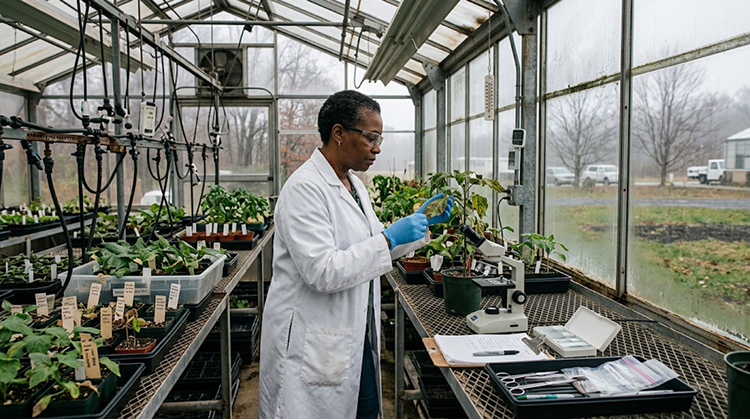
USDA had announced plans to decommission BARC and relocate its research programs to facilities elsewhere in the country. In its April 23, 2026, announcement, the department argued that restructuring would modernize its research infrastructure, reduce maintenance burdens, and align programs more closely with regional agricultural needs.
The department cited a campus containing more than 400 buildings, many described as outdated or underutilized, as part of its rationale for changing the facility’s role. USDA also outlined plans to redirect certain infrastructure resources toward projects in Lexington, Kentucky; Lincoln, Nebraska; and Ames, Iowa.
The new court order prevents USDA from closing or consolidating Agricultural Research Service facilities covered by the ruling, explicitly including Beltsville. It also blocks the covered relocation and reassignment activities while the stay remains in force.
That does not settle the longer-term question of whether the facility will eventually be restructured. It does, however, preserve the status quo while the legal proceedings continue, giving researchers and partner organizations more time to assess what the proposed changes could mean for ongoing projects.
The dispute is being closely watched in Maryland because of the facility’s local employment and research role. The Washington Post reported that the court’s action protects approximately 1,000 jobs associated with the Beltsville center while the case remains unresolved. The precise employment impact will depend on the positions and programs affected by any future decision.
Agricultural Research Has Consequences Beyond Maryland
The significance of BARC extends beyond the state where it operates. Federal agricultural research supports producers across multiple regions, and findings developed at one facility can influence farm management, crop protection, livestock health, and food safety nationwide.
Research involving plant diseases, insects, soil conditions, and animal health can help producers identify risks and develop practical responses. The value of this work may become apparent only after years of experiments, field observations, and collaboration with universities, state agencies, and private-sector partners.
The Beltsville campus has supported research involving poultry, cattle, bees, plant health, and foodborne or food-associated hazards. Those areas intersect with issues that affect the wider food system, including disease surveillance, pollination, livestock production, and the safety of agricultural products.
A relocation can preserve a research program on paper while still creating practical challenges. Laboratories may require specialized equipment, controlled environments, biological collections, or proximity to particular field conditions. Moving staff and scientific infrastructure can interrupt experiments, complicate collaborations, and require time to reestablish laboratory routines.
The consequences are not inevitable, and USDA has argued that distributing programs among other facilities could improve coordination and bring research closer to particular production regions. The central question is whether those benefits can be achieved without losing scientific continuity, specialized expertise, or access to essential infrastructure.
For farmers, the outcome matters because public research often provides information that individual producers cannot afford to generate themselves. Agricultural businesses can use research findings to assess production risks, improve crop and livestock management, and make investment decisions. Long-term agricultural research planning also depends on stable scientific capacity and reliable links between researchers and producers.
USDA Had Planned To Distribute Research Programs Across The Country
The department’s reorganization proposal was intended to move selected research programs away from Beltsville and into other locations. USDA identified potential destinations including Chatsworth, New Jersey; University Park and Wyndmoor, Pennsylvania; Charleston, South Carolina; Kerrville, Texas; Logan, Utah; Wenatchee, Washington; Madison, Wisconsin; and Kearneysville, West Virginia.
The agency’s stated rationale was that a more distributed research footprint could align facilities with regional agricultural conditions and reduce dependence on aging infrastructure. A research program focused on a particular crop, livestock system, or production challenge might benefit from closer links to universities and farmers in the relevant region.
However, relocation planning involves more than selecting a destination. USDA would need to address laboratory capacity, specialized equipment, staffing, research schedules, partnerships, and the cost of transferring or replacing infrastructure. Some projects may be easier to move than others, especially when they rely on controlled facilities or long-running experiments.
The court order does not establish that every proposed relocation would be scientifically unsound. Instead, it limits USDA’s ability to proceed with the covered changes while the legal issues are reviewed. That gives the department and the plaintiffs a period in which the statutory authority for the reorganization can be examined.
USDA’s research reorganization announcement provides the department’s explanation of the original plan. Comparing that rationale with the court’s order helps clarify the difference between the administration’s policy objectives and the legal constraints governing implementation.
Congressional Spending Restrictions Are Central To The Case
The legal challenge raises a broader question about the limits on executive-branch restructuring. Congress controls federal appropriations and can attach conditions to how agencies use the funds provided to them. When legislation restricts reorganization spending, agencies must comply with those conditions even when they argue that operational changes would improve efficiency.
Judge Chhabria’s October 13 order found that the unions were likely to succeed on their argument that USDA’s actions conflicted with restrictions in the fiscal year 2026 appropriations legislation. The order is preliminary relief, not a final ruling resolving every legal question in the case.
The distinction is important because the administration may continue to defend the restructuring in court. Further proceedings could clarify the scope of the statutory restrictions, which activities are covered, and what options remain available to USDA.
The stay also does not automatically reverse every relocation that took place before the court’s intervention. The order includes provisions addressing employees who had already moved and begun work at new duty stations before an earlier administrative stay. As a result, the practical effect differs depending on the employee, component, and timing of the action.
For agricultural research, this legal uncertainty can complicate long-term planning. Laboratories may hesitate to commit to major transitions while the status of their facilities remains disputed. Researchers and partner institutions may also need to account for uncertainty when scheduling experiments, hiring staff, or planning collaborative work.

The Ruling Does Not Guarantee Beltsville’s Long-Term Future
The October 13 decision is a significant immediate victory for the unions and others opposing the reorganization, but it should not be read as a permanent judicial guarantee that Beltsville will remain unchanged.
The court has paused the covered actions while the litigation continues. The administration may continue to argue that its restructuring is lawful and that distributing research programs across the country would improve the department’s effectiveness. Plaintiffs, meanwhile, can continue challenging the legality of the spending and administrative decisions underlying the plan.
The timing of congressional funding restrictions also matters. Reporting on the decision has highlighted December 11, 2026, as a key date tied to the expiration of the current continuing resolution. That date may affect the legal and budgetary landscape, but it does not automatically determine the final outcome of the case or guarantee that the same restrictions will apply afterward.
Future developments could include additional court orders, new congressional action, revised USDA plans, or further litigation over the scope of the department’s authority. Researchers and agricultural organizations will need to follow those developments before drawing firm conclusions about the center’s long-term status.
For Maryland, the pause provides temporary relief from the proposed closure. For the national agricultural research system, it creates more time to evaluate how any future restructuring might affect scientific capacity, staffing, and the continuity of research services.
Farmers Will Be Watching The Impact On Agricultural Science
The court ruling illustrates how federal administrative decisions can affect the institutions that support agricultural production. Farmers may never visit a federal laboratory, yet they can depend on its research through disease guidance, crop management recommendations, livestock science, and information distributed through extension networks and industry partnerships.
The direct economic impact of keeping Beltsville open cannot be measured simply by counting the jobs preserved during the temporary stay. A full assessment would also consider the cost of maintaining the campus, the value of ongoing research, the expenses associated with relocation, and the long-term results of any proposed changes.
USDA has argued that its reorganization would modernize infrastructure and improve how research resources are used. Opponents have warned that closures and relocations could disrupt services and diminish institutional capacity. The court’s decision has not conclusively settled that policy debate; it has restricted implementation while legal questions remain unresolved.
The next stage of the case will help determine whether USDA can proceed with the covered restructuring under its current legal authority. Until then, Beltsville’s research operations have temporary protection, and the department must comply with the court’s limits.
The broader issue is how the United States can modernize public agricultural research while preserving the expertise, facilities, and scientific continuity that farmers rely on. The outcome could influence not only the future of one Maryland research center, but also how federal agencies approach major reorganizations when congressional spending rules and public-service obligations are involved.