The U.S. Department of Agriculture has awarded $86.6 million through the Specialty Crop Block Grant Program, directing federal support toward research, marketing, disease management, food safety, and market development across the American specialty crop industry. Announced on October 13, 2026, the funding covers approximately 609 state-level projects across 56 states and territories, giving regional agricultural agencies additional resources to address the problems affecting their growers.
The announcement by Agriculture Secretary Brooke L. Rollins highlights an important part of federal farm policy that receives less attention than corn, soybeans, and wheat programs. Specialty crops include fruits, vegetables, tree nuts, dried fruits, horticultural products, and nursery crops. These industries often face distinct production risks, seasonal labor requirements, perishability concerns, and distribution costs that require different forms of investment.
The regional distribution of the grants matters because specialty crop production varies sharply across the United States. California’s large agricultural sector receives a substantial allocation, while Florida, Michigan, Georgia, Texas, and other states can direct funding toward the crops and supply chains that support their local economies. The potential economic effect depends on how effectively these projects turn public funding into better production methods, stronger markets, and lower operating risks.
USDA Is Directing $86.6 Million Toward Specialty Crop Competitiveness
The USDA announcement published October 13, 2026 identifies approximately 609 projects supported through the Specialty Crop Block Grant Program, administered by USDA’s Agricultural Marketing Service. The program aims to improve the competitiveness of specialty crops through research, education, marketing, food safety, and improvements to the distribution chain.
The awards are intended to support a broad range of activities. Projects can help growers develop improved varieties, address plant diseases and pests, strengthen food safety procedures, improve market access, and reduce the costs associated with moving products from farms to consumers. Some efforts also focus on consumer education and increasing knowledge about healthy food choices.
This structure gives states room to respond to local agricultural conditions. A state with a major blueberry industry may prioritize pest management or postharvest handling, while another with a large nursery sector may focus on plant health, production research, or market development.
The funding also comes at a time when growers face pressure from labor expenses, energy prices, weather variability, transportation costs, and uncertain returns. A grant-funded research project cannot eliminate those pressures, but it may help address a specific bottleneck that individual farms or smaller agricultural organizations would struggle to finance independently.
USDA’s funding announcement therefore represents more than a single federal spending figure. It provides a framework for supporting projects that can influence the productivity and market position of specialty crop businesses across different regions.
California Receives The Largest State Allocation
California stands out in the FY2026 funding distribution. The USDA’s Specialty Crop Block Grant Program funding notice lists an estimated allocation of $28.96 million for California, reflecting the state’s substantial specialty crop acreage and production value. That allocation is considerably larger than those available to most other states.
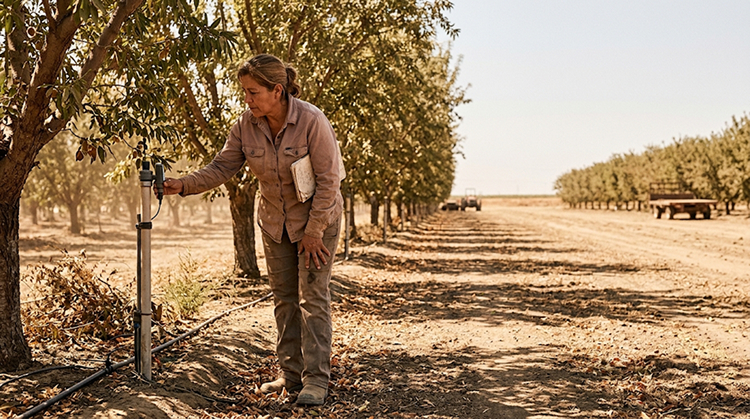
California produces a wide range of fruits, vegetables, nuts, and horticultural products for domestic and export markets. Its agricultural businesses operate across different climates and growing regions, creating demand for research into water management, pest control, food safety, labor efficiency, and postharvest handling.
The funding formula helps explain why state allocations differ. According to USDA’s FY2026 program notice, allocations combine an estimated base amount with factors tied to specialty crop cash receipts and acreage. The formula connects federal funding to the scale of each state’s specialty crop industry rather than dividing the available money evenly.
That approach directs more funding toward states with large specialty crop sectors. It can also mean that growers in smaller states have less money available overall, even when their local industries face significant challenges.
The economic effect will depend on how state agencies select projects and how well the funded work addresses needs shared by growers. Research that improves disease detection or reduces losses during storage may benefit a large number of farms, while a narrowly focused marketing initiative could produce gains for a more limited group of businesses.
Florida, Michigan And Georgia Have Different Priorities
The regional allocations illustrate how the same federal program can serve different agricultural economies. USDA reported that Florida will receive more than $4.3 million, Michigan more than $2.64 million, and Georgia more than $1.7 million through state-administered projects.
Florida’s projects will support specialty crops including mangoes, blueberries, sweet corn, and muscadine grapes. The state’s warm climate supports a diverse growing sector, but production can be affected by hurricanes, disease pressure, extreme heat, and changing water conditions. Research, outreach, and marketing initiatives may help growers address those risks and maintain access to buyers.
Michigan’s allocation covers crops including apples, asparagus, beans, blueberries, grapes, herbs, mushrooms, and Christmas trees. The breadth of that list shows why state-level planning is important: growers in the same state can face different production cycles, pests, market requirements, and postharvest needs.
Georgia’s more than $1.7 million allocation supports projects related to pecans, blueberries, peppers, strawberries, peaches, apples, Vidalia onions, and citrus, among other specialty crops. USDA says Georgia’s funding covers research, education and outreach, and marketing projects.
Texas will receive more than $2 million for work involving grapes, watermelons, pecans, onions, and spinach. North Carolina will receive more than $1.5 million, while Pennsylvania’s allocation exceeds $1.1 million. Ohio will receive more than $800,000 for projects related to crops and products that include apples, leafy greens, brassicas, herbs, maple syrup, honey, and nuts.
These allocations should not be interpreted as direct payments to individual farmers. They fund state-selected projects intended to strengthen the wider specialty crop industry. Growers may benefit through research findings, training, improved disease management, better marketing channels, or changes in handling and distribution practices.
Research Funding Could Reduce Production And Disease Risks
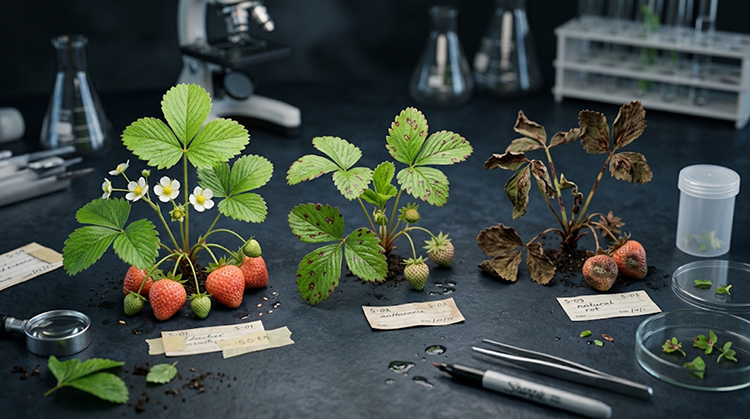
Crop research is one of the program’s most consequential uses because specialty crop losses can quickly erode farm revenue. Perishable products often have limited windows for harvest, storage, and sale. A disease outbreak, pest infestation, or postharvest problem can reduce both the quantity and quality of marketable produce.
Research supported through the program can help identify better crop varieties, improve disease monitoring, develop production recommendations, and strengthen responses to emerging pests. These improvements may be especially valuable where growers have limited room to recover from a poor season.
Disease management also has consequences beyond individual farms. Plant pathogens and invasive pests can spread through growing regions, threatening multiple producers and increasing the cost of control. Coordinated research and outreach can help state agencies and agricultural organizations distribute information faster and promote practices that reduce avoidable losses.
The program’s value will depend on whether funded projects produce usable results. A research award may generate important findings, but growers still need practical guidance, access to suitable technologies, and evidence that a recommended practice works under local field conditions.
For that reason, successful projects should be judged by outcomes such as reduced crop losses, improved quality, lower treatment costs, better yields, or increased marketable production—not simply by the amount of money spent.
Marketing Projects Could Strengthen Regional Farm Revenue
Specialty crop competitiveness depends on production costs, but it also depends on the prices growers can obtain and the markets they can reach. Marketing projects can help agricultural organizations communicate product qualities, improve buyer relationships, and develop demand for crops that may otherwise struggle to stand out in crowded supply chains.
This is particularly relevant for smaller producers and regional crop sectors. Individual farms may lack the resources to conduct market research, coordinate promotional campaigns, or build relationships with larger buyers. Shared projects can spread some of those costs across a wider group of businesses.
Marketing efforts can also support diversification. A region that develops new outlets for blueberries, pecans, mushrooms, or specialty vegetables may become less dependent on a limited set of buyers. However, promotional spending alone cannot guarantee higher prices. Results depend on consumer demand, product quality, reliable supply, and the ability to meet buyers’ volume and delivery requirements.
Distribution improvements can be equally important. Specialty crops frequently require careful temperature control, timely handling, packaging, and transport. Delays or inadequate storage can damage quality before produce reaches retailers or food-service buyers. Projects that improve handling practices or reduce inefficiencies may help growers preserve more of the value created in the field.
For producers evaluating longer-term investments, this is where specialty crop planning connects production decisions with market access, infrastructure, and the financial risks associated with crop selection.
Federal Grants Do Not Remove The Financial Pressure On Growers
The $86.6 million investment offers targeted assistance, but it should be considered in the context of the broader economics of specialty crop production. Farmers continue to manage labor, fertilizer, fuel, equipment, irrigation, packaging, insurance, and transportation expenses. Grant-funded projects may address some of those pressures, but they do not cover every farm’s operating costs or guarantee a profitable harvest.
The program’s design also matters for access. Under the Specialty Crop Block Grant Program, state departments of agriculture apply to USDA and administer funding for selected projects. Individual growers and organizations generally need to work through the appropriate state process rather than submit direct applications to USDA for this block-grant allocation.
The USDA program guidance explains the program’s purpose and state-level application structure. That distinction is important for organizations planning research, education, food-safety, or marketing proposals. Applicants should review their state’s rules, eligible project types, application calendar, and any requirements before committing resources to a proposal.
The funding notice establishes an award period running from September 30, 2026, through September 29, 2029, subject to applicable funding and program conditions. This multi-year period gives selected projects time to carry out research, deliver education, and assess results. It also means the most meaningful economic effects may emerge gradually rather than immediately after the announcement.
State agencies will need to select projects carefully, coordinate with growers and research institutions, and track measurable results. Projects that produce practical tools and broadly useful findings may generate benefits that continue after the grant period ends.
The Program’s Impact Will Depend On Results At Farm Level
The distribution of $86.6 million across 56 states and territories gives specialty crop industries a new round of support for research, education, food safety, marketing, and distribution improvements. The allocations reflect differences in production scale, while state-level projects can focus on specific crops and regional challenges.
California’s large allocation reflects its position in U.S. specialty crop production. Florida, Michigan, Georgia, Texas, North Carolina, Pennsylvania, and Ohio illustrate how funding can reach different crop sectors and market structures. Yet the size of each allocation alone does not show which state will gain the most economically.
The clearest measure of success will be whether funded projects solve practical problems for growers. Better disease management, reduced postharvest waste, stronger market connections, improved crop varieties, and more efficient distribution could help farms protect revenue and compete in changing markets.
The grants are therefore best understood as an investment in the systems surrounding specialty crop production. Their long-term value will depend on the quality of the projects, the participation of growers, and the ability of state agencies and research partners to turn funding into measurable improvements across American agriculture.