Welcome to the farm of the future, where cows have better fitness trackers than most humans. I’ve seen ear tags turn into advanced monitoring systems. They make your Apple Watch look simple by comparison.
Today’s livestock monitoring is more than just tracking where animals are. We’re talking about wearable sensors that track body temperature and rumination patterns. Smart Paddock’s ear tags and rumen boluses make animals walking data centers.
These devices work with AI systems that analyze movement and behavior. This leads to constant health checks and early problem detection. It’s changing how we care for animals.
It’s not just about gathering data. It’s about using that data to keep herds healthy and farms running smoothly. The era of connected farming has finally come.
Health Tracking Benefits
Remember when finding out an animal was sick meant waiting for obvious signs? Those days are over. Now, we have precision animal health monitoring, where data is key and prevention is better than treatment.
These systems find health problems before animals even notice. They track changes in behavior, temperature, and how much animals eat. These changes are often missed by even the most careful people.
The real magic is in the data. By constantly monitoring, we create detailed health profiles for whole herds. It’s like having a medical intuition backed by solid evidence, not just old tales.
Early detection leads to early treatment. This cuts down on antibiotic use a lot. We’re moving from treating sickness to preventing it. This makes animals healthier and farming more sustainable.
Predictive analytics change how we manage animal health. Farmers using these systems see big improvements:
| Benefit | Traditional Methods | Precision Health Monitoring | Improvement |
|---|---|---|---|
| Disease Detection | Visible symptoms only | Pre-symptomatic alerts | 48-72 hours earlier |
| Antibiotic Usage | Reactive treatment | Targeted prevention | 35-50% reduction |
| Recovery Rates | Variable success | Consistent improvement | 40% faster recovery |
| Operational Efficiency | Manual monitoring | Automated systems | 60% time savings |
The financial benefits are huge too. Less money spent on medicine. Lower death rates. Better productivity. It’s like a Swiss watchmaker’s dream.
But the real value is in animal welfare. Health monitoring means fewer sick animals. Faster help. Better lives for all animals.
This technology is a big change in how we manage animals. We’re not just treating sickness anymore. We’re stopping it before it starts.
The data shows it’s true. Farmers using precision animal health see real benefits. Better recovery rates. Less animal suffering. The list goes on.
Outsmarting diseases before they start is rewarding. It’s not just better farming. It’s smarter, kinder agriculture.
Feed Efficiency
While Silicon Valley focuses on smart homes, the real change is in smart barns. Here, feeding systems are so precise, they’d impress NASA engineers. These aren’t old-fashioned feed troughs anymore. They’re high-tech wonders that make every calorie count.
I’ve seen automated systems like Optiweigh track animal growth without stressing them out. No need for scary chutes or manual checks. It’s all about constant, accurate data.
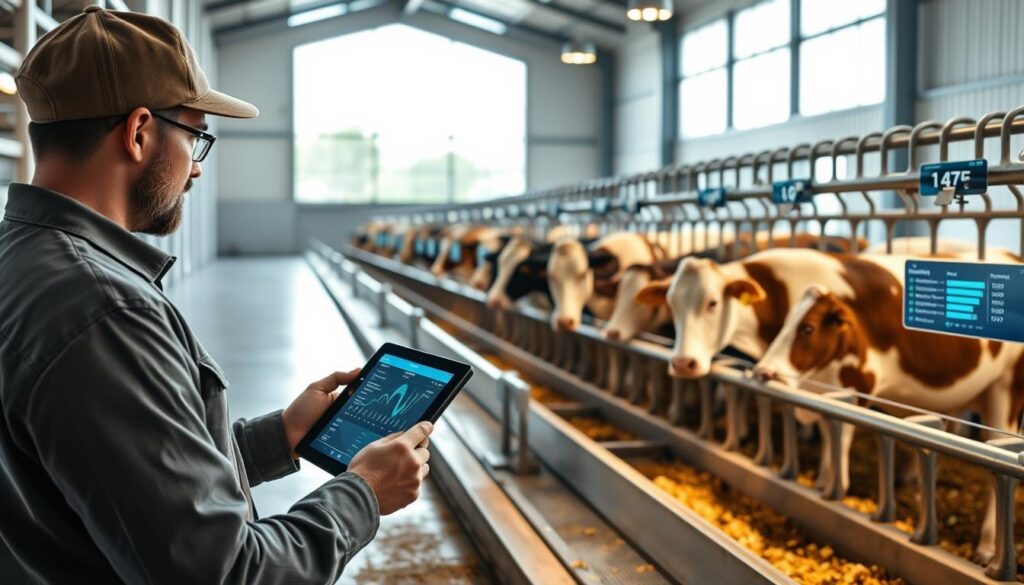
Smart feeders with RFID or cameras know each animal by name. They adjust food portions based on what each needs. It’s like having a top chef for every cow, but without the fancy presentation.
This tailored nutrition leads to amazing results:
| Technology | Traditional Approach | Smart Barn Solution | Efficiency Gain |
|---|---|---|---|
| Feed Monitoring | Manual measurements | Automated weighing systems | 87% more accurate |
| Portion Control | One-size-fits-all | RFID-based individual rations | 42% less waste |
| Growth Tracking | Monthly weigh-ins | Real-time growth insights | Instant adjustments |
| Nutrition Planning | Standardized feed | Individualized nutrition plans | 31% better conversion |
The numbers speak for themselves. Farms with these systems see feed conversion ratios that blow traditional methods out of the water. It’s like turning feed into muscle with the efficiency of a high-performance car.
With real-time growth insights, managing livestock becomes a science. It’s not just about feeding animals; it’s about creating a perfect nutrition symphony. This leads to faster growth, less waste, and sustainability that benefits the bottom line.
These smart barns are changing the game in agricultural efficiency. The future of farming isn’t about bigger fields. It’s about smarter data.
Early Warning Systems
Remember when watching over livestock meant squinting from afar? Those days are over. Today, systems don’t just watch; they predict.
Modern livestock monitoring is like a farm’s nervous system. It’s always on, always checking, and never gets sidetracked. It tracks everything from how animals move to what they eat, with the accuracy of a Swiss watch and the curiosity of a toddler.
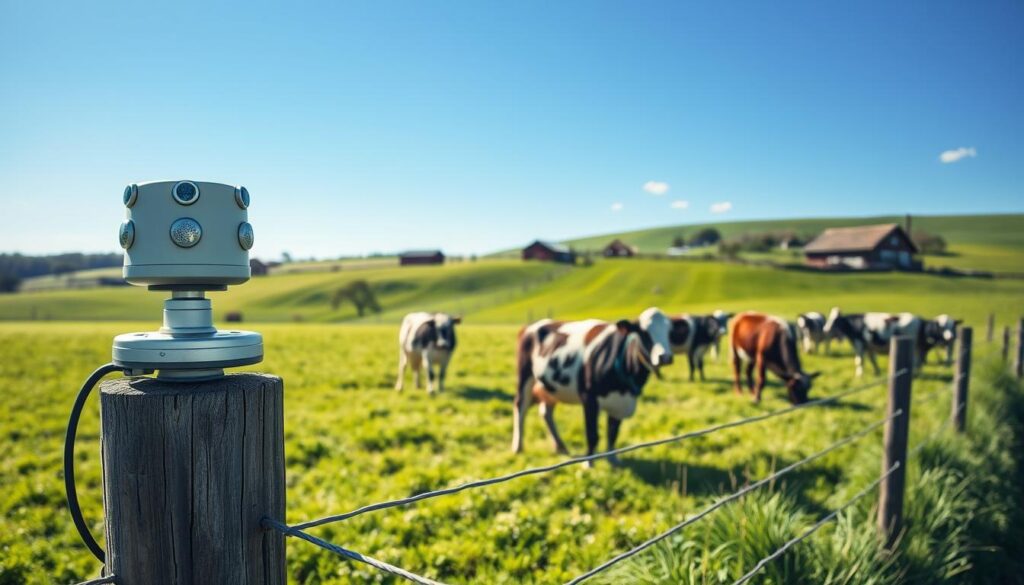
The magic is in the data patterns. If Bessie the cow acts differently, the system catches it fast. It spots changes in movement, eating habits, and growth patterns.
Here’s what 24/7 monitoring prevents:
- Illness outbreaks before symptoms show
- Environmental stress responses
- Nutritional deficiencies
- Behavioral changes indicating discomfort
Companies like Fancom have mastered this early warning approach. Their systems catch details humans might miss. It’s not just tech; it’s like having a sixth sense for farm issues.
The results are clear: 40-60% faster intervention times and fewer animal losses. Farmers now prevent problems instead of just reacting to them. It’s like the difference between fighting fires and installing smoke detectors.
This pattern recognition changes how we care for animals. The system warns you before issues arise. It’s like having a working crystal ball, minus the fog and bad fashion.
The best part of modern livestock monitoring is its constant attention. While we sleep, eat, and scroll through social media, these systems stay alert. They’re like farm security guards who never take a break, never miss a sign, and never get tired.
Technology ROI
Let’s explore the financial benefits of precision animal health technology. It’s not just about fancy tools; it’s a way to make money. The numbers show it’s as exciting as a booming stock market.
Operational efficiency is key. Imagine your team focusing on big decisions, not just chasing animals. Technology saves time and money. It also cuts down on fuel use, helping your wallet and the planet.
Healthier animals mean lower treatment costs. Better feed efficiency saves money too. Early detection prevents big losses. It’s a win-win for both animal welfare and profits.
The data shows big savings compared to old methods. These systems pay off quickly. Plus, they help the environment, making your operation stand out.
| Investment Area | Typical Savings | Payback Period | Long-term Value |
|---|---|---|---|
| Health Monitoring Systems | 15-20% treatment cost reduction | 8-12 months | Improved herd longevity |
| Automated Feeding | 12-18% feed cost savings | 10-14 months | Consistent weight gains |
| Remote Monitoring | 30% labor hour reduction | 6-9 months | 24/7 operation oversight |
| Predictive Analytics | 25% loss prevention | 12-18 months | Data-driven decisions |
These technologies save money and prepare your operation for the future. They monitor both animal and financial health. It’s like having a financial advisor who’s also a vet. The impact of livestock farming technology boosts your bottom line.
Consider the benefits. Better animal health means higher quality products. These products sell for more, increasing your profits. It’s a cycle that starts with technology and ends with success.
The beauty of precision animal health technology is its dual purpose. You get animal welfare and profitability at the same time. The data shows clear financial gains and healthier animals.
Smart operations see today’s tech investment as tomorrow’s edge. Early adopters plant seeds for growth. The benefits go beyond savings to include market and regulatory advantages.
The real question is not if you can afford these technologies. It’s whether you can afford to be without them. The ROI story is compelling and essential for success in today’s market.
Herd Management Platforms
If individual sensors are the orchestra players, herd management platforms conduct the entire symphony. Platforms like Pairtree Intelligence and Fancom One integrate every data point into a cohesive strategy. These systems transform chaos into clarity.
Imagine AI forecasting growth patterns or pasture availability with eerie precision. Benchmarking across herds becomes effortless. Traceability satisfies even the strictest food safety standards. It’s like having a team of data scientists working tirelessly—no coffee breaks required.
True smart barns leverage this integration. Climate data informs feeding schedules. Health metrics adjust environmental controls. Everything connects, creating a holistic view that boosts efficiency and outcomes. The revolution isn’t just in the data; it’s in the decisions.
Welcome to the future of farming—where art meets science, and every detail matters.