Let’s debunk a common myth. I once thought soil was just a passive stage. You dig a hole, add stuff, and plants grow. It seemed like a one-time thing. But, soil is actually alive and needs care.
Most of us keep taking from it without giving back. Green manure farming is a smart way to put something back in.
So, what is green manure? It’s not a bag of product. It’s a process where you grow certain plants, like sunhemp or clover. You grow them not for food, but to give back to the earth.
Then, you turn them into the soil when they’re still green. This is where their magic happens.
Their power lies in biological nitrogen fixation. Legumes have tiny bacteria that turn air nitrogen into a form plants can use. It’s a smart, self-sustaining system.
This process enriches the soil, locks in carbon, and makes it strong. It’s a game-changer for gardeners. Instead of using chemicals, you’re using nature’s own power. For more on how cover crops work, it’s both simple and genius. This is what sustainable farming is all about.
Planting Strategies
If your garden’s plan for organic soil fertility were a heist, are you the muscle or the mastermind? The key is not brute force but a series of smart moves.
Cover cropping is your first line of defense. Clover or mustard acts as a living blanket. It protects the soil from erosion and keeps nutrients in place.
Crop rotation is next. It’s like diplomacy for your garden. Don’t let one crop family rule. Switch to beans after tomatoes to keep the soil balanced.
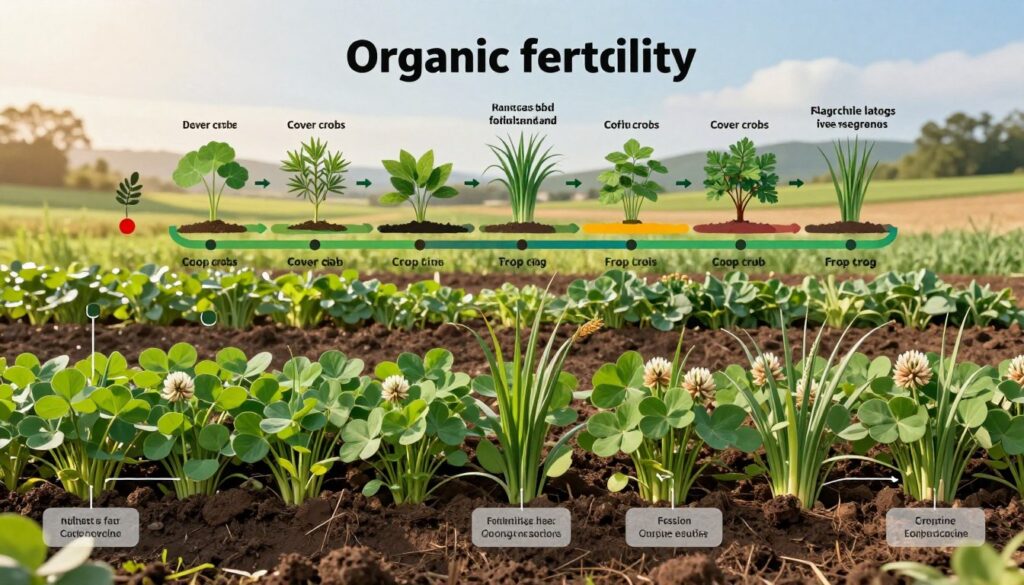
Mulching is a smart move. It keeps moisture in, weeds out, and feeds earthworms. It’s easy and effective.
Intercropping is about using space wisely. Plant lettuce between broccoli. It’s efficient and keeps pests away.
Green manure incorporation is the game-changer. It’s like making fertilizer at home. You grow sunhemp, then turn it into the soil.
This method is all about local production. It’s efficient and sustainable. Groups like Earth5R support this approach for a closed-loop system.
Your strategy is more than a list. It’s a way of thinking. Use cover crops, rotate, mulch, intercrop, and incorporate green manure. This builds strong, healthy organic soil fertility.
Timing and Best Species
Green manure farming is like a seasonal casting call. Choosing the wrong actor for the climate is a disaster for your soil. It’s like wearing a winter coat in July or casting a tropical sunhemp in frosty weather.
My autumn ritual includes sowing a cool-season “triumvirate.” This trio of plants works together like a political alliance. It’s not just gardening; it’s running a mini ecology department.
The first plant is mustard. It releases biofumigants when it decomposes. This is like a botanical SWAT team cleaning the soil of pests.
The second plant is a legume like clover or vetch. These plants fix nitrogen in the soil. They’re like financial engineers for your garden.
The third plant is a grass like barley or oats. It adds bulk to the soil. Its biomass becomes organic matter that worms love.
This cool-season crew does it all: pest control, building fertility, and improving soil texture. But when the seasons change, so must your plants.
| Season | Primary Species | Key Function | Best For |
|---|---|---|---|
| Cool Season (Fall/Winter) | Mustard, Clover/Vetch, Barley/Oats | Biofumigation, Nitrogen Fixation, Bulk Organic Matter | Frost-prone zones, pre-spring soil prep |
| Warm Season (Spring/Summer) | Sunhemp, Cowpea, Buckwheat | Rapid Nitrogen Fixation, Weed Suppression | Building fertility quickly, smothering weeds |
| Problem-Specific | Daikon Radish, Alfalfa (Medicago sativa L.) | Break Compaction, Deep Nutrient Mining | Hardpan soils, subsoil nutrient access |
In summer, fast-growing nitrogen fixers like sunhemp or cowpea are key. They grow quickly, capturing nitrogen from the air.
Match the species to the season and your soil’s needs. For hardpan soils, use daikon radish as a green manure. It aerates the soil like a natural tool.
Choosing the right tool for your green manure farming plan is crucial. Legumes like Vicia villosa Roth. (hairy vetch) are great for cooler soils. Astragalus sinicus L. (Chinese milkvetch) works well in specific conditions. It’s not just planting; it’s strategic soil management.
Get the timing and species right in your green manure farming plan. You’ll get a standing ovation from your garden.
Soil Improvement Data
The data on green manure is like a soil rehab guide. It’s not just tips; it’s about making soil fertile. Let’s look at the lab results.
First, let’s talk about carbon. Studies show green manure boosts soil organic carbon a lot. This is good for the climate because it stores carbon underground. It’s like putting money in the earth’s bank.
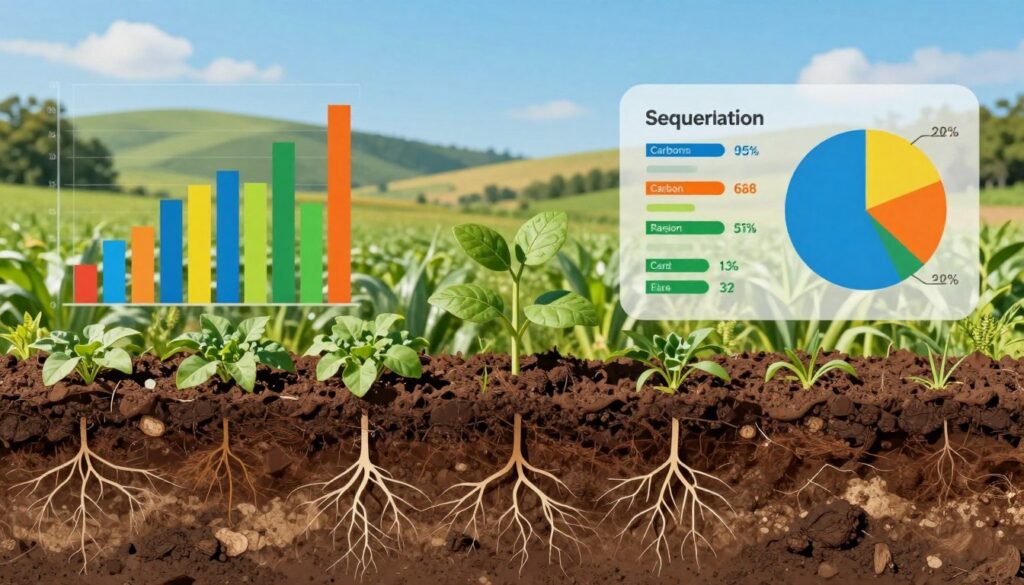
Next, let’s talk about water. Green manure makes soil better at holding water. This is great for farmers facing droughts. It helps the soil keep water better.
Then, there’s the microbes. Green manure feeds the soil’s tiny workers. These microbes turn dead matter into nutrients for plants. They also fight off bad bacteria and make the soil strong.
On the other hand, using chemicals harms the soil. It kills the good microbes and makes the soil less fertile. This has led to a third of the world’s land being degraded. But green manure fixes this problem.
| Soil Health Metric | With Green Manure Practice | Without Green Manure (Conventional) |
|---|---|---|
| Organic Carbon Content | Increased by 15-30% over 3-5 years | Static or declining |
| Water Holding Capacity | Can improve by up to 20% | Vulnerable to rapid drying |
| Microbial Biomass | Significantly higher, diverse population | Lower, less diverse |
| Surface Erosion | Greatly reduced due to soil structure & cover | Higher risk, especially on slopes |
| Annual Input Cost per Acre | Lower (reduced fertilizer/pesticide needs) | Consistently high |
The economic benefits are huge. Farmers save money by not buying as many chemicals. The soil becomes a valuable asset.
The data shows green manure is a game-changer. It fights weeds, reduces erosion, and balances pest cycles. For more on how it works, check out our analysis on how does green manure improve soil.
The numbers are clear. Green manure is not just a trend; it’s a key to fertile, strong, and profitable land. The proof is in the earth itself.
Farmer Experiences
The true test of any farming idea isn’t in a lab. It’s in the hands of farmers. After years of using green manure, my garden’s soil changed dramatically. It went from hard as concrete to soft as a pancake.
This change is not unique to me. Earth5R’s work in India shows the same results. In Maharashtra, farmers switched to using dhaincha and sunhemp. This move helped stabilize their yields and income.
In Tamil Nadu, green manure and mulching fought off erosion. Uttar Pradesh saw a drop in pesticide use by intercropping legumes with cereals. These are real stories of soil recovery.
The science backing this change is strong. The University of New Hampshire explains it well. Green manure farming rebuilds soil from the ground up. It turns bad soil into a living ecosystem.
The question isn’t if it works. It’s if we’re ready to listen to the soil and the farmers who prove it every season.