Every grower knows that a successful harvest starts with feeding the soil right. It’s not just luck or good weather that matters.
Crops need a balanced diet to grow well. These crop nutrients help with many things, like making stalks strong and improving harvest quality.
Today, farmers use new tools to give plants what they need. For example, nutrient boosting seed coatings give plants a big advantage early on.
In the United States, plant nutrition is key to healthy farming. Without it, crops may not handle stress or grow fully in summer.
By focusing on a good diet, growers can keep their fields productive and strong. This simple approach is essential for improving yields and keeping the land healthy for years.
Macronutrients and Micronutrients Explained
Plants need different nutrients to grow well. These nutrients are split into macronutrients and micronutrients. They help plants grow, develop, and fight off diseases.
To understand plant nutrition, knowing about macronutrients and micronutrients is key. Learning how to balance these nutrients is vital for healthy plants.
Nutrient Classification
Macronutrients are needed in large amounts. They include nitrogen, phosphorus, and potassium. These nutrients are important for plant growth, like leaf and root development.
Essential Macronutrients for Plant Growth
Plants need nitrogen, phosphorus, and potassium to grow. These are called NPK and are key for plant development.
Nitrogen helps with leaf growth. Phosphorus is important for roots, flowers, and fruits. Potassium keeps plants healthy and fights off diseases.
| Nutrient Type | Examples | Role in Plant Growth |
|---|---|---|
| Macronutrients | Nitrogen (N), Phosphorus (P), Potassium (K) | Promotes leaf growth, root development, and overall plant health |
| Micronutrients | Iron (Fe), Zinc (Zn), Boron (B) | Essential for enzyme functions, photosynthesis, and plant defense mechanisms |
Deficiency Signs in the Field
It’s key to spot nutrient deficiencies in crops to keep them healthy and boost yields. These deficiencies show up in many ways, affecting how plants grow.
Nutrient shortages can really hurt crop health and how much they produce. Knowing the signs of these shortages is vital to fix them fast.
Identifying Nutrient Deficiencies
Spotting nutrient shortages needs a good grasp of their symptoms. Looking closely at plants is a big part of figuring out these problems.
Common Symptoms of Nutrient Deficiencies
Deficiencies can lead to various symptoms, like:
- Yellowing or browning of leaves
- Stunted growth
- Poor flowering or fruiting
- Weakened resistance to diseases and pests
Nitrogen deficiency often makes leaves turn yellow. Potassium deficiency can make leaf edges brown. Knowing these signs helps fix the problems.
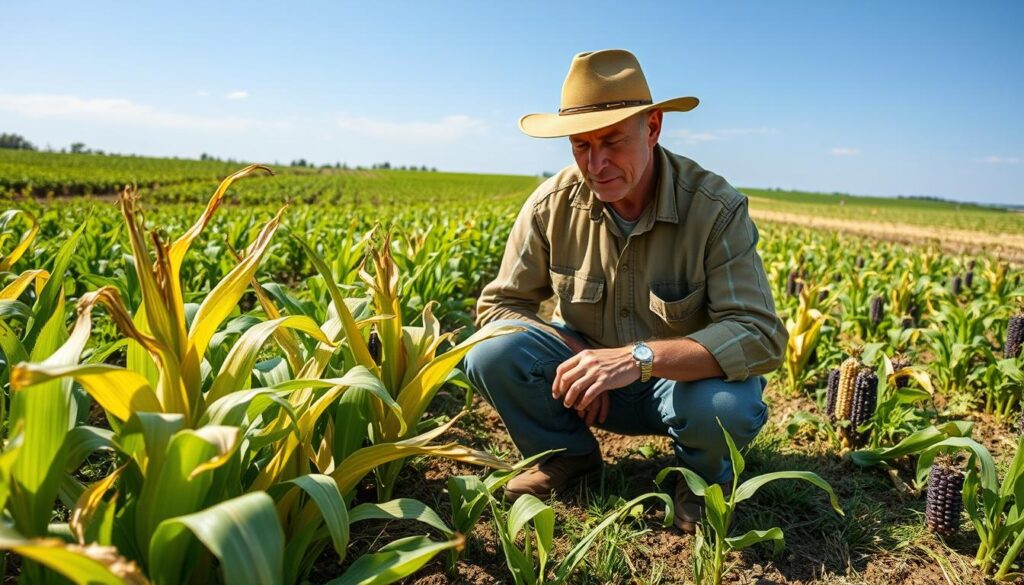
By spotting these signs early and acting fast, farmers and experts can lessen the harm of nutrient shortages. This helps crops grow stronger and healthier.
| Nutrient | Deficiency Symptom |
|---|---|
| Nitrogen | Yellowing leaves |
| Potassium | Browning of leaf edges |
| Phosphorus | Purple discoloration on leaves |
Matching Nutrition to Crop Stage
Crops need different nutrients at different times. This affects how well they grow and how much they produce. Giving the right nutrients at the right time is key to getting the best from crops.
Nutrient Requirements at Different Growth Stages
Crops need different nutrients at different times. For example, seeds need phosphorus to grow roots during germination.
Nutrient Uptake at Various Growth Stages:
| Growth Stage | Primary Nutrient Needs | Role |
|---|---|---|
| Germination | Phosphorus | Root development and establishment |
| Vegetative | Nitrogen | Leaf growth and development |
| Flowering/Fruiting | Potassium, Phosphorus | Flower and fruit development, overall plant health |
Knowing what nutrients are needed at each stage helps farmers. For example, corn needs a lot of nitrogen when it’s growing leaves.

By matching nutrient application to the specific needs at each growth stage, farmers can avoid over-fertilization. This reduces waste and helps the environment.
Improving Nutrient Efficiency
It’s key to make nutrient use better for plant health and less waste. By using smart ways to help plants absorb nutrients, farmers can grow more crops. This also helps protect our environment.
Effective Strategies for Nutrient Uptake
Soil and tissue tests help find out if plants have what they need. Fertigation, or adding nutrients through water, gives plants a steady flow of nutrients. This helps plants grow strong and healthy.
Using these methods, farmers can make nutrient use better. This leads to healthier plants and more crops. It’s also good for the planet.