Planting the same thing in the same spot, season after season, is a recipe for disaster. It’s like giving pests and weeds a detailed map and a free lunch. The soil gets tired. The yields drop. So, why break the cycle?
The answer is a practice so old it feels new again. Farmers 8,000 years ago weren’t just throwing seeds at the dirt. They were playing a long game—a strategic shuffle of plant families to outsmart nature itself.
This isn’t just folklore. Modern crop rotation farming is a cornerstone of regenerative agriculture. It’s a deliberate act of ecological subversion. You’re not just growing food; you’re managing a system.
You confuse pests that set up shop for a specific crop. You balance the soil’s nutrient checkbook, letting one plant family pay back what another withdrew. You stop the slow bleed of topsoil and build resilience from the ground up.
The core idea is simple: change the script every year. For a deep dive into the practical benefits and yield-boosting results, the evidence is compelling. This is the smart, sustainable plot twist your land has been waiting for.
Rotation Examples
The corn-soybean rotation is a classic in farming, but it’s just the start. Corn is like the bassist, needing a lot and using up nitrogen. Soybeans, on the other hand, are like the lead guitarist, adding back what corn takes away. Together, they make a good team, but there’s more to the story.
Why stick to just two when you can have a whole cast of characters? A three or four-year cycle is where the real magic happens. It’s like creating a sustainable cropping system with care and precision.
Let’s look at the cast. Year one, we have legumes, the soil’s best friends. They fix nitrogen for free. Then, in year two, we bring in the brassicas. These are the deep diggers, like broccoli and kale, that loosen the soil.
In year three, it’s time for the solanaceae family. This includes tomatoes, peppers, and potatoes. They’re the showstoppers, using up the nutrients that came before. Some farmers add a fourth year with cover crops, giving the soil a chance to rest.
This approach creates a sustainable system that lasts. It’s not just about this year’s harvest. It’s about keeping your soil healthy for years to come. Each plant family has its role, ensuring no one gets too much attention.
Here’s a simple three-year rotation plan that you can try:
| Year | Crop Family | Example Crops | Primary Soil Benefit |
|---|---|---|---|
| 1 | Legumes | Soybeans, Peas, Clover | Nitrogen Fixation |
| 2 | Brassicas | Broccoli, Cabbage, Radish | Soil Aeration & Pest Break |
| 3 | Solanaceae | Tomatoes, Peppers, Potatoes | Nutrient Utilization |
Each family does something different for the soil. Legumes give, brassicas prepare, and solanaceae use what’s been prepared. It’s a balanced system.
Switching between corn and soybeans is like watching only two TV channels. But adding wheat or cover crops? That’s like having access to the whole TV library. Your soil gets a variety of benefits, and pests can’t get too comfortable.
Planning these rotations is like writing a multi-season story. You need to think about where each plot should be next. For more on planning these stories, check out our crop rotation guide.
The magic happens when you start thinking in terms of crop families and soil relationships. It’s not just about planting; it’s about taking care of the land. Your soil becomes a thriving ecosystem, not just a place to grow crops.
Pest/Disease Benefits
Crop rotation farming is more than a strategy—it’s a clever way to manage soil. Most pests target specific plants with great skill. If you give them the same plants every year, they’ll make themselves at home.
Rotation changes the game. By switching plants, you make pests confused. They show up expecting one thing but find another. This messes up their life cycle.
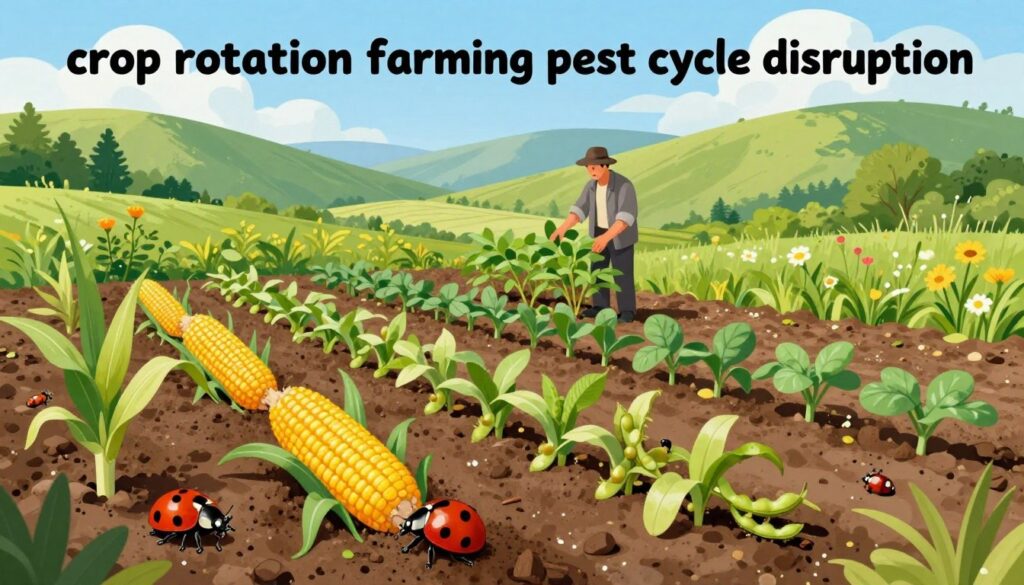
This approach isn’t about killing pests. It’s about making them less of a problem. Diseases that harm tomatoes won’t do well with corn. You’re changing the rules of the ecosystem to keep pests away.
Studies from Clemson University back this up. They say rotation is a simple way to manage pests and diseases. Continuous planting makes pests and diseases too strong. Rotation weakens them by cutting off their food supply.
Here’s how it works:
- Breaks Life Cycles: Insects wait in soil for their host plants. But when those plants don’t come back, they’re left waiting.
- Starves Specialists: Aphids that love certain plants can’t survive on others. They either leave or die.
- Dilutes Pathogen Load: Diseases like fusarium wilt weaken when their host plants are gone for a few years.
- Creates Biochemical Diversity: Different plants release different chemicals. This makes it hard for pests to find a home.
This method is simple yet powerful. It works with nature, not against it. For more on using crop rotation to manage pests and improve soil, check out our guide on crop rotation for pest management and soil.
Don’t rely on chemicals. The best pest control is a smart plan. Keep pests on their toes, and they won’t cause much harm.
Data on Yields & Input Reduction
Let’s get real with the numbers. Crop rotation isn’t just a feel-good idea. It’s about making money and cleaning up the environment.
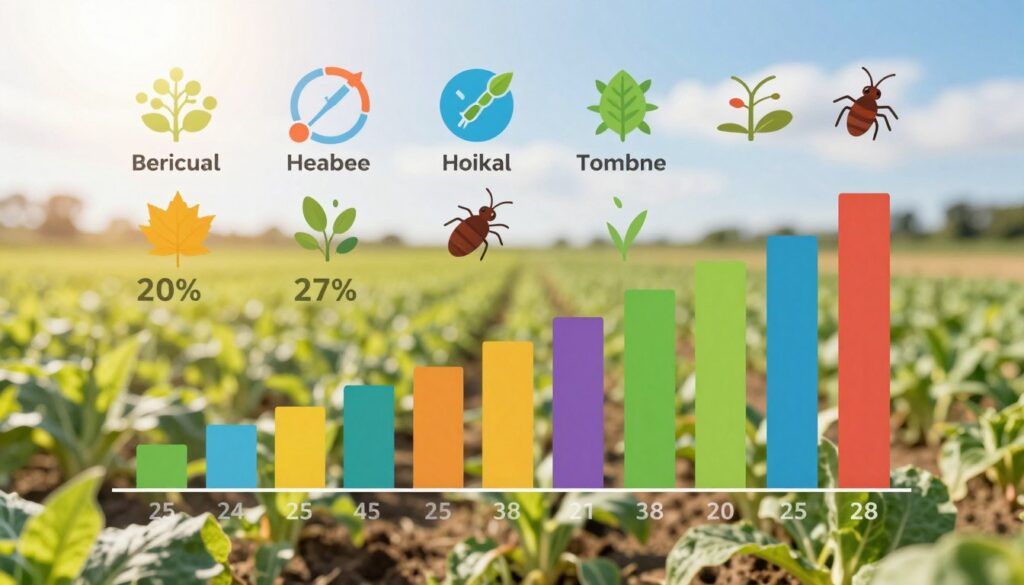
Forget small gains. Think big changes. A University of Illinois study found that corn in a two-year rotation with soybeans saw a 29% yield bump. But add a small grain and a legume cover crop for four years, and that jumps to 48%.
This isn’t just about more corn. It’s about changing what’s possible in farming. It’s a smart way to farm.
| Rotation System | Corn Yield Improvement | Key Mechanism |
|---|---|---|
| Continuous Corn | 0% (Baseline) | Depletes soil, invites pests. |
| Two-Year (Corn-Soy) | +29% | Breaks pest cycles, diversifies nutrient demand. |
| Four-Year (Corn-Soy-Wheat-Cover) | +48% | Adds nitrogen fixation, improves soil structure, further breaks cycles. |
Now, let’s talk about saving money. This isn’t about using less bad stuff. It’s about needing less in the first place. Healthy soil needs fewer fertilizers. Fewer pests mean less chemicals.
This is a win-win. You make more and spend less. It’s smart farming and smart economics.
But it’s not just about your wallet. It’s also about the environment. Less fertilizer means less pollution. Fewer pesticides mean cleaner water.
So, a sustainable cropping system is about making money and taking care of the planet. The numbers prove it. It’s not just good for the earth; it’s good for your bottom line.
Long-Term Planning
So your soil is healthier and pests are confused. What’s next? Crop rotation farming becomes a lifelong commitment. It’s like moving from a one-night stand to a long-term relationship with your land.
You become a historian and detective, using a notebook, Google Sheet, or an app like Planter. Your goal is to create a map of what grew where and when. This isn’t just busywork. It’s the blueprint for a sustainable cropping system that enriches your soil over time.
Group your plants by family and plan their movements like a four-year chess game. Modern agriculture shows us that precise rotations can cut water use and increase yields. Your garden ledger should track these successes.
This careful planning builds a legacy, not just lettuce. If you’re stuck, seek advice from your local extension office or a landscape ecologist. The aim is to make the land more fertile and resilient for future farmers.
The true harvest of long-term thinking is seen in future generations. They might not know your name, but they’ll enjoy the fruits of your wisdom.