The U.S. Department of Agriculture (USDA) announced more than $325 million for 42 conservation projects on October 26, 2026, expanding federal support for farmers, ranchers, and forest landowners working to improve agricultural productivity and protect natural resources. Agriculture Secretary Brooke Rollins announced the investment in Cedar Rapids, Iowa, through the Regional Conservation Partnership Program (RCPP), which combines federal funding with contributions from public and private partners.
The projects address a broad range of agricultural challenges, including soil erosion, nutrient runoff, water quality, grazing infrastructure, wildlife habitat, and the preservation of productive farmland. One initiative in western and central Iowa aims to establish more than 300,000 acres of cover crops, while projects in Georgia, Texas, and Washington focus on working forests, coastal prairie, and salmon habitat.
According to USDA, 75% of this year’s RCPP funding will go directly to farmers or cover the cost of implementing conservation practices. The investment is intended to make conservation more practical for agricultural businesses by connecting environmental improvements with the long-term productivity of working land.
For producers, the announcement raises several important questions: which conservation practices could receive support, how the projects will operate locally, and what the investment means for farm management and environmental performance.
How USDA’s $325 Million Conservation Investment Works
The funding operates through the Regional Conservation Partnership Program, administered by USDA’s Natural Resources Conservation Service (NRCS). RCPP brings together agricultural producers, conservation organizations, state agencies, tribal governments, and other partners to address natural resource challenges that can extend beyond an individual farm.
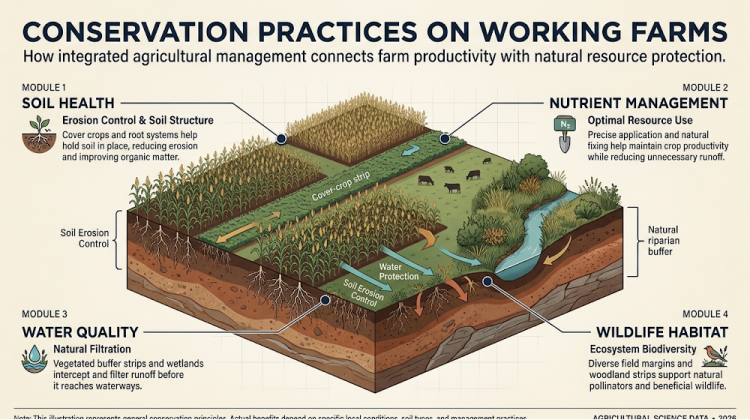
Unlike a program focused exclusively on a single conservation practice, RCPP supports projects built around regional priorities. A partnership might combine cover crops with improved grazing infrastructure, coordinate restoration work across a watershed, or protect productive agricultural land through a voluntary conservation easement.
USDA’s October 26 announcement identified 42 projects receiving more than $325 million in investment. The projects are intended to improve farm operations while conserving soil, water, forests, and wildlife habitat. Federal resources are combined with partner contributions to expand the reach of conservation activities.
The department also reported that NRCS has streamlined partnership agreements and increased flexibility during the past year. These changes are intended to reduce administrative burdens and give local partners more room to develop projects around regional conditions.
Under the program’s established structure, RCPP includes two principal approaches. RCPP Classic uses NRCS contracts and easements with producers, landowners, and communities working alongside project partners. RCPP Alternative Funding Arrangements provide funding to partners to support eligible conservation activities on participating land.
The distinction matters because farmers generally participate through an approved project rather than receiving an automatic share of the nationwide funding announcement. The location of a farm, the practices proposed, and the structure of its local partnership can determine whether an opportunity is available.
Producers can review the official RCPP program information to understand how projects are structured, what activities may qualify, and how participation works.
Iowa Project Targets 300,000 Acres of Cover Crops
One of the most substantial examples in the announcement is an Iowa partnership covering western and central parts of the state. The project combines cover crops, forage and biomass plantings, livestock watering systems, and other land-management practices to improve soil and water conditions while supporting livestock production.
USDA projects that the initiative will establish more than 300,000 acres of cover crops. The department also estimates reductions of approximately 3.3 million pounds of nitrogen, 336,000 pounds of phosphorus, and 1 million tons of soil loss.
These figures are projected outcomes rather than reductions already verified across the completed project. Actual results will depend on implementation, weather, soil conditions, management decisions, and the measurement methods used to evaluate conservation performance.
Cover crops are planted between or alongside primary cash-crop seasons to maintain living vegetation and protect exposed soil. Depending on the species and management system, they can reduce erosion, improve soil structure, capture nutrients that might otherwise leave fields, and provide forage for livestock.
For Iowa farmers, these benefits can connect environmental objectives with day-to-day field management. Keeping soil covered during periods when corn and soybean fields would otherwise remain bare can help limit the movement of sediment during heavy rain. Certain cover crops can also contribute organic matter or improve nutrient cycling over time.
However, cover crops require planning. Planting dates, seed costs, termination timing, available equipment, and spring soil conditions all affect how well they fit into a crop rotation. Poorly timed termination or unsuitable species selection can create management challenges, particularly when planting windows are tight.
The Iowa project also incorporates livestock watering systems and forage plantings. Reliable water infrastructure can help producers manage grazing distribution, while improved forage availability may create additional options for livestock operations. These measures can connect conservation work with the economics of cattle production.
Iowa Agriculture Secretary Mike Naig said the state’s Cattle and Conservation Working Lands Program began as a pilot in Taylor County in 2016. The program has since expanded, and the new partnership is intended to extend its reach to livestock producers in more Iowa counties.
The Iowa Department of Agriculture and Land Stewardship provides additional information about state agricultural programs and conservation initiatives.
Georgia Project Protects Working Forests and Wildlife Habitat
The USDA announcement also highlighted the Longleaf Landscape project in southwest Georgia, led by Tall Timbers Research, Inc. The project aims to protect at least 6,000 acres of working forest across 16 counties through voluntary conservation easements.
Longleaf pine ecosystems have ecological and economic significance in the southeastern United States. These forests support a range of wildlife and plant communities, while working forestland can continue to provide timber-related income under appropriate management.
The Georgia initiative responds to several pressures facing rural landowners, including development, habitat fragmentation, and changes in timber markets. When land is converted to other uses, it can become more difficult to maintain connected habitat and preserve large areas of working forest.
Voluntary conservation easements offer one way to address that challenge. An easement establishes legally defined restrictions on certain future uses of a property while allowing compatible activities specified by the agreement. Depending on its terms, an easement can help maintain land in agricultural or forestry use rather than allowing unrestricted development.
USDA said the Longleaf Landscape project will provide landowners with technical expertise and conservation management plans. The project also includes more than $10 million in matching contributions, according to the department’s announcement.
The proposed restoration work focuses on fire-dependent longleaf pine forests, wildlife habitat, and water quality. Fire can play an important ecological role in maintaining these systems when managed under appropriate conditions. Prescribed burning, habitat management, and forest planning require specialist knowledge and careful consideration of local risks.
For participating landowners, the project illustrates how conservation funding can support long-term property management while maintaining productive uses of rural land. It also shows why conservation programs may involve forest owners and land managers as well as conventional crop and livestock producers.
Texas Coastal Prairie Partnership Addresses Land Conversion
In Texas, the Coastal Prairie Working Lands Partnership, led by the Texas Agricultural Land Trust, will work to conserve remaining coastal tallgrass prairie along the Gulf Coast through voluntary, producer-driven agricultural conservation easements.
The initiative addresses development pressure, habitat fragmentation, and rising land values. These factors can make it increasingly difficult for agricultural landowners to maintain working properties when competing uses offer different financial incentives.
Coastal prairie landscapes provide habitat and contribute to watershed functions while supporting agricultural activity where land management is compatible with conservation objectives. Protecting these areas can help preserve open space and maintain the ecological connections that support wildlife and water resources.
The partnership’s approach centers on keeping productive land available for agriculture while protecting its natural features. Conservation easements can establish long-term restrictions on development, but their precise terms vary by property and agreement. Participation therefore requires landowners to understand both the benefits and the limitations associated with the legal arrangement.
The Texas project also highlights an important distinction in conservation policy: protecting agricultural land does not necessarily mean removing it from production. A conservation easement may allow continued farming and ranching, subject to the terms established for the property.
For producers, the relevant questions include how an easement affects future land use, succession planning, property value, and financing. These decisions are specific to each operation, so landowners considering a similar arrangement should obtain independent legal and financial advice before entering an agreement.
Washington Partnership Focuses on Salmon Habitat and Watershed Health
The Nooksack Watershed Restoration Phase 2 project in Washington provides another example of how agricultural conservation funding can address environmental challenges at a regional scale. Led by the Lummi Nation and the Nooksack Indian Tribe, the project will work to restore natural river processes and improve habitat conditions in the Nooksack River watershed.
According to USDA, planned activities include installing engineered logjams, enhancing floodplain and wetland habitats, and planting riparian trees across 256 acres.
Riparian areas are the lands alongside rivers and streams. Vegetation in these areas can stabilize banks, provide shade, filter runoff, and contribute habitat for wildlife. Wetlands and connected floodplains can also help support natural water storage and improve habitat conditions.
Engineered logjams use strategically placed wood structures to influence river flow and create habitat features. Their design must account for local hydrology, channel characteristics, flood risks, and ecological objectives. They are not interchangeable structures that can be installed without site-specific planning.
The Nooksack project is intended to support endangered salmon species by improving habitat and creating cooler-water refuges. Salmon recovery involves multiple interacting factors, including water temperature, migration routes, habitat quality, and watershed conditions. The project is one component of a broader conservation effort rather than a guarantee of a particular biological outcome.
The tribal leadership of this initiative also underscores the role of local and Indigenous organizations in developing conservation projects that reflect regional environmental priorities. Effective watershed restoration often requires coordination across property boundaries and between organizations with different responsibilities.
For agricultural communities, healthier watersheds can matter beyond wildlife protection. Water quality, erosion, floodplain conditions, and land management are interconnected concerns that can affect rural infrastructure and the long-term viability of working land.
What the Funding Means for Farmers and Ranchers
The $325 million announcement offers potential support for producers whose conservation priorities align with the 42 selected partnerships. However, it does not establish a universal payment available to every farmer or landowner in the United States.
RCPP operates through approved projects and partner agreements. Eligible producers may work with a project partner or, where permitted, apply directly to NRCS to carry out conservation activities consistent with a selected project. Land eligibility and participation requirements depend on the project and the program rules.
USDA’s statement that 75% of this year’s funding will go directly to farmers or cover conservation implementation costs is significant because it emphasizes on-the-ground activity. Still, the share does not mean every participating farm will receive the same amount or that all conservation expenses will be reimbursed.
Farmers interested in participating should first determine whether an approved project operates in their region and whether their land and proposed activities fit its objectives. They can then discuss technical requirements, cost-sharing arrangements, schedules, and documentation with the lead partner or local NRCS office.
Conservation practices can have different financial effects depending on the farm. Cover crops may require additional seed, equipment, and labor, while grazing improvements may involve fencing, water infrastructure, or changes to livestock rotations. Conservation easements may affect long-term property decisions, and watershed restoration may require coordination with neighboring landowners.
The most useful assessment compares the proposed support with the full costs and operational implications of the practice. Producers should also ask how project outcomes will be measured and what maintenance or reporting responsibilities will continue after installation.
For farms evaluating broader operational improvements, modern agricultural planning can help connect conservation goals with field layouts, equipment use, water management, and long-term business decisions.
How Producers Can Explore RCPP Opportunities
Farmers and landowners should begin with the official NRCS resources and local conservation contacts rather than assuming the October 26 announcement opens a new individual application window for all 42 projects.
The first step is to identify the project serving the farm’s county or watershed. The next is to confirm whether the project is accepting participants, which conservation practices it supports, and what eligibility conditions apply.
Producers should be prepared to discuss the resource issue they want to address, the land involved, existing management practices, and the operational changes they could implement. Depending on the project, they may need acreage information, maps, management records, or other documentation to determine whether the proposed work fits the partnership’s goals.
The NRCS RCPP program page explains the program’s structure and links to resources for partners and producers. Farmers can also contact a local USDA Service Center to discuss relevant conservation programs and find out which NRCS office serves their area.
The USDA’s October 26 announcement provides the starting point for reviewing the 42 selected projects and their stated objectives. As partnerships move into implementation, the practical measure of the investment will be the conservation work completed, the participation of producers and landowners, and the results documented over time.