Let’s cut through the buzz for a second. We’re not talking about a charming sidebar to nature here. We’re discussing the silent, unpaid workforce that underpins one-third of our food supply.
Think of them as the ultimate gig economy contractors. They flit from job to job with a precision that would make an Amazon algorithm blush. Without this intricate network of bees, butterflies, and other unsung heroes, our agricultural system isn’t just weakened—it’s fundamentally broken.
The data doesn’t lie. Pollinators contribute nearly $20 billion to U.S. crop production annually. Over 75% of leading global crops depend on their services. Your morning almonds, afternoon blueberries, and evening strawberries? All hostages to their health.
This isn’t about saving cute insects. It’s about recognizing a critical production asset we’ve foolishly taken for granted. As the U.S. Fish and Wildlife Service, this relationship represents billions in economic value. Meanwhile, innovators explore solutions like the pollinator-assisting drones being developed overseas.
The decline of pollinator habitat isn’t an environmental sidebar. It’s a direct threat to our dinner plates and bottom lines. Let’s analyze why.
Planting for Bees/Butterflies
Creating a pollinator workforce is like a Silicon Valley headhunter’s job, not a carnival barker’s. You’re not just planting flowers. You’re building an entire ecosystem’s employee benefits package.
Start with native plants. They’re not just pretty. They’re the original local cuisine, perfected over millennia. Pollinators see your garden as a menu, not decoration.
Native species speak the local dialect of nectar and pollen. They bloom when local insects expect them to. Their chemical signatures match what native bees have evolved to digest. It’s like serving authentic regional cuisine versus frozen microwave dinners.
Meet the specialists. The squash bee is nature’s version of a dedicated craftsman who only works with one material. These bees have co-evolved exclusively with cucurbits—squash, pumpkins, zucchini. They’re so efficient at pollinating these plants that honeybees look like amateurs by comparison.
Why does this matter for bees agriculture? Because specialization equals efficiency. A squash bee starts work before dawn, finishes by mid-morning, and achieves near-perfect pollination rates. It’s the ultimate proof that sometimes, going narrow and deep beats being a generalist.
Then there are the multitaskers: edible flowers. Nasturtiums, calendula, and borage aren’t just garnishes for your salad. They’re dual-purpose investments. You get food for your table and a nectar bar for pollinators. Borage, with its star-shaped blue flowers, is particularly brilliant—it literally refills its nectar every two minutes.
Native fruit trees like persimmons offer another layer of strategic depth. They provide early spring blooms when little else is flowering. This extends your farm’s “open for business” sign through more of the growing season. It’s the difference between a pop-up shop and a year-round department store.
The real magic happens when you think in terms of succession planting. You need blooms from early spring through late fall. Early bloomers like willows and maples kickstart the season. Midsummer flowers like coneflowers and bee balm maintain the momentum. Late bloomers like asters and goldenrod provide the season’s grand finale.
| Planting Strategy | Primary Benefit | Pollinator Attraction | Integration Ease |
|---|---|---|---|
| Native Perennials | Evolutionary compatibility | Specialist & generalist bees | High (low maintenance) |
| Edible Flowers | Dual human/pollinator food | Butterflies & honeybees | Medium (seasonal planting) |
| Native Fruit Trees | Extended bloom season | Early spring specialists | Low (long-term investment) |
| Succession Mix | Season-long food supply | All pollinator types | High with planning |
Diversity is your insurance policy. A monoculture is a single point of failure. If that one plant fails or finishes blooming, your pollinator diner closes for the season. A diverse planting ensures something is always on the menu.
Think of it as programming nature’s calendar. Early spring? Fruit trees and early bulbs. Late spring? Native shrubs and early perennials. Summer? The main event with coneflowers, milkweed, and sunflowers. Fall? Asters, goldenrod, and sedum for the late shift.
This isn’t gardening. It’s landscape architecture for insects. You’re designing flight paths, rest stops, and feeding stations. The best part? When you get it right, the benefits compound. Better pollination means higher yields. Higher yields mean more profit. More profit means you can plant even more.
For those looking to dive deeper into specific regional planting guides, resources like the British Columbia bee forage plant database offer scientifically-vetted starting points. Remember, the most successful bees agriculture operations treat their pollinators not as accidental visitors, but as deliberate partners in production.
The bottom line? Stop thinking in terms of individual plants. Start thinking in terms of systems, seasons, and symbiotic relationships. Your pollinators certainly are.
IPM & Chemical Reduction
Chemical pesticides have been like overzealous bouncers in agriculture. They kick out both pests and beneficial insects. For years, we thought only dead bugs were good. But using chemicals like gasoline to fight pests burned down our ecosystems.
Pollinators, key to our food, got caught in the crossfire. It was like friendly fire on a huge scale. But there’s a smarter way to manage pests without poisoning everything.
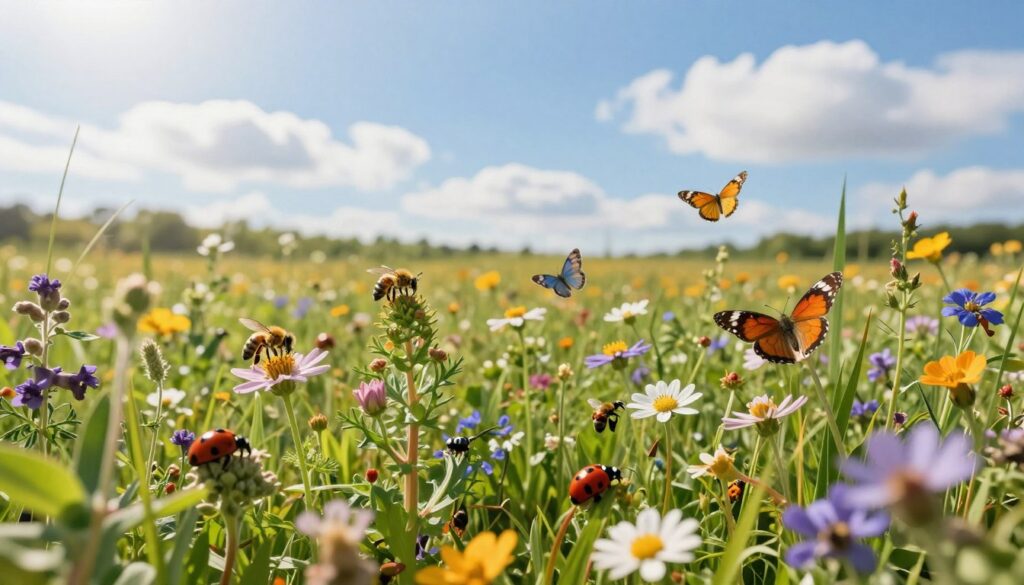
FAP data shows fields with more beneficial insects had 64.8% fewer pests than those with chemicals. This isn’t just about saving the environment. It’s a proven method that works.
Boosting insect biodiversity means more than just adding butterflies. It brings in a team of natural enemies. Ladybugs, lacewings, and wasps keep pests in check without needing a paycheck.
This approach is like switching from a dictatorship to a democracy. Chemicals are like a single ruler, while biodiversity is a team effort. The former causes damage, while the latter promotes balance and self-regulation.
Integrated Pest Management (IPM) is a smarter choice. It uses biodiversity as the first defense. You monitor pests and only use chemicals when needed, often with less harmful methods.
Reducing chemicals lets more natural enemies thrive. This leads to fewer pests and less need for chemicals. It’s a cycle that benefits pollinators, soil, and yields. This method also fits with precision nutrient management.
We’re moving towards farming that’s smart and resilient. It sees ecosystems as complex networks, not simple machines. The old chemical approach is outdated, like a flip phone compared to a smartphone.
We need to see insects as allies, not just pests. Many are beneficial, controlling pests, pollinating, and cycling nutrients. This diversity is good for both ecology and economics. It’s like diversifying investments instead of betting on one stock.
So, stop using so much spray and start learning about beneficial insects. They might be your best pest control team, waiting in your hedgerows.
Success Stories
Forget Silicon Valley unicorns—the most compelling startup story I’ve seen lately involves dirt, bees, and a 121% profit surge in Moroccan fields. This isn’t theoretical environmentalism. It’s hard-nosed business strategy playing out across 233 farms.
The model is brilliantly simple yet revolutionary. Farmers dedicated just 25% of their land to marketable pollinator plants—sunflowers, coriander, fennel. The remaining 75% grew their main cash crops. This wasn’t sacrifice. It was system design.
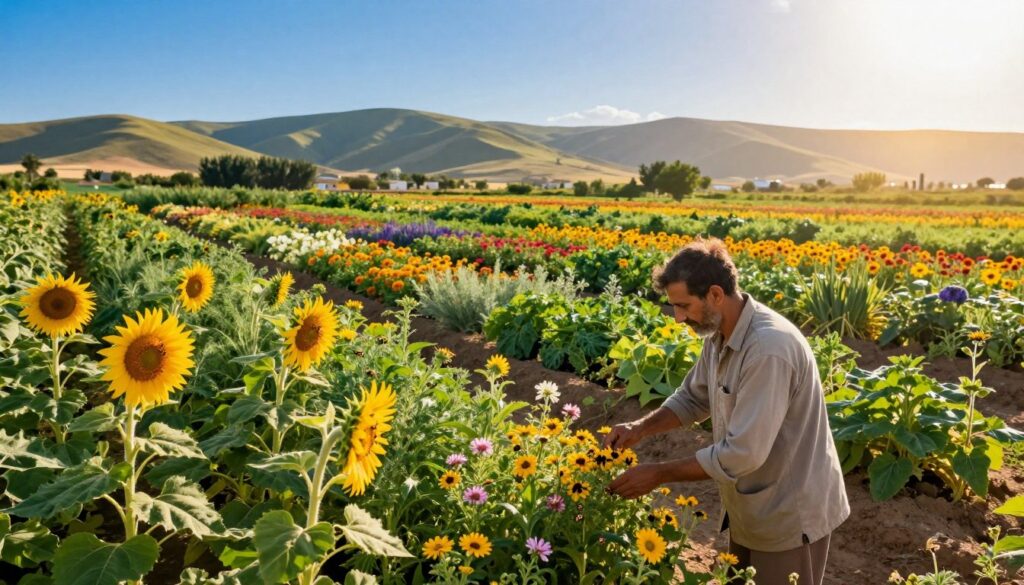
The results read like an investor’s dream. Average net income jumped 121% per surface area. Let me repeat that for emphasis: more than doubled. This farming success story wasn’t built on subsidies or guilt. It was built on superior ecological engineering.
Here’s how the magic happens. Those habitat plants attracted a diverse army of wild pollinators. Better pollination meant better fruit set and higher yields in the main crops. But the benefits didn’t stop there.
More beneficial insects naturally moved in. Pest populations dropped. Farmers spent less on chemical interventions. The system began self-regulating. Suddenly, agricultural profitability wasn’t just about output volume. It was about input efficiency.
The real genius emerged during crop failure. When bad weather decimated a primary harvest, those habitat plants became a financial airbag. They were marketable. They generated income anyway. This is risk mitigation at its most elegant.
Think of it as a biological hedge fund. You’re diversifying your portfolio across multiple species and revenue streams. One crop might fail, but the entire system remains profitable. This challenges the core assumption of industrial agriculture.
We’ve been taught that productivity and ecology are locked in a zero-sum game. More bees must mean less wheat. The Moroccan data screams otherwise. Higher biodiversity correlated directly with higher bank balances.
This blueprint is replicable. It doesn’t require exotic technology or massive capital. It requires a shift in perspective. From monoculture to polyculture. From chemical warfare to biological harmony. From vulnerability to resilience.
Similar patterns emerge closer to home. Consider the experience of a California almond grower who integrated habitat. Her story echoes the same principles: diversified plantings support pollinators, which boost yields, which boost profits.
The lesson is clear. Pollinator-friendly farming isn’t a charitable cost. It’s a competitive advantage. It’s a risk mitigation strategy. Most importantly, it’s a proven path to genuine agricultural profitability.
These farming success stories offer more than inspiration. They offer a blueprint. One where financial resilience and ecological health aren’t competing goals. They’re the same goal. The spreadsheet and the ecosystem finally agree.
Market Connection
Let’s get down to business. Does building a bug hotel really pay off? Forget the green image. It’s all about the numbers.
First, ditch the expensive beekeepers. Your local pollinators work for free, all day, every day. They save you money on labor costs.
Second, quality produce sells well. Pollinators boost yields and make fruits and veggies bigger and better. This means you can charge more for your products.
The sustainable agriculture market is growing. It values honesty and caring for the environment. Companies like All Native Seed and Botanical Interests are key players. They offer native seeds that make your land more productive and easy to care for.
Calling this eco-friendly farming is old news. It’s just smart, forward-thinking farming. It’s about making money while protecting the environment. The link between a buzzing field and a strong profit is clear. The market has spoken, and insects are the winners.