We’re facing a paradox: we have lots of data on global water scarcity but waste water in our fields. The World Health Organization says nearly 40% of people face water shortages every day.
This isn’t about cutting back on water. It’s about using applied intelligence in farming.
Imagine moving from a leaky bucket to a precise pipette. The old way of thinking about water was outdated, like a dial-up modem.
The new approach uses smart tech and market forces. It’s about being precise with water, not just saving it. The best crops come from using water wisely.
Drip vs. Overhead
The debate between drip and overhead irrigation is more than just about the equipment. It’s about precision versus broadcast. Drip irrigation whispers to the roots, while overhead irrigation shouts at the clouds. Understanding this difference is key to irrigation efficiency.
Imagine the overhead sprinkler on a windy day. It’s like a show, wasting water in the air. It waters everything, including your car and the neighbor’s cat.
Drip irrigation, on the other hand, is quiet and efficient. It delivers water directly to the roots. It’s like sending a secret message, not broadcasting to everyone.
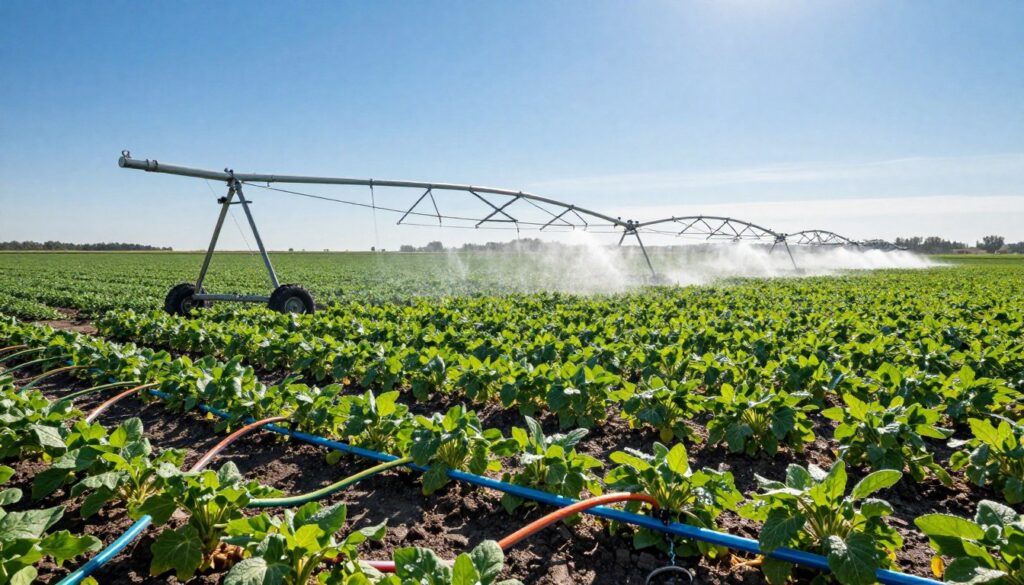
There’s a big difference between precision irrigation and smart irrigation. Precision irrigation uses tools like drip tape to deliver water accurately. It’s like using a scalpel instead of a machete.
Smart irrigation uses technology like AI and IoT sensors. It decides when and where to water, and how much. It’s like the brain guiding the scalpel.
Together, precision irrigation and smart irrigation create a powerful system. It’s like the brain and nervous system of agriculture. You use less water and avoid guessing about watering.
Let’s look at the benefits. Drip irrigation reduces evaporation and runoff. It saves water and nutrients. Field studies show that switching to drip can save 40-60% of water.
Overhead irrigation still has its uses, like for pasture or turf. The key is knowing when to use each method. A detailed comparison of drip irrigation vs overhead sprinklers shows when each is best.
The goal of irrigation efficiency is to move from guessing to using data. It’s about using tools and data to water plants wisely. This shift is a big step forward for farms and gardens.
This change turns water management into a science. It still lets gardeners use their intuition. The tools and data are there. Now, we just need to use them wisely.
Soil Moisture Sensors
The most honest conversation on your farm is between roots and sensors in the dirt. While you check the weather or calendar, these underground informants gather data. They reveal what the topsoil is hiding.
The earth surface may look dry and desperate. You might think it needs water right away. But sensors a few inches down might show a different story. They find cool, moist soil, a root-level oasis.
This is the heart of farm water conservation. It moves from irrigation as a chore to a strategy. No more watering based on guesses. With sensors, you’re diagnosing.
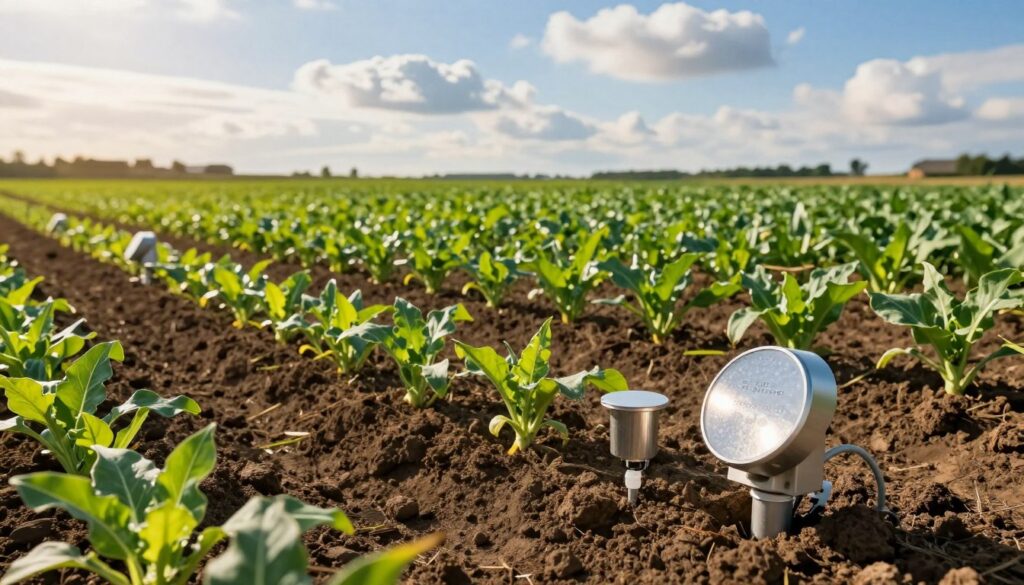
So, how do these digital tools work? They measure soil water content. Some use electrical resistance, others dielectric constants. The tech is complex, but the result is simple: a number. That number tells you when to water and when not to.
The benefits are clear:
- Eliminate Guesswork: Replace “I think it’s dry” with “It has 22% volumetric water content.”
- Prevent Overwatering: The biggest sin in irrigation. Sensors stop you from drowning roots and flushing nutrients.
- Boost Crop Health: Consistent moisture levels reduce plant stress and improve yield quality.
- Slash Costs: Less water pumped means lower energy bills. It’s a direct hit to your operating expenses.
Starting with a few key zones isn’t rocket science. The data will shock you. You’ll find you’ve been overwatering by 20, 30, even 40 percent. That’s money and water wasted.
This granular control is a fundamental shift. It turns your field from a black box into an open book. You’re no longer reacting to visual cues or the day of the week. You’re proactively managing a living system based on its actual needs. This is the essence of the principles of smart irrigation—using data to make every drop count.
In the end, soil moisture sensors are your best defense against waste. They’re the quiet, unassuming heroes of farm water conservation. They don’t make dramatic speeches. They just tell the truth. And in agriculture, as in life, the truth—especially when it’s buried—is what sets you free from costly, outdated habits.
Mulching
While Silicon Valley engineers work on algorithms, farmers have been using mulch for centuries. This isn’t just old advice. It’s a fundamental water conservation technology that’s older than microchips. Think of mulch as the original way to keep water from evaporating.
Here’s how it works. Organic materials like straw or leaves act as a hat for your soil. This hat shields the earth from the sun, reducing evaporation. So, the water your smart irrigation system delivers stays in the soil.
The link to irrigation efficiency is clear. Even with the best drip systems, dry soil is a problem. Mulch keeps the soil cool and moist. This means plants get more water, not just losing it to the air.
Mulch does more than just keep soil moist. It protects the soil structure. This prevents it from becoming hard and dry. Healthy soil absorbs water better, not letting it run off.
This protection is key for natural habitats downstream. Covered soil doesn’t erode, keeping streams clear. It also keeps harmful substances from getting into the water. This helps the whole ecosystem.
Mulch also fights weeds, saving water and effort. As it breaks down, it feeds the soil’s microbes. This creates a cycle of healthier soil and plants.
For more on using mulch, check out our guide on mulching for soil and water conservation. It’s useful for any garden or farm.
Mulch is simple and effective. It doesn’t need fancy tech or a lot of money. It works everywhere, from deserts to humid areas. In our quest for water conservation, mulch is a timeless ally.
Government Incentives
Smart irrigation tech can be pricey. It includes sensors, controllers, and more. This is where smart policy comes in, making sense of the costs.
Government incentives for farm water conservation are strategic. They’re like power-ups in farming. They make eco-friendly choices smart financially.
In Canada, the “Living Labs” approach is a model. It’s not just research. It’s real farms where experts and farmers work together. Programs like the Agricultural Climate Solutions (ACS) initiative offer funding and partnerships.
This approach reduces risk for farmers. They can try new tech without big costs. The government gets solutions that work. It’s a win-win for everyone.
In the U.S., similar programs exist. They come from USDA, state departments, and local water districts. It’s important to know what’s available.
| Program Type | Key Features | Typical Funding Range | Best For |
|---|---|---|---|
| Conservation Grants | Direct funding for specific projects, often competitive application process | $5,000 – $50,000+ | Pilot projects, innovative technology trials |
| Cost-Share Programs | Government pays percentage (often 50-75%) of eligible costs | Varies by project scale | Infrastructure upgrades like drip systems or moisture sensors |
| Tax Credits & Deductions | Reduces tax liability for conservation investments | 25-50% of investment value | Larger capital investments with clear ROI |
| Low-Interest Loans | Special financing through agricultural banks or state programs | Full project cost at 1-3% interest | Major system overhauls requiring significant capital |
| Certification Rewards | Premium payments for verified conservation practices | $10-$50 per acre annually | Existing operations adding verification to current practices |
Getting started requires some research. Start with your local NRCS office. They can guide you to programs like EQIP. State departments also offer programs.
The application process can be tough. But the payoff is worth it. It can turn a big expense into a smart investment.
These incentives show that water stewardship matters. They make advanced farm water conservation systems affordable. That moisture sensor network? It’s now a smart investment with government support.
In the end, these programs are more than funding. They show that sustainable agriculture needs partnership. The government offers support, and farmers bring the land and know-how. It’s a smart move for water, crops, and farms for the future.
Farmer Insights
Smart irrigation tech is great, but it’s only as good as the farmer using it. The real test isn’t in spreadsheets. It’s in the less stress for crops and farmers each season.
A study in Choices Magazine highlights this. California avocado growers who worked with cooperative extension were more likely to use soil-moisture monitors. Their experience made data useful for fighting drought.
Living Labs show the value of this approach. They mix sensor data with farmer know-how. This hands-on method proves that irrigation efficiency is a mix of tech and experience.
The lesson is clear. Farms that will do well are those that listen, adjust, and understand. Saving water means investing in a stronger future.