What if everything we’ve been told about cows and climate is wrong? What if the problem isn’t the animal, but how we keep it confined?
For years, we’ve followed the CAFO model. It’s all about efficiency, ignoring soil, water, and animal welfare. This neglect shows in polluted water and barren land.
The alternative isn’t new technology. It’s going back to nature. This is the world of sustainable livestock management, where cows are seen as helpers, not enemies.
Adaptive Multi-Paddock (AMP) grazing is a key method. It’s not just letting cows roam. It’s a dance, like wild herds, where animals thrive.
When done right, the land starts to work with us. It’s the heart of rotational grazing. This approach doesn’t drain the soil; it enriches it.
Manure Management
In the industrial food complex, manure is seen as a problem. But in regenerative agriculture, it’s a treasure. This change in view is more than just a smell difference. It shows two different ways of seeing the world.
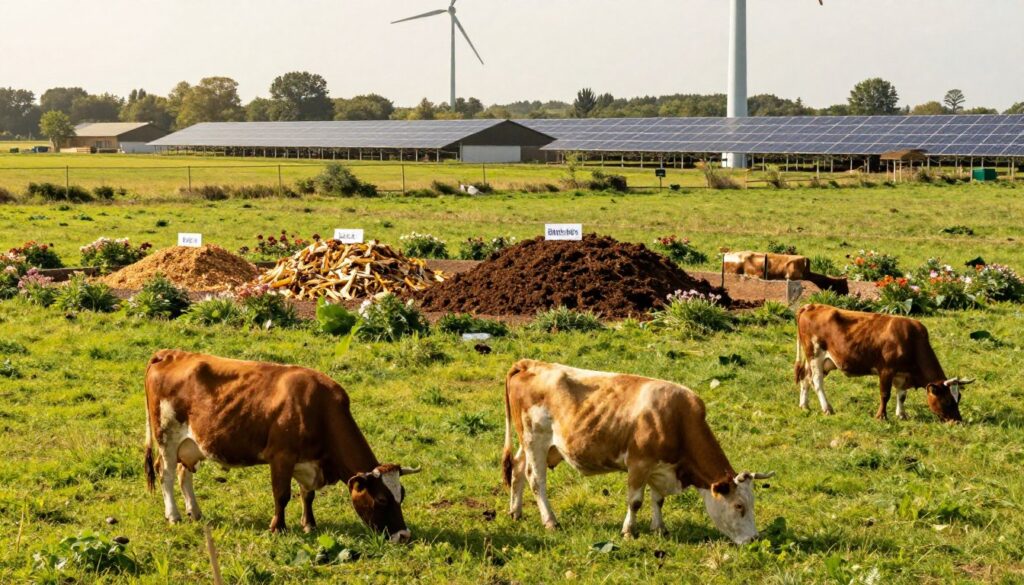
The CAFO model views manure as a big problem. It’s stored in huge, open-air lagoons. When these lagoons get full, the solution is to spray the manure on fields. But the land can’t handle it, causing pollution and harm to rivers.
In regenerative grazing, manure is a valuable resource. It’s the heart of livestock sustainability. Each cow’s waste is like a deposit into the soil’s bank.
Think of it as a slow-release fertilizer and a way to add nutrients to the soil. The animals help spread fertility where it’s needed. This changes the focus from getting rid of waste to placing nutrients where they’re needed.
This isn’t just a dream. It’s based on how nature works. A report on enhancing manure management shows that using animals and their manure is key. It’s a partnership that’s been around for ages.
The difference is huge. It’s like comparing a simple system to a complex one. One creates problems, the other solves them.
| Aspect | CAFO (Concentrated Animal Feeding Operation) | Regenerative Grazing |
|---|---|---|
| Primary View of Manure | A costly waste product and pollutant | A valuable nutrient resource and soil builder |
| Handling & Storage | Centralized lagoons and slurry tanks | Distributed directly on pasture by animals |
| Nutrient Application | Industrial spraying, often in excess | Natural, even distribution at ideal rates |
| Environmental Outcome | Water pollution, air quality issues, emissions | Soil enrichment, carbon sequestration, clean water |
| System Philosophy | Linear (extract, produce, dispose) | Circular (recycle, renew, regenerate) |
This table shows the difference between two systems. The regenerative system is the heart of sustainable livestock management. It shows how to build soil without using chemicals.
The beauty of this system is its simplicity. You don’t need fancy machines or chemicals. Just animals moving across the land. Their manure feeds the soil, and the cycle goes on. It’s a natural way of working, not against nature.
Health and Welfare Practices
The modern CAFO is a paradox. It’s designed to ignore nature but spends billions on its problems. It’s like a factory that keeps catching fire, so it buys more fire trucks.
Stress is the main problem. Animals in small spaces, without their natural behaviors, are stressed. This is basic biology, not just animal rights talk. Stress weakens their immune systems.
The fix? A lot of medicine. Antibiotics and growth hormones are given to prevent sickness and boost growth. It’s like giving animals steroids.
This approach is expensive and creates more problems. It makes animals sick and makes our food unhealthy.
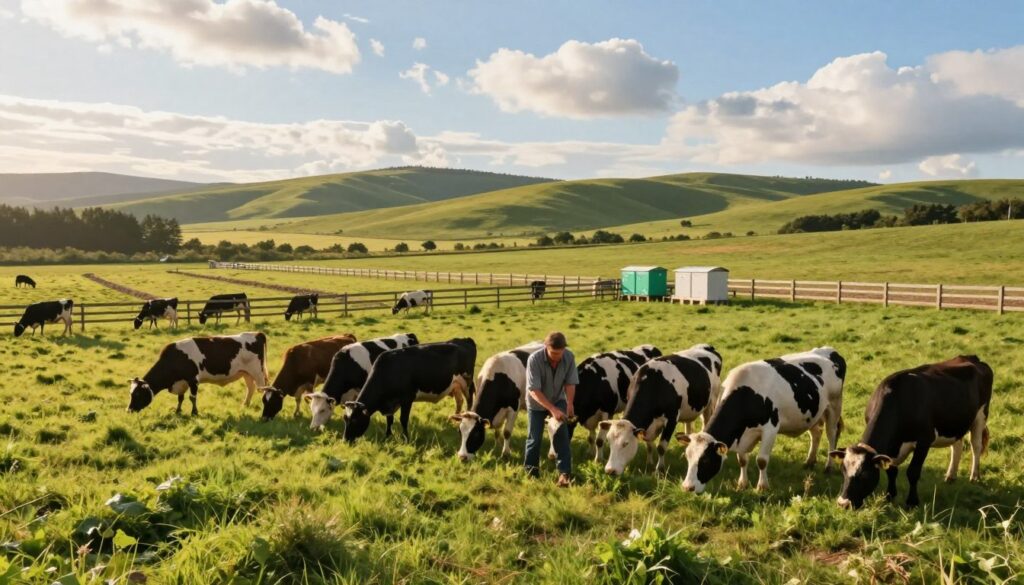
Sustainable livestock management is different. It aims to make disease unnecessary. How? By making the animal’s life match its natural purpose.
Let animals eat diverse foods and move freely. This keeps their gut healthy and their body strong. It also reduces stress, which helps their immune system.
This approach makes animals healthier. They don’t need as much medicine. Farmers become caretakers, helping animals stay well.
Welfare and health are the same for animals. A good system supports both. It’s about treating animals right.
Today, people want to know where their food comes from. They know that stressed animals make unhealthy meat. This is important for them.
The difference between old and new farming is clear. See the table below for a comparison.
| Health Factor | CAFO (Confinement) Model | Sustainable Management Model |
|---|---|---|
| Diet Foundation | Artificial, grain-based ration designed for rapid weight gain. | Natural, diverse forage from rotated pastures. |
| Immune System Support | Relies on prophylactic antibiotics to prevent disease in crowded conditions. | Built through natural diet, movement, low stress, and sunlight exposure. |
| Growth Regulation | Often accelerated using synthetic growth hormones. | Governed by natural pacing and seasonal grazing patterns. |
| Behavioral Expression | Suppressed. Confinement denies grazing, roaming, and social structures. | Encouraged. Animals graze, roam, rest, and interact naturally. |
| End Product | Meat from a pharmacologically managed system. | Meat from a biologically aligned system. |
Switching to sustainable livestock management is a step forward. It’s about understanding and caring for the whole system. The animal’s well-being is key.
When farmers say animals thrive, they mean it. Thriving means they’re strong and healthy. It means no need for medicine and a healthy environment.
Managing animals sustainably is the best care. It stops problems before they start. It’s a smarter, simpler way to farm.
Market Benefits (Grass-Fed, Organic)
Does doing good pay off? The answer is yes. We’ve moved from just talking about it to making it worth it. Sustainable farming is now a business with a high value.
Think of it like carbon credits. Ranchers like Fernando Mendez at Marview Farms earn money for the carbon their land absorbs. It’s a win-win, where profit comes from helping the planet. Certifications like Regenerative Organic Certified® open doors to customers who care about what they buy.
Green feed meets green tech here. Tools from Agheiro track health and traceability. This builds trust and value in the meat.
The market wants less but better meat, research shows. Brands like Circle J Meats connect people to the land and the story. It’s not just meat; it’s integrity.
The future of meat is a story. It’s about the soil, the animals, and being open about how we farm. Tell it right, and people will listen.