The 2026 U.S. crop outlook is becoming increasingly regional as record heat collides with uneven soil moisture across major agricultural areas. July delivered the hottest month ever recorded for the contiguous United States, with a national average temperature of 76.89°F, surpassing the previous July record set during the 1930s Dust Bowl. Every contiguous state finished at least 1°F above its 20th-century average.
The heat arrives at a sensitive point in the growing season. Corn is moving through grain development, soybeans are entering pod-setting and filling stages, and farmers across the Corn Belt are watching soil moisture closely. The result is an agricultural picture that looks strong in some areas and increasingly stressed in others.
That split matters for the 2026 harvest. National crop ratings can provide a broad measure of conditions, but they do not capture every difference between heavy soils in Iowa, lighter soils in Nebraska, irrigated fields in the Plains, or rain-fed farms farther east.
The USDA’s weekly crop reports, the U.S. Drought Monitor, NOAA climate data and field-level observations are now becoming increasingly important for determining whether current yield expectations can hold through harvest.
Record Heat Arrives During A Critical Growing Window
July’s national heat record changed the background for the remainder of the summer growing season.
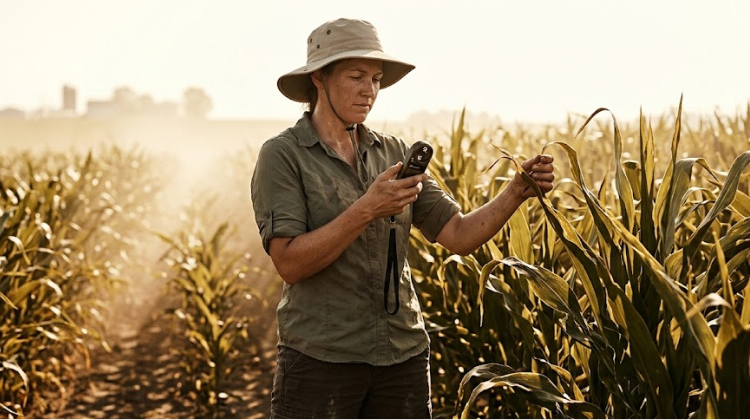
NOAA’s National Centers for Environmental Information reported that the contiguous United States averaged 76.89°F during July 2026, making it the warmest month in the national record dating to 1895. The previous July record was established in 1936, during the Dust Bowl era.
The unusual feature was not limited to daytime temperatures. Extremely warm overnight conditions contributed heavily to the record. The national average minimum temperature for July was also the highest recorded for any month, according to NOAA’s assessment.
For agriculture, nighttime temperatures matter. Plants use the overnight period to recover from daytime heat, and warmer nights can increase respiration and maintain higher levels of plant stress.
The effect varies by crop and location. A field with deep soil moisture may tolerate several hot days better than a field already operating with limited available water. Rainfall timing can be just as significant as total rainfall.
The NOAA climate data provide the temperature and precipitation records needed to compare current conditions with historical agricultural weather patterns.
That historical comparison is becoming particularly relevant in 2026 because the heat has been widespread rather than confined to a single growing region.
Corn Enters A Yield-Sensitive Phase
Corn is now far enough into development that weather conditions have a direct relationship with final yield potential.
The latest USDA crop-progress reporting has shown corn moving through silking, dough and dent stages at varying rates across the country. This matters because kernel development continues after pollination, and heat and moisture availability can influence the amount of grain ultimately harvested.
The USDA’s June production report already documented significant regional differences in crop conditions. At the end of May, 67% of the nation’s corn was rated good to excellent, while 66% of soybeans received the same combined rating. The report also highlighted short-term dryness in the upper Midwest.
Conditions have changed considerably since those early-season measurements.
For corn producers, the key question is whether available moisture can carry crops through the final stages of grain development. Fields with deeper roots and stronger water reserves may retain more yield potential than fields exposed to repeated moisture deficits.
The issue is especially relevant across areas of the western Corn Belt, where rainfall patterns can be more variable and irrigation availability differs substantially between farms.
The USDA’s Crop Progress reports provide weekly information on crop development and condition across major producing states.
Soybeans Have More Time But Face Their Own Risks
Soybeans present a different production equation.
The crop can continue adding reproductive structures through much of August, which means rainfall arriving later in the season can still influence yield. That flexibility gives soybeans some ability to recover from short periods of stress.
It does not eliminate the risk created by persistent heat and depleted soil moisture.
Soybean plants require sufficient water during flowering, pod formation and seed development. Prolonged stress can reduce the number of pods that reach maturity and limit seed size.
The acreage picture adds another factor. USDA’s June Acreage report estimated 85.4 million soybean acres planted in 2026, an increase of 5% from 2025. Corn acreage was estimated at 95.3 million acres, down 3%.
That means soybean production has a larger planted-acre base this year, giving the market more potential supply if yields remain strong. Corn has less acreage available to compensate for disappointing yields.
The USDA 2026 Acreage report provides the official state-by-state acreage estimates behind these national figures.
Midwest Conditions Are Far From Uniform
The phrase “Corn Belt weather” can make the region sound like a single agricultural environment. It is not.
Iowa, Illinois, Indiana, Minnesota, Nebraska, Ohio and South Dakota have different soils, rainfall patterns, planting dates, drainage characteristics and irrigation infrastructure.
A thunderstorm that delivers several inches of rain to one county can leave a nearby area with little measurable precipitation.
This variation becomes more significant during periods of extreme heat.
Fields with high organic matter and strong water-holding capacity can sometimes maintain crop function longer during dry periods. Fields with shallow soils or limited water reserves can reach stress conditions sooner.
The same distinction applies to irrigation. Irrigated operations may have more options for protecting yield during extended dry periods, although groundwater availability, pumping costs and water regulations can limit how much irrigation can actually be applied.
That means a national yield forecast should be treated as an average rather than a prediction for every farm.
Soil Moisture Creates A Sharper Regional Divide
Heat alone does not determine whether a crop will suffer significant damage. Soil moisture is the other half of the equation.
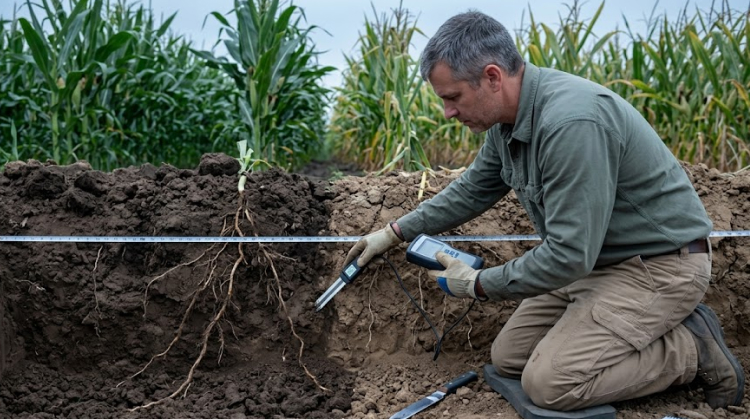
When adequate water remains available in the root zone, plants can continue transpiring and maintain leaf function during hot conditions. When soil moisture becomes limited, the same air temperature can produce much greater crop stress.
The U.S. Drought Monitor tracks these differences using precipitation, soil moisture, streamflow, groundwater, vegetation health and other indicators. Drought.gov describes soil moisture as a key component of agricultural monitoring and drought forecasting.
This creates a divided agricultural picture across the United States.
Some farms have benefited from timely thunderstorms that replenished moisture during important reproductive stages. Other areas have experienced persistent dryness or rainfall that has been too irregular to rebuild deeper soil reserves.
| Factor | Potential Crop Effect |
|---|---|
| High temperatures with adequate soil moisture | Greater stress but potentially limited yield impact |
| High temperatures with depleted soil moisture | Higher risk of leaf stress and reduced grain or pod development |
| Timely rainfall during reproductive stages | Can stabilize yield potential |
| Extended hot, dry period | Greater risk of reduced kernel weight or pod development |
| Cooler temperatures after rainfall | Can reduce short-term heat stress |
The difference between these scenarios is why national crop averages can sometimes conceal meaningful farm-level risk.
The Drought.gov agriculture resources provide maps and monitoring information connecting drought conditions with agricultural impacts.
July Heat Also Changes Farm Water Demand
Extreme heat can increase the rate at which crops consume available water.
Evapotranspiration rises as temperatures increase, creating greater demand from both crops and the atmosphere. If rainfall does not keep pace, soil moisture can decline faster than it would under more moderate temperatures.
That process can turn a short dry spell into a more meaningful agricultural problem.
The effect is particularly important for fields entering reproductive development. Corn and soybeans are drawing substantial resources from the soil at the same time that farmers are facing increased atmospheric demand.
The USDA Weekly Weather and Crop Bulletin tracks weather conditions, precipitation, temperatures and crop developments across the country, providing another layer of information for evaluating regional production conditions.
Farmers can respond through irrigation, residue management, soil-moisture monitoring and adjustments to future planting strategies. Those responses can reduce risk, but they cannot eliminate the effect of prolonged weather extremes.
Drought Monitoring Becomes More Important After A Record July
The combination of record heat and uneven rainfall makes drought monitoring more relevant for agricultural decisions.
Drought is not defined simply by a lack of rain. Soil moisture, groundwater, streamflow, vegetation health and longer-term precipitation deficits all contribute to the classification.
That distinction matters for farmers because agricultural drought can develop even when a region has received occasional rainfall.
A field may receive a storm that improves surface moisture without fully restoring deeper soil reserves. Another farm may receive repeated moderate rainfall that maintains root-zone moisture despite below-normal monthly precipitation.
The U.S. Drought Monitor’s regional assessments therefore provide useful context for interpreting crop conditions. Drought.gov recently hosted an August 6 Midwest drought webinar focused on conditions, outlooks and resources for stakeholders in the region.
The timing reflects how quickly conditions can change during the peak summer growing period.
Precision Agriculture Gives Farmers A Closer View
The national weather and USDA reports provide essential information, but farmers increasingly need field-level measurements.
Satellite imagery can identify vegetation changes. Soil-moisture probes can show conditions at different depths. Weather stations can measure temperature, humidity and rainfall at individual farm locations. Drone imagery can identify stress patterns that may be difficult to see from the road.
Agheiro’s coverage of precision farming technology provides a natural connection between these tools and the current weather-driven crop outlook.
The value of field-level monitoring increases during uneven weather. A farmer cannot manage a field based solely on a national average temperature or statewide crop rating.
A satellite image showing declining vegetation health in one section of a field can trigger additional scouting. A soil probe can show whether the problem is limited to the surface or extends deeper into the root zone.
This information can support irrigation scheduling, crop scouting and harvest planning.
Grain Markets Must Separate Heat Risk From Actual Production Losses
The agricultural market is now dealing with two different questions.
The first is whether extreme heat and dry soils are reducing yield potential. The second is whether those risks are already reflected in grain prices.
Those questions do not always produce the same answer.
If crop conditions remain strong across enough major producing areas, traders may view regional stress as manageable. If deteriorating conditions become widespread, expectations for national production can change.
Corn faces a particularly interesting supply calculation in 2026 because planted acreage is already lower than last year. A meaningful yield reduction would have a larger effect on production than it would in a year with substantially more planted acres.
Soybeans have more planted acreage, giving the crop a larger acreage base. Yet stronger acreage does not guarantee a larger harvest if late-season heat and moisture shortages reduce yields.
The USDA National Agricultural Statistics Service will continue supplying the production, acreage and crop-condition data that markets use to update those calculations.
The 2026 Crop Outlook Is Becoming More Regional
The defining feature of the 2026 agricultural outlook may be the growing gap between regions rather than a single national crop trend.
Record heat has raised the baseline level of weather stress. Dry soils increase the vulnerability of crops that lack sufficient root-zone moisture. Timely rainfall can offset some of that pressure, creating fields that remain productive even when nearby areas struggle.
This makes the next several weeks especially significant.
Corn is moving through grain development, soybean plants are still establishing pods and farmers are watching whether late-summer rainfall can stabilize soil moisture. At the same time, national crop reports continue to provide updated measurements of conditions and development.
July’s record national temperature does not automatically mean a poor harvest. The agricultural impact depends on where the heat occurred, how long it lasted, how much moisture was available and whether rainfall arrived at the right time.
The 2026 crop outlook is consequently becoming less about a single national number and more about the distribution of productive conditions across individual states, watersheds and farms.
For producers, that means field-level information is becoming increasingly valuable. For grain markets, it means national production estimates need to be read alongside regional weather and soil-moisture data.
The harvest will ultimately provide the final measurement. Until then, the combination of record heat, uneven rainfall and changing soil moisture will remain one of the most important variables shaping U.S. agricultural production through the remainder of the 2026 growing season.