Corn and soybean fields across the Midwest entered August with much of the 2026 crop already well into reproductive development, but the weather pattern has introduced a new variable into yield expectations. Heat, uneven rainfall, and increasing drought pressure across parts of the Corn Belt are forcing producers and analysts to evaluate whether strong early-season crop development can translate into equally strong yields at harvest.
The U.S. Department of Agriculture’s June Acreage report estimated 95.3 million acres of corn planted in 2026, down 3% from 2025, while soybean acreage reached an estimated 85.4 million acres, up 5%. Corn harvested for grain was projected at 87.4 million acres, 4% below the previous year.
Those acreage changes already altered the production equation before the summer heat arrived. Weather now has greater influence over the final outcome because yield potential depends on how successfully crops complete pollination, grain filling, pod development, and seed formation.
Heat Pressure Builds Across The Corn Belt
The National Weather Service Climate Prediction Center identified elevated heat and drought risks across parts of the Great Plains and Corn Belt as August began. Its late-July outlook warned that antecedent dryness, above-normal temperatures, and below-normal precipitation could increase the risk of rapid-onset drought across portions of the region.
The concern is less about one hot afternoon than the combination of heat and insufficient soil moisture over several days. Corn has high water requirements during reproductive development, and moisture stress during pollination can affect kernel formation. Soybeans face a different set of risks as flowering and pod development progress.
Weather conditions are highly uneven across the Midwest. Illinois, Iowa, Indiana, Minnesota, Nebraska, and the Dakotas can experience very different rainfall patterns during the same week. A storm that provides meaningful moisture to one county may leave another field dry only a few miles away.
The NOAA Climate Prediction Center outlook highlighted a slight risk of extreme heat extending into portions of the Middle and Upper Mississippi Valleys, Ohio Valley, Great Lakes, Mid-Atlantic, and Northeast during August 5–6. The same outlook identified increased rapid-onset drought risk across parts of the Great Plains and Corn Belt.
That combination is significant for agricultural markets because yield losses do not need to occur uniformly across the region to influence production expectations.
Crop Development Remains Ahead In Several Regions
The 2026 crop entered the summer with relatively advanced development in several major producing states.
A late-July USDA Crop Progress report showed 78% of the national corn crop had reached the silking stage, compared with 73% at the same point a year earlier and a five-year average of 74%. About 25% had reached the dough stage, compared with 24% in the previous year and 22% for the five-year average.
That faster development can be beneficial when moisture remains adequate. Earlier development can allow plants to progress through vulnerable stages before later-season weather deteriorates. It can become a problem when accelerated crop development coincides with heat and declining soil moisture.
Illinois provides a useful example of how rapidly conditions can change. Illinois Extension reported that heavy June rainfall left some fields saturated, while warmer conditions later supported strong crop recovery in areas that were not severely waterlogged. Researchers noted that prolonged waterlogging can damage roots and restrict nutrient uptake, creating another layer of variability in final yield potential.
The result is a highly uneven production environment. A field with deep soil moisture can tolerate several hot days more effectively than a field entering August with depleted reserves.
Soil Moisture Is Becoming A Bigger Yield Variable
Soil moisture is one of the most important indicators for determining how much heat a crop can tolerate.
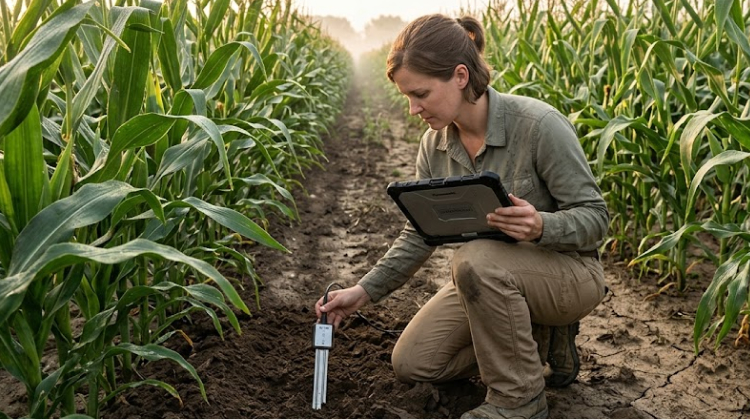
A field with adequate moisture can support evapotranspiration, allowing plants to release water and moderate leaf temperatures. When available water declines, plants reduce transpiration and begin conserving moisture. Extended stress can interfere with photosynthesis and reproductive development.
The USDA Crop Progress and Condition data provide weekly information that helps analysts compare crop development and condition across major producing states. USDA also maintains gridded crop-progress datasets that provide geographic representations of corn and soybean progress and condition.
This geographic approach matters more as weather becomes uneven. National averages can hide significant differences between states and even between neighboring counties.
Iowa remains one of the most important indicators for the national corn and soybean outlook. USDA’s 2026 Iowa agriculture overview lists approximately 13 million acres of corn planted and 10 million acres of soybeans planted. The state therefore represents a substantial share of the national production base.
Indiana provides another major production center, with USDA reporting approximately 5.35 million planted corn acres and 5.6 million planted soybean acres for 2026.
The significance of these figures extends beyond state boundaries. Yield deterioration across several major producing states could reduce national production even if other areas continue performing near expectations.
Soybeans Face A Different Set Of Weather Risks
Soybeans respond differently to August weather because reproductive development continues later in the season.
The crop’s pod-setting period can extend through August, making moisture availability important even after corn has progressed further into grain formation. Heat stress can reduce flower retention and interfere with pod development if plants face sustained moisture shortages.
The increase in soybean acreage makes this particularly relevant for 2026. USDA estimated soybean planted area at 85.4 million acres, 5% above 2025.
A larger planted area can partially offset lower yields, but the relationship is not linear. If weather reduces yield per acre across a large portion of the Midwest, the additional planted acreage may not fully compensate for production losses.
This is why the market will focus heavily on yield estimates rather than acreage alone.
Acreage Changes Make Weather More Important For Grain Markets
The 2026 acreage mix already created a different supply structure before the August heat concerns emerged.
USDA’s June report showed corn acreage declining while soybean acreage increased. Corn planted area fell to 95.3 million acres, while soybean area reached 85.4 million acres.
| Crop | 2025 Acreage | 2026 Acreage | Year-Over-Year Change |
|---|---|---|---|
| Corn | 98.7 million acres | 95.3 million acres | -3% |
| Soybeans | 81.2 million acres | 85.4 million acres | +5% |
That shift means the market has less room for a major corn yield disappointment if demand remains firm.
The broader grain market is already sensitive to weather developments. The UN Food and Agriculture Organization reported that its food price index reached 131.1 points in July, the highest level since January 2023. Cereal prices increased 3.4% from June, with maize prices rising 3.6% amid concerns about U.S. drought conditions.
The weather premium can therefore develop before harvest data confirms an actual production decline.
Corn Faces A Narrower Window During Reproductive Growth
Corn’s yield potential becomes particularly sensitive to weather as plants move through pollination and early grain development.
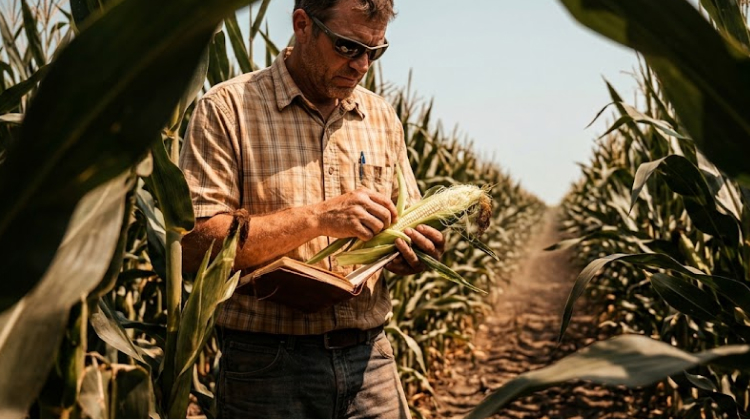
High temperatures increase crop water demand. When heat arrives with sufficient moisture, corn can continue developing at a strong pace. When the same temperatures occur alongside dry soils, plants can experience greater stress.
This creates an important distinction between heat alone and heat combined with moisture shortages.
The late-July federal weather outlook identified increasing rapid-onset drought risk across portions of the Corn Belt after periods of below-normal rainfall and elevated evapotranspiration.
Corn farmers therefore have several variables to monitor at the field level:
- Soil moisture at different depths
- Tasseling and silking progress
- Kernel development
- Leaf condition
- Local rainfall totals
- Short-term temperature forecasts
The USDA National Agricultural Statistics Service will provide another important data point with its August Crop Production report scheduled for August 12. The August report is expected to become a major reference for the market because it incorporates updated production estimates as the growing season moves deeper into reproductive development.
Until that report is released, current weather and crop-condition information should be viewed as indicators of risk rather than final evidence of national yield losses.
Regional Differences Will Shape The Final Yield Picture
The Corn Belt should not be treated as a single weather system.
Iowa, Illinois, Indiana, Minnesota, Nebraska, South Dakota, and Wisconsin each have different soil profiles, planting dates, rainfall histories, and crop development patterns.
Drought conditions can intensify in one section while excessive rainfall affects another. This was already visible earlier in the season. A June Midwest drought assessment found that 13% of the region was experiencing moderate to extreme drought, while large areas of Illinois, Indiana, Iowa, and surrounding states had substantial moisture surpluses.
That contrast demonstrates why national yield estimates require field-level information.
Illinois had substantial moisture during parts of June, while areas farther north and west experienced different precipitation patterns. Later heat can change the balance quickly, particularly when soil moisture reserves are already uneven.
The Midwest drought monitoring data show how soil moisture, precipitation, and drought classifications can vary significantly across the same agricultural region.
Precision Monitoring Becomes More Valuable During Heat Stress
Weather volatility increases the value of field-level monitoring.
Farmers using soil-moisture sensors, satellite imagery, weather stations, drone imagery, and crop scouting can identify differences that are difficult to detect from county or state averages.
A national crop rating may show stable conditions even as individual fields experience significant stress. Precision monitoring allows producers to identify those areas earlier and adjust irrigation, nutrient management, or harvest planning.
Agheiro’s coverage of precision agriculture data examined the growing role of agricultural data systems in production decisions.
The 2026 heat pattern provides another example of why agricultural data needs to operate at a local scale. Two farms in the same county can have different soil types, planting dates, drainage characteristics, and moisture reserves.
Technology does not eliminate weather risk. It gives farmers better information about where that risk is developing.
August Weather Will Determine How Much Yield Potential Survives
The next several weeks will be decisive for the 2026 corn and soybean crop.
The Climate Prediction Center’s August outlook was issued against a backdrop of El Niño conditions, with sea-surface temperatures in the Niño 3.4 region reported at 1.3 degrees Celsius above normal in mid-July. The outlook also highlighted the potential for changing precipitation and temperature patterns during August.
For farmers, the central issue is not whether every field experiences extreme heat. It is whether heat arrives repeatedly in areas where soil moisture is already limited.
Corn acreage is lower than last year, soybean acreage is higher, and both crops are entering development stages where weather can alter final yield potential. That combination gives the August USDA reports greater importance for grain markets.
The next USDA production estimates will provide a more formal assessment of yield prospects, but field conditions will continue changing between reports. Rainfall distribution, temperature extremes, soil moisture, and crop development will determine whether current concerns become measurable production losses or remain short-term weather pressure.
For now, the 2026 Corn Belt crop remains a story of strong development colliding with increasingly uneven weather conditions. The final production picture will depend less on the heat of a single week than on whether Midwestern fields receive enough moisture to carry corn through grain development and soybeans through pod formation.