As of October 18, 2026, diesel farm margins remain under pressure from fuel prices that rose sharply before and during the 2026 harvest period. The clearest signal came in mid-September 2026, when the U.S. national average diesel price reached $6.29 per gallon, up 68% from about $3.74 per gallon one year earlier, according to MarketScreener reporting.
For growers, that price increase did not land as a single line item. It moved through field operations, harvest timing, grain hauling, produce shipping, machinery use, and cash-flow planning. Fuel is not the largest cost on every farm, but harvest is one of the least flexible periods in the production calendar. When crops are ready, farmers often have limited room to delay machine hours simply because diesel is expensive.
Why Diesel Farm Margins Tightened In 2026
Diesel Farm Margins At The Machine Level
The machine-level math explains why the 2026 diesel price shock is so difficult to absorb. Research notes from the 2026 harvest period show that one combine can use about 300 gallons of diesel per day during peak harvest. At elevated fuel prices, a South Dakota farmer expected to spend as much as $1,500 per day just to fuel that machine, roughly double the fuel cost from the same period in 2025.
That example is not a national average, and it should not be treated as a universal farm budget. Still, it shows the direction of pressure. Diesel use is tied directly to the work that has to happen: harvesting, moving grain, running support equipment, and positioning trucks or wagons. Unlike some overhead costs, harvest fuel spending rises with daily field activity.
Regional differences made the pressure uneven. In some areas, especially California, diesel prices exceeded $8.00 per gallon. That matters for farms with high transportation exposure, specialty crop logistics, or long distances between fields, packing points, processors, or buyers.
Input Forecasts Were Overtaken By Actual Prices
University of Illinois farmdoc analysis showed that 2026 diesel input costs rose 79.8% relative to expected fall projected prices. The same analysis found that, for non-irrigated corn in McLean County, Illinois, costs were about 42% above projected levels, while soybean costs were about 33% higher, based on farmdoc margin coverage data.
Those figures point to a wider issue: the budget that looked workable earlier in the year may not have matched the cost structure farmers faced by harvest. For diesel farm margins, the problem is not only the price per gallon. It is the gap between planned expense and actual expense after planting, spraying, harvest, drying, and hauling decisions have already been set in motion.
Where Costs Hit The Harvest Budget
Field Fuel And Hauling Costs
Fuel affects harvest in several connected ways. The combine is the most visible machine, but it is not the only consumer of diesel. Trucks, tractors, grain carts, dryers linked to harvest logistics, and other machinery-related operations can all be exposed to higher fuel prices. Research notes indicate that fuel, including diesel and diesel-related operations such as hauling, drying, and machinery, typically represents 3% to 5% of production costs for major U.S. crops such as corn, soybeans, and wheat. When diesel prices spike, that share rises.
The increase can be especially hard for farms with tight margins before harvest begins. If grain prices, yields, or local basis do not offset higher fuel expense, the extra diesel cost reduces working capital. Some farmers have responded by cutting non-fuel expenses and tightening budgets, but harvest fuel is not fully avoidable once a crop needs to be removed from the field.
Transportation Extends The Pressure Beyond The Field
The diesel problem does not stop at the field edge. Produce shipping from California rose 40% to 120% year over year, and refrigerated trucking out of Washington State reached a four-year high. These increases are relevant because farm margins are shaped by both production costs and the cost of moving products to market.
For grain farms, the effect may appear through trucking to elevators, processors, or on-farm storage decisions. For produce growers, fuel-sensitive freight can be a larger share of the marketing cost. In both cases, higher diesel prices can weaken the link between gross revenue and net return.
Agheiro has tracked the same pressure in related coverage of record diesel prices, with attention to how harvest timing makes fuel exposure difficult to avoid.
Sustainable Farming Choices Under Fuel Pressure
Efficiency Is Useful, But It Has Limits
High diesel prices often push farmers to review machinery passes, hauling routes, storage choices, and harvest schedules. That review can support sustainable farming goals when it reduces unnecessary fuel use, soil disturbance, or duplicated fieldwork. Still, the 2026 situation calls for caution. Not every fuel-saving idea is practical during harvest, and not every farm has the same equipment, labor, crop mix, or storage access.
For diesel farm margins, the most defensible approach is to separate controllable fuel use from unavoidable harvest work. A farm may be able to reduce idle time, plan field order more carefully, or coordinate trucks with less waiting. It may not be able to postpone harvest without creating crop quality or weather risk. The research available here supports the existence of severe fuel cost pressure; it does not support claims that any single practice can fully offset the increase.
Sustainable decisions also need to account for cash flow. A farmer may want to adopt lower-fuel practices, but high input costs can delay equipment changes or conservation investments. This is one reason community-level strategies matter. Shared planning, cooperative hauling, local repair capacity, and clear communication with buyers can help farms reduce waste without assuming that every operation has the same capital base.
- Track diesel use by operation rather than only by farm total, so harvest costs can be compared with planting and hauling costs.
- Review field sequence and hauling distance before harvest days begin, especially where fuel prices are highest.
- Separate short-term budget cuts from long-term soil and machinery decisions, since rushed savings can create later costs.
Community Decisions For A Costly Harvest
Local Coordination Can Reduce Waste
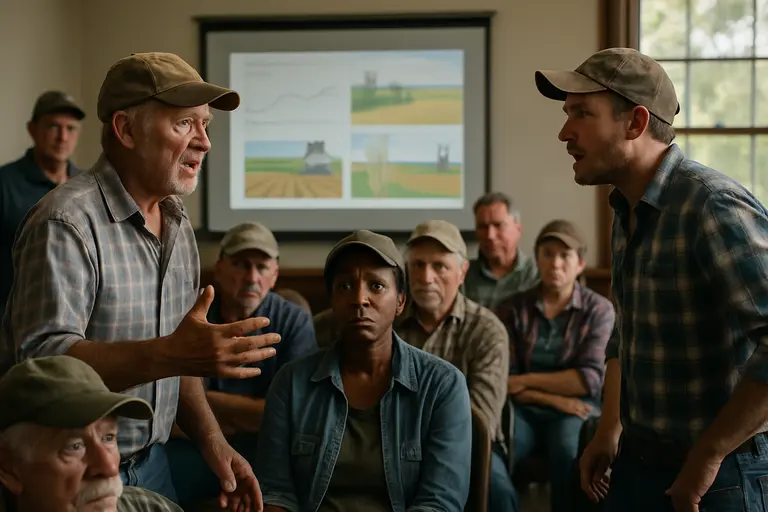
Farm communities cannot set national diesel prices, but they can reduce some friction around harvest logistics. Grain delivery timing, equipment repair access, local storage constraints, and truck availability all affect how much fuel is burned while waiting, backtracking, or making repeated trips. These are practical management questions rather than claims of guaranteed savings.
Community institutions also matter because fuel pressure does not stay on the farm balance sheet. Higher transport and production costs can affect food supply chains, local businesses, and rural households. For readers interested in discovering local community support, Bethel NC UMC is a related site in the same network, offering connections beyond farm market data.
The most useful community response is fact-based and modest: share timely information, avoid overstating what any single farm can control, and recognize that smaller operations may have less room to absorb daily fuel bills. Record diesel prices can make cooperation more valuable, but they do not remove the need for careful farm-level budgeting.
Diesel Farm Margins During Harvest Season
The 2026 harvest fuel shock shows how quickly input markets can change the economics of an otherwise planned production year. Diesel at $6.29 per gallon nationally in mid-September, with some regional prices above $8.00, created a cost environment that many budgets were not built to absorb.
The clearest lesson for diesel farm margins is that fuel risk deserves the same careful attention as seed, fertilizer, land, and machinery costs. Diesel may be a smaller share of total production expense in normal periods, but harvest concentrates fuel demand into a narrow window. When prices rise sharply, that timing can turn fuel from a routine operating cost into a direct margin threat.
For sustainable farming, the answer is not simply to cut spending wherever possible. A better path is disciplined fuel tracking, practical logistics planning, and community coordination where it fits local conditions. The evidence supports a cautious view: 2026 diesel costs have squeezed farm margins, but the size of the impact depends on crop, region, machinery use, transport distance, and how much of the budget was already committed before prices peaked.