Disease Resistant Crops are gaining attention because wheat and cotton breeders are under pressure to reduce losses from fungal and bacterial pathogens without leaning only on chemical control. Recent wheat and cotton research through mid-2026 points to real progress: new germplasm, stronger DNA markers, and field-tested resistance traits. The evidence is promising, but it also shows why disease resistance must be judged over years, locations, pathogen races, and agronomic performance.
Disease Resistant Crops In Wheat And Cotton Breeding
Why Disease Resistant Crops Still Need Field Proof
Breeding for resistance is not a single-step fix. A line can look strong in a greenhouse or controlled screen and still fail if disease pressure changes, if a different pathogen race dominates, or if the resistance trait carries a yield or quality penalty. That is why the most useful findings in 2025 and 2026 are those that combine genetic discovery with field data.
In wheat, several current efforts target Fusarium head blight, Fusarium crown rot, stripe rust, and powdery mildew. In cotton, recent work has focused on bacterial blight, Verticillium wilt, Fusarium wilt, and insect resistance. These targets differ biologically, but they share a practical challenge: breeders need resistance that can be selected reliably and then moved into cultivars farmers can grow without sacrificing grain, fiber, or market quality.
For Disease Resistant Crops, the strongest research signal is not only the discovery of a resistance gene. It is the combination of that gene with usable breeding material, validated markers, and performance data across disease pressure. A related discussion on wheat resistance traits shows how genome-wide studies are helping clarify resistance targets in U.S. wheat breeding.
What The 2026 Evidence Can And Cannot Tell Us
The current evidence supports cautious optimism. Several wheat lines have shown resistance across multiple seasons or environments. Cotton mapping studies have identified major genomic regions tied to resistance. Still, the research record does not prove that every new line will become a widely planted cultivar. Release timelines, seed increase, regional adaptation, disease race shifts, and farmer acceptance all remain decisive.
For those interested in how science communication spans across networks, Leap Year Publishing is part of the same broader network of practical information sites. This network’s pragmatic focus is crucial in crop science because resistance traits truly matter only when they can withstand the rigorous journey from discovery to consistent farm performance.
Wheat Lines Show Several Resistance Pathways
Fusarium Resistance From Wild Genetic Sources
A major wheat development is WGC002, a germplasm line developed by USDA-ARS and North Dakota State University. It carries the wild grass-derived resistance gene Fhb7The2, which provides significant resistance to Fusarium head blight under diverse environmental conditions, and it is already being used in spring, winter, and durum wheat breeding programs, according to the USDA ARS release.
That is a meaningful step because Fusarium head blight is difficult to manage through a single practice. Resistance genes can reduce risk, but they usually need to be combined with adapted backgrounds and other management choices. WGC002 appears useful as breeding material rather than as an immediate field-ready cultivar. That distinction is significant for farmers who may hear about a breakthrough but still wait years before seeing resistant varieties in commercial seed channels.
Fusarium crown rot presents a separate warning. Research in China found that affected area expanded from 2.66 million hectares in 2022 to about 4 million hectares in 2024. In a screen of more than 3,000 wheat genotypes, only 7 percent showed moderate resistance. Those numbers indicate that breeders face a narrow resistance base for that disease, at least within the material screened.
Stripe Rust And Powdery Mildew Results Add Depth
Stripe rust resistance work is also advancing. At UC Davis, durum wheat breeding lines carrying the resistance gene Yr78 have shown a dramatic reduction in disease susceptibility to stripe rust. As of April 13, 2026, researchers expected resistant cultivars to become available to farmers in about two to three years, roughly around 2028 to 2029. That timeline is reasonable for cultivar development, but it should not be read as a guaranteed release date.
Another useful wheat result came from screening more than 2,000 mutant lines in the durum wheat ‘Kronos’ background. That work identified more than 30 Enhanced Disease Resistance mutants. Sixteen lines showed persistent resistance to stripe rust over four years, and several also showed resistance to other fungal diseases. Only one mutant had reduced kernel weight under disease pressure. Published in June 2025, that result suggests there may be usable resistance variation beyond standard breeding sources.
Powdery mildew research adds a different model. A three-season field trial from 2021 to 2023 tested wheat lines that pyramided transgenic immune receptor genes, including Pm17, Pm3b, and Pm8. The study reported strong and additive race-specific resistance to Blumeria graminis f. sp. tritici with no negative side effects in the trial, as summarized in the field trial abstract. This supports gene pyramiding as a research path, while regulatory acceptance and deployment strategy remain separate questions.
Cotton Resistance Work Is Moving Toward Markers
Bacterial Blight Mapping Gives Breeders A Target
Cotton research in 2026 shows how genetic mapping can shorten the search for resistance. In a study published on June 19, 2026, NC State researchers mapped resistance in cotton lines to race 18 of bacterial blight. A genome-wide association study using about 63,000 genetic markers revealed a major genomic region with a single dominant gene largely responsible for strong resistance. DNA markers were developed so breeders can track that resistance more efficiently.
This is the kind of result that can make marker-assisted selection more practical. Instead of waiting for disease symptoms under uncertain field pressure, breeders can screen seedlings or breeding populations for markers linked to resistance. That does not remove the need for field testing, but it can reduce wasted effort and help maintain resistance during backcrossing or population development.
Verticillium And Fusarium Wilt Remain Hard Targets
Central Asian cotton breeding work published in early 2026 reported the development of line L-1077, also designated C-6602, through marker-assisted selection and phenotypic and biochemical screening. The line maintained Type IV fiber quality, superior yield, and strong resistance to both Verticillium dahliae and Fusarium oxysporum f. sp. vasinfectum. If these findings hold across broader environments, the line could be useful as a parent or regional cultivar candidate.
Another cotton study identified a stable, major-effect QTL called qVW-A01-2 in a genome-wide association study of 355 Chinese cotton accessions. The candidate gene GhAMT2, an ammonium transporter, was upregulated after infection and linked with lignin biosynthesis and reactive oxygen species balance. Overexpression increased tolerance, while silencing reduced resistance. The research also found that elite alleles associated with this region have been used more often since the 1990s, in line with improved wilt resistance in breeding history.
For Disease Resistant Crops, cotton illustrates the value of combining older breeding gains with newer genomic tools. The science is not only about finding a new gene. It is also about confirming which historical alleles worked, why they worked, and how breeders can track them with greater confidence.
Field Validation Sets The Pace For Adoption
Multiple Seasons Reduce False Confidence
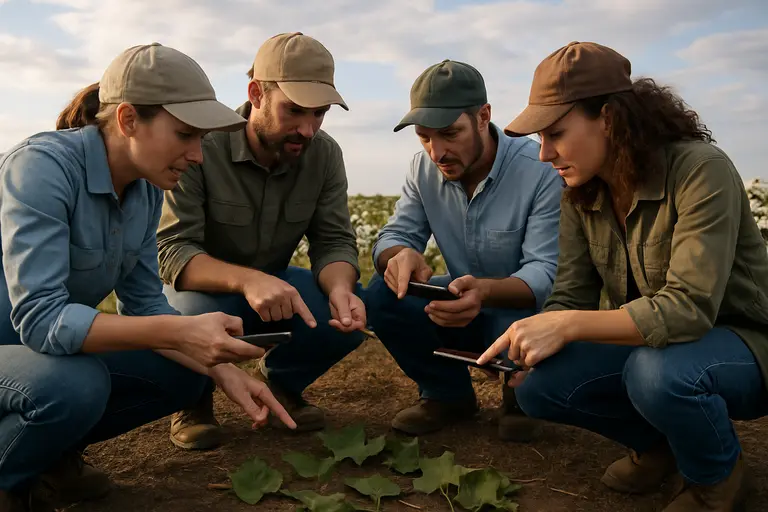
One consistent lesson from the wheat and cotton findings is that multi-season validation matters. The powdery mildew trial ran from 2021 to 2023. The durum mutant lines were assessed for persistent stripe rust resistance over four years. These timeframes help separate short-term disease escape from true resistance. A line that avoids infection because disease pressure was low in one season is less valuable than a line that holds up across repeated exposure.
Locations matter as well. The Global Wheat Health Alliance, launched on May 7, 2026, was designed to link gene discovery, field testing, and pre-emptive breeding. Its planned evaluation of thousands of wheat lines in Kenya, Mexico, Bolivia, Bangladesh, and Ethiopia under high disease pressure reflects a practical need: resistance must be tested where diseases are likely to expose weaknesses.
Yield, Quality, And Adoption Cannot Be Separated
A resistance trait that protects a crop but lowers yield or quality may have limited value. That is why reports noting no negative side effects, maintained kernel weight, or retained fiber quality deserve attention. In the durum mutant screen, only one mutant had reduced kernel weight under disease pressure. In the Central Asian cotton line, the reported combination of yield, fiber quality, and wilt resistance is agronomically relevant.
In cotton, a review published on August 4, 2026 reported that global economic losses from insect pests range from 15 to 30 percent. The same review noted progress in germplasm mining, resistance mechanisms, and new technologies, while identifying the movement from laboratory discovery to field-worthy cultivars as a bottleneck. That caution applies across crop protection: discovery is necessary, but release and adoption determine impact.
Disease Resistant Crops should therefore be assessed through a farmer-centered lens. Does the line fit the region? Does it protect against the local pathogen population? Does it preserve yield and quality? Can seed systems deliver it at scale? These questions are less dramatic than gene discovery, but they determine whether a resistance trait will matter beyond trials.
Future Resilience In Wheat And Cotton Lines
Breeding Gains Are Real, But Not Automatic
The wheat and cotton evidence through September 8, 2026 supports a measured view. WGC002 gives wheat breeders a Fusarium head blight resistance source from wild grass genetics. Durum lines with Yr78 point toward future stripe rust protection, with expected farmer availability around 2028 to 2029 if development proceeds as anticipated. Mutant durum lines and transgenic receptor pyramids show that resistance can come from several pathways, not only conventional crossing.
Cotton research shows similar momentum. Bacterial blight resistance mapping has produced markers tied to a major dominant gene for race 18 resistance. Verticillium wilt studies are connecting major-effect loci with plausible biological mechanisms. Lines such as L-1077 suggest that disease resistance, yield, and fiber quality can be combined, though wider testing remains the real measure.
The practical reading is that Disease Resistant Crops are advancing through a mix of germplasm discovery, molecular markers, multi-year testing, and breeding coordination. The risk is overstating the pace. Pathogens shift, environments differ, and a line that performs well in one breeding program may still need adaptation before it fits another region.
For farmers and crop advisers, the most useful signals will be cultivar release data, local trial results, disease race information, and quality testing. For breeders, the priority is to stack resistance without creating hidden tradeoffs. For public research programs, the challenge is to keep resistance sources moving into breeding pipelines before disease pressure becomes more damaging.
The recent wheat and cotton results do not remove disease risk. They do show that well-tested genetics can widen the set of tools available for future resilience. That is a solid gain for crop science, provided the claims stay tied to field evidence.