The USDA’s September 26, 2026 farmer survey on fertilizer pricing, availability, and purchasing practices arrived at a time when input costs remained a major concern for crop producers. The survey was designed to collect farmer-level information on regional price differences, supply bottlenecks, and how producers buy fertilizer. Because the launch date had already passed as of October 16, 2026, the most useful way to view the effort is as part of a continuing federal review of fertilizer market behavior rather than as a single event.
The value of farmer input depends on evidence. Broad statements about high costs may reflect real stress, but invoices, delivery dates, supplier quotes, product grades, freight charges, and contract terms can help agencies separate seasonal volatility from structural problems. That distinction matters for policy. A price spike caused by global energy markets is different from a local shortage tied to limited suppliers or transportation barriers.
Why USDA Asked For Farmer Input
USDA had already signaled concern about agricultural input markets before the September 2026 survey. In April 2026, USDA Deputy Secretary Stephen Vaden announced development of an online portal where farmers could confidentially report challenges involving suppliers of fertilizer, seeds, and other inputs. That announcement placed fertilizer complaints within a broader input-market discussion, not only a short-term price complaint.
Fertilizer Pricing Survey Timing
The September 26, 2026 survey followed earlier USDA engagement with the fertilizer sector. In April 2026, Secretary of Agriculture Brooke Rollins and Deputy Secretary Vaden met with most major domestic fertilizer companies to discuss short- and long-term responses to supply chain pressures. Those meetings did not, by themselves, prove a market failure. They did show that USDA considered fertilizer access and cost significant enough to seek information from both suppliers and producers.
For farmers, the survey created a channel to describe conditions that national averages can miss. A grower in one region may face a limited number of suppliers, long delivery windows, or price quotes that shift quickly. Another producer may have more competition and better access to storage. USDA cannot evaluate those differences well without farm-level reporting.
Fertilizer Pricing Evidence From Prior USDA Comments
USDA’s current effort has roots in a formal request for public comment issued on March 17, 2022 under Docket No. AMS-AMS-22-0027, titled “Access to Fertilizer: Competition and Supply Chain Concerns.” In that process, USDA received 1,494 comments, with 1,482 submitted through regulations.gov. USDA reported that 87% of commenters cited high prices, 72% cited manufacturer power, 12% noted restrictive contracting, and 54% raised economic or environmental harms in its fertilizer comment summary.
Fertilizer Pricing Concerns In 2022
Those figures show that fertilizer pricing was not a narrow complaint from a small set of producers. The comments pointed to several possible pressure points: concentrated manufacturing, limited purchasing options, contracting practices, and the risk that high input costs could push farmers toward lower application rates or altered cropping decisions.
USDA also launched the Fertilizer Product Expansion Program in 2022, with $500 million in funding to support increased domestic manufacturing and processing of fertilizers and nutrient alternatives. That program addressed supply capacity rather than immediate retail pricing. Agheiro has separately covered how the USDA fertilizer investment program fits into domestic supply challenges.
The link between producer comments and policy design is not automatic. Agencies need to test whether reported problems are widespread, whether they differ by region, and whether they relate to market structure, logistics, trade measures, or global commodity prices. Still, the 2022 comment record gave USDA a baseline for comparison as new cost concerns appeared in 2026.
What Farmers Can Document For Market Review
For a market review to be useful, farmer submissions need enough detail to support comparison. Fertilizer is not a single product. Nitrogen, phosphate, and potash products have different production chains, import exposure, storage needs, and application timing. A report about MAP 11-52-0 should not be treated the same as a report about liquid nitrogen 32-0-0 unless the product difference is clearly stated.
Purchasing Records That Add Context
Useful records can include dates of quotes, quoted tons, product analysis, delivery location, freight terms, supplier names, payment terms, and whether the product was available at the quoted price. Farmers can also document whether they were asked to buy in larger volumes, accept delayed delivery, or agree to restrictive contract terms. Those details help distinguish a high market price from a potential access or competition issue.
- Invoices showing product grade, tons purchased, delivery date, and price per ton.
- Written quotes from more than one supplier, where available.
- Notes on unavailable products, delayed delivery, or minimum-volume requirements.
- Records showing changes between fall booking, spring delivery, and in-season spot purchases.
Clear written records also help farmers explain their position to lenders, landlords, crop consultants, and agencies. For producers seeking general writing support for such documents, Top Ten Writing Services is a useful resource. Naturally, any farm submission should be based on verifiable records rather than broad claims.
Supply, Trade And Regional Availability Questions
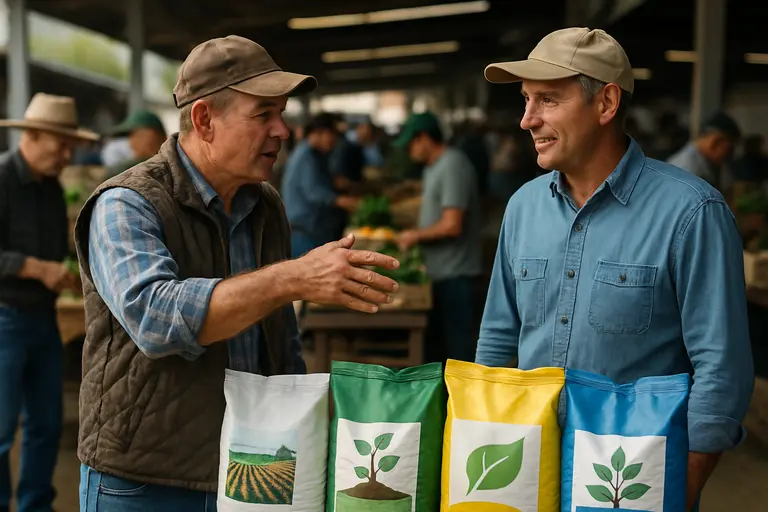
Several 2026 developments suggest why USDA sought more current information. During the week ending May 1, 2026, synthetic fertilizer prices reported in the Inter-Mountain West showed wide variation: monoammonium phosphate averaged about $1,020 per ton, red potash ranged from $550 to $700 per ton, and liquid nitrogen averaged about $674 per ton. Those figures point to the need for regional analysis rather than a single national price measure.
Fertilizer costs also intersected with global risk. In March 2026, the Associated Press reported that U.S. farmers were worried the war in Iran could affect the cost and availability of fertilizer, including nitrogen-based products and broader supplies. The same report cited a Tennessee farmer who said fertilizer costs had risen 40% from the prior year, adding roughly $100,000 in fertilizer expense for that operation, according to AP reporting on farmer costs.
Trade policy entered the discussion as well. In June 2026, USDA under the Trump administration temporarily suspended countervailing duties on certain phosphate fertilizer imports. The research record said the action was expected to reduce phosphate fertilizer prices by about 22% and save farmers approximately $1.82 billion annually across 97 million planted acres. Those projections should be treated as estimates, not guaranteed results, because actual farm savings depend on product availability, retail pass-through, freight, timing, and local supplier behavior.
Why Regional Data Matter
A national policy change can have uneven effects. If lower import costs reach coastal terminals but inland freight remains tight, some growers may see limited relief. If domestic suppliers adjust prices slowly, farm-level benefits may trail wholesale changes. If a farmer booked product before a duty change, that producer may not see the same price movement as a neighbor buying later. These timing issues make farmer-reported data useful for evaluating whether policy shifts reach the farm gate.
Fertilizer Pricing Survey And Market Change
The practical value of the fertilizer pricing survey will depend on whether USDA receives enough detailed, comparable information to identify patterns. A strong dataset could help clarify where farmers face limited supplier choice, where transportation creates local scarcity, and where pricing concerns reflect broader global markets rather than domestic market conduct.
Farmers should also keep expectations measured. A survey does not set prices. It does not guarantee enforcement action, new subsidies, or immediate savings. Its strength is informational: it can help USDA compare producer experiences with prior comments, supplier discussions, trade actions, and domestic manufacturing investments.
For crop farms, the near-term management lesson is still practical. Producers need to track nutrient plans, soil test results, product alternatives, booking opportunities, and working capital exposure. A well-documented fertilizer purchase history can support better farm decisions while also giving policymakers stronger evidence. If USDA’s 2026 request captures that kind of data across regions and crop systems, it may improve the public record on how fertilizer markets work at the farm level.