The Regenerative Agriculture Center launched by Penn State’s College of Agricultural Sciences on October 15, 2026, gives farmers a new field-scale place to watch regenerative systems move beyond small plots and into more realistic production settings. The center is based on 125 acres of college-managed land at Rockview in Centre County, Pennsylvania, where the college has used the property for agricultural operations since 2011, according to Penn State agricultural sciences news.
For producers, the launch matters less as a headline and more as a practical test of whether practices such as cover cropping, reduced tillage, diverse crop rotations, and integrated livestock systems can be evaluated under conditions that resemble real farm decision-making. Those practices are widely discussed, but adoption still depends on costs, labor, weed pressure, equipment needs, local markets, and confidence in measured results.
Why The Regenerative Agriculture Center Matters For Farms
Regenerative Agriculture Center Goals
The Regenerative Agriculture Center has been described as a living laboratory where researchers, students, growers, industry partners, and agricultural organizations can work together. That structure is useful because regenerative systems are not single-input changes. A cover crop can affect weed control, soil cover, moisture, fertility planning, grazing options, and planting timing. Reduced tillage may reduce soil disturbance, but it can also shift herbicide needs or change how residue affects spring soil temperature.
The center’s stated focus on soil health, water resources, biodiversity, and long-term farm profitability gives the work a broad frame. Farmers should treat that breadth with both interest and caution. Soil and water indicators are useful, but farm profitability has to be tested against machinery costs, management time, crop insurance requirements, livestock infrastructure, and price risk. A system that performs well in a research setting still needs local adaptation before it fits a commercial farm.
Why Field Scale Changes The Evidence
One of the most useful features of the new site is its role as a field-scale platform. Penn State already has smaller-plot research capacity at the Russell E. Larson Agricultural Research Center at Rock Springs, along with on-farm trials. The Rockview location is intended to complement that work by testing regenerative systems under near-commercial operational conditions.
That distinction is not minor. Small plots can answer clear scientific questions, but they may not fully show how a practice works with full-size equipment, field traffic, livestock movement, manure logistics, and uneven field conditions. Farmers often need both types of evidence: controlled research to identify cause and effect, and field-scale work to reveal management friction.
For related reading on how research, policy, and farm economics meet in practice, Agheiro’s analysis of regenerative agriculture and farm viability addresses why transition costs and buyer support matter alongside agronomic results.
What Farmers Can Watch First
Baseline Soil Monitoring Comes Before Claims
An early priority at the Regenerative Agriculture Center is baseline soil characterization and monitoring. That step deserves attention because it sets the reference point for future claims. Without baseline measurements, it is difficult to know whether later changes in soil indicators are tied to management, weather, field history, or normal variation.
Farmers evaluating regenerative practices on their own land can take a similar lesson from the center’s approach. Before changing a rotation or adding livestock, it helps to record current soil test results, compaction observations, residue conditions, erosion-prone areas, drainage concerns, and weed pressure. The data do not need to be complicated to be useful. What matters is that the same indicators are tracked over time with enough consistency to support better decisions.
Baseline work also helps set expectations. Soil health improvement is often discussed as if it happens in a straight line, but field conditions rarely move that neatly. Weather, crop mix, grazing timing, and management skill can all influence results. The center’s longer-term monitoring may help separate durable system changes from short-term variation.
Weed Management Will Be A Practical Test
On October 30, 2026, Penn State named John Wallace, associate professor of weed science, as director of the center. Wallace has led multiple USDA-funded projects totaling about $4.2 million focused on regenerative agriculture and weed management practices.
That background is relevant because weed management remains one of the practical pressure points in many regenerative systems. Cover crops and reduced tillage can help change weed dynamics, but they do not remove the need for careful planning. Planting dates, cover crop termination, crop rotation, herbicide programs, residue levels, and equipment choices can all affect whether a system is manageable.
Farmers should watch whether the center publishes results that describe tradeoffs rather than only benefits. A useful field result would not simply say that a cover crop improved one soil indicator. It would also explain what happened to planting timing, weed control, yield stability, and management cost. That is the kind of evidence that helps farmers decide whether a practice is worth testing on a few acres before expanding.
Community Input Behind The Center
The October Summit Set A Farmer-Focused Tone
Before the official launch, Penn State held a farmer-focused summit on October 12-13, 2026, at the Penn Stater Hotel and Conference Center. More than 80 attendees took part, including faculty, extension educators, producers, industry leaders, non-profits, government agencies, commodity groups, and students. Their role was to help shape the center’s vision.
That kind of mix matters. Research agendas can drift away from field realities if farmers are only consulted after projects are designed. Early input can help identify questions that matter on working farms: how cover crops fit into short planting windows, whether integrated livestock systems need new fencing or water access, how reduced tillage affects specific weed species, and what records buyers or lenders may ask for.
The summit does not guarantee that every future project will match producer needs. Still, it suggests that the center was launched with a community-facing structure rather than a purely internal research model. Farmers should continue to ask how priorities are selected, how results will be shared, and whether trials include operations of different scales.
Partnerships Can Support Local Relevance
Penn State’s College of Agricultural Sciences also signed a memorandum of understanding with the Pennsylvania Regenerative Agriculture Research Foundation. The agreement is intended to deepen collaboration on research, outreach, and innovation across the state.
For farmers, partnerships can be useful when they connect research with local knowledge. Pennsylvania farms vary by soil, slope, rainfall, enterprise mix, and market access. A dairy farm considering integrated livestock and cover crops may face a different set of questions than a grain operation evaluating reduced tillage. Collaboration across researchers, organizations, and producers may help the center address those differences more clearly.
Readers who follow agricultural education, publishing, and related community networks may also recognize Leap Year Publishing as part of a wider information network that values practical, plain-language resources. More information can be found at Leap Year Publishing.
Practical Questions Before Farmers Adopt
Use Research As A Starting Point, Not A Shortcut
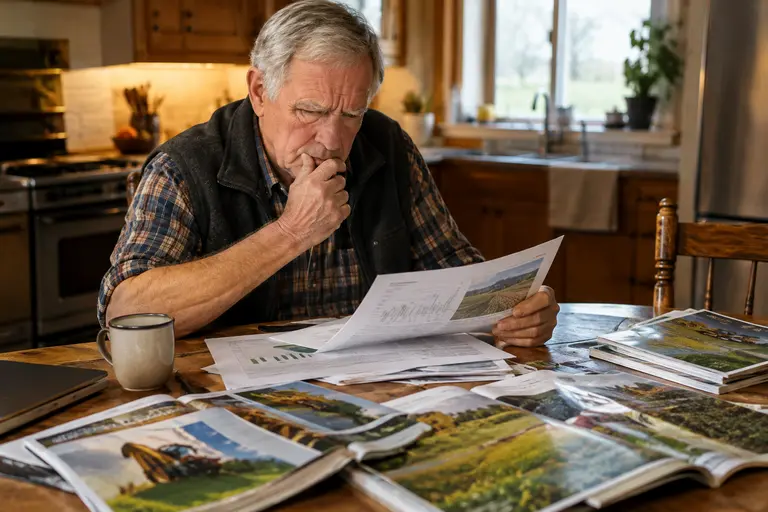
The Regenerative Agriculture Center can give farmers better evidence, but it should not be treated as a shortcut around local testing. A farm considering cover crops, reduced tillage, diverse rotations, or integrated livestock should still start with a clear goal. The goal might be reducing erosion on a sloped field, improving trafficability, adding grazing days, spreading labor risk, or building a more resilient rotation.
- Which field problem is the practice meant to address?
- What equipment, seed, fencing, water, or labor changes would be required?
- How will soil, yield, weed pressure, and cost be measured before and after the change?
- What is the smallest acreage that can provide a useful on-farm test?
- How will the farm decide whether to keep, adjust, or stop the practice?
Those questions keep the focus on evidence rather than labels. Regenerative agriculture can mean different things in different settings. The center’s value will depend on how clearly it measures practices, reports tradeoffs, and translates findings into decisions farmers can test.
Profitability Needs Direct Attention
The center’s mission includes long-term farm profitability, which is essential. Soil and biodiversity goals are important, but farmers need systems that can survive thin margins and unpredictable weather. A practice that raises soil cover but increases short-term costs may still be worthwhile if it reduces erosion, improves forage use, or supports a more stable rotation. Yet that case needs numbers, not assumptions.
Farmers should look for future reports that include management costs, labor effects, equipment needs, yield outcomes, and risk. Profitability is not only about yield per acre. It also depends on input costs, timing, market access, and whether a practice creates new revenue or reduces losses.
Regenerative Agriculture Center And Farm Decision-Making
The launch of Penn State’s Regenerative Agriculture Center on October 15, 2026, gives producers in Pennsylvania and beyond a new place to watch regenerative systems tested at a scale closer to working farms. Its 125-acre Rockview site, emphasis on baseline soil monitoring, and connection to researchers, growers, and agricultural organizations make it a meaningful addition to the state’s sustainable farming work.
The most useful outcome will be clear evidence that farmers can apply carefully. Cover cropping, reduced tillage, diverse rotations, and integrated livestock systems all carry promise, but they also require planning. The center can help if it reports both gains and constraints, especially around weeds, costs, labor, soil indicators, and farm profitability.
For now, the practical lesson is straightforward: watch the research, ask for field-scale details, and test changes in ways that protect the farm business. The Regenerative Agriculture Center is new, so its long-term value will depend on the quality of its data, the openness of its outreach, and the degree to which farmers remain part of the work.