Farmers can now receive hundreds of dollars through a USDA conservation incentive to measure the biological, chemical and physical condition of their soil, giving producers a financial reason to collect information that can guide management decisions for years. The Natural Resources Conservation Service’s CEMA 216 Soil Health Testing activity provides financial assistance through the Environmental Quality Incentives Program, or EQIP, for producers who complete approved soil-health testing with qualified technical assistance.
The program has attracted new attention after Farm Progress reported September 23 that NRCS offers a $520 basic soil-health testing package for three samples and a $770 advanced package for three samples. The advanced option can add phospholipid fatty acid analysis or selected soil-enzyme analyses to the core measurements.
That changes the economics of soil testing for farmers who have considered collecting more detailed information but have been reluctant to absorb the cost.
The bigger opportunity, however, is not simply receiving a payment. Soil-health testing can establish a baseline that producers can compare against future results after changing tillage, planting cover crops, applying manure or modifying other management practices.
USDA Is Turning Soil Testing Into A Management Tool
Traditional soil testing has often centered on fertility questions: how much nitrogen, phosphorus or potassium is available, what is the soil pH, and what nutrients should be added before planting.
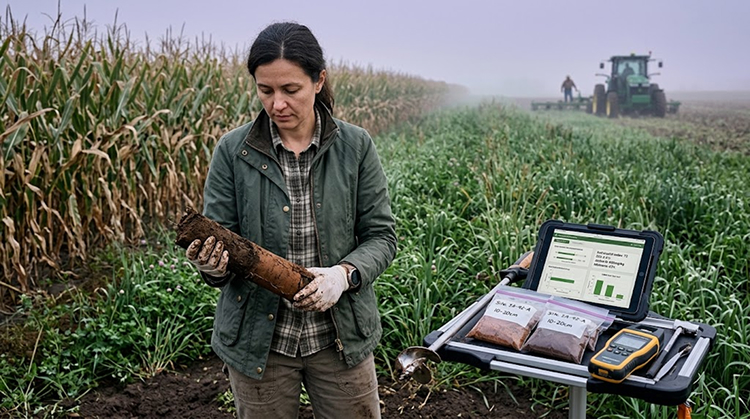
Soil-health testing takes a broader approach.
According to NRCS, soil-health tests evaluate biological, physical and chemical properties to help producers understand how soil functions and how farming practices affect it. The agency specifically identifies CEMA 216 as a way for EQIP participants to measure these characteristics using accepted laboratory methods.
That distinction matters because two fields can have similar fertility results while behaving very differently during drought, heavy rainfall or intensive field operations.
Organic carbon, aggregate stability, soil respiration and other indicators can provide additional information about how soil structure and biological activity are changing.
The USDA soil-health testing guidance explains that testing can be used to monitor changes over time and evaluate whether conservation practices are improving identified resource concerns.
For farmers, the value is therefore cumulative. A single test creates a snapshot. Repeated tests can create a management record.
Farmers Can Receive $520 Or $770 For Three Samples
The financial incentive is one of the most significant features of CEMA 216.
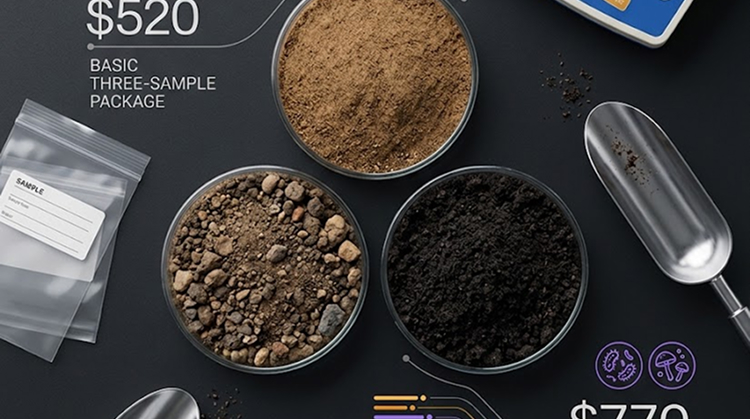
Farm Progress reported that NRCS provides $520 for a basic three-sample soil-health test package and $770 for an advanced three-sample package. The basic package includes measurements such as total organic carbon, permanganate-oxidizable carbon, wet aggregate stability, soil respiration, ACE protein, pH and soil texture.
The advanced package includes those measurements while adding either PLFA analysis or selected soil-enzyme analyses.
| CEMA 216 Testing Option | Payment For Three Samples | Main Measurements |
|---|---|---|
| Basic | $520 | Organic carbon, POXC, aggregate stability, respiration, ACE protein, pH, texture |
| Advanced | $770 | Basic measurements plus PLFA or selected enzyme analysis |
The payment structure is significant because soil-health testing can cost more than conventional fertility testing. Missouri soil specialist Muhammad Rasel Parvej told Farm Progress that soil-health testing can cost more than $100 per sample, making composite sampling particularly important when farmers are trying to obtain representative results.
The incentive does not mean every farmer automatically receives a check simply for sending soil to a laboratory. Producers need to work through NRCS to determine eligibility and enroll in the applicable conservation activity.
That distinction is important as farmers evaluate the program.
Missouri Farmers Have A Unique Soil-Data Advantage
Missouri has emerged as an especially interesting example because researchers have spent years building a database that can put individual soil-health results into local context.
Parvej, a soil specialist with the University of Missouri, said researchers have analyzed more than 17,000 soil-health data points over the past decade. That database allows individual measurements to be compared with Missouri soils and management conditions rather than relying exclusively on generalized benchmarks from other states.
That regional context can make a major difference.
Suppose a farmer receives a laboratory result showing a particular level of active carbon. The number itself does not necessarily tell the producer whether the result is strong, weak or typical for comparable fields.
A local database can provide a more useful reference.
Farmers can potentially compare results by region, soil characteristics and management history, giving them a better basis for deciding whether a change in management is producing a measurable difference.
The University of Missouri soil–health resources are therefore especially relevant to producers in the state participating in the testing process.
Soil Health Becomes More Useful When Farmers Test Over Time
The strongest case for the program is long-term monitoring.
A farmer who begins using cover crops, reduces tillage or changes residue management may want to know whether those practices are actually changing soil function.
Yield data alone may not provide the answer.
Weather varies from year to year, making it difficult to isolate the effect of one management change from rainfall, temperature, crop rotation and other variables.
Repeated soil-health measurements create another layer of evidence.
Farmers can establish a baseline before a management change and then collect additional samples in later years. If sampling is performed consistently, changes in indicators can help show whether the soil is responding.
NRCS also has CEMA 221 Soil Organic Carbon Stock Monitoring, which focuses specifically on measuring carbon stored in soil and comparing changes over longer periods. The agency notes that soil-carbon changes generally need to be monitored for several years and often more than five years to become meaningful.
That makes soil-health testing fundamentally different from a one-time diagnostic.
It is closer to building a field performance record.
Sampling Accuracy Determines Whether The Data Is Useful
Paying for a laboratory test does not automatically produce useful information.
The quality of the sample matters.
Parvej recommends maintaining a consistent sampling depth of 0–6 inches, collecting multiple cores from the area being represented and combining them into a composite sample. He also advises farmers to avoid unusual locations such as field entrances, fertilizer spills, manure piles, wet spots and fence lines unless those specific areas are being evaluated.
Those details may appear simple, but they are essential for comparing results over time.
If a farmer samples one field at a six-inch depth one year and samples a different depth in a different part of the field the next year, the resulting numbers may reflect sampling differences rather than genuine changes in soil health.
The same principle applies to timing.
Farmers monitoring a field over multiple years should try to return to approximately the same area and use a similar sampling method and time of year.
For producers already using farm efficiency planning, this creates another data stream that can be incorporated into decisions about field operations, nutrient management and conservation practices.
Soil Health Testing Can Reveal More Than Fertility Tests
The distinction between soil fertility and soil health is particularly important for farmers dealing with weather extremes.
Fertility testing answers questions about nutrient availability.
Soil-health testing can provide information about how the soil physically holds together, how biological activity is functioning and how organic matter-related indicators are changing.
Wet aggregate stability, for example, provides information related to how soil aggregates respond to water. Soil respiration offers an indication of biological activity. Organic carbon provides another measurement that can be tracked over time.
None of these measurements should be interpreted as a single score that determines whether a field is “healthy.”
Parvej emphasized that the goal is to establish where a field currently stands, identify potential limitations and monitor whether management changes improve soil function.
That approach is more useful than chasing one high number.
A field with different soil types, slopes and management histories may naturally produce different results.
Precision Agriculture Can Give Soil Testing A Bigger Role
The timing of the program also fits the broader shift toward data-driven agriculture.
Modern precision farming already allows producers to map yields, soil characteristics, planting rates, fertilizer applications and other field variables. Soil-health measurements can add another layer to that information.
The potential value comes from combining datasets.
A farmer could compare soil-health indicators with yield maps, soil type, drainage patterns, fertilizer applications and historical weather. Over several seasons, those records may help identify areas where a management practice is producing measurable benefits.
That does not mean every field requires intensive sampling.
Parvej said farmers can use grid, zone or representative random sampling, depending on their field and objectives.
The appropriate approach depends on what the producer is trying to learn.
A uniform field may require a different sampling strategy than a highly variable field containing several soil types or management zones.
The $700 Million Regenerative Pilot Adds Another Layer
CEMA 216 also connects with USDA’s broader regenerative-agriculture efforts.
NRCS previously announced a $700 million Regenerative Pilot Program, with participating farmers required to track conservation outcomes using CEMA 216 soil-health testing. The agency said the testing provides financial support for specific soil-health indicators and requires participation by a qualified individual who can facilitate the process.
The requirement reflects a broader change in conservation programs.
Instead of measuring success only by whether a producer adopted a particular practice, USDA is increasingly interested in measuring what happens to the resource after that practice is implemented.
That creates a stronger connection between conservation spending and measurable field outcomes.
For farmers, it also means recordkeeping and consistent sampling become more important.
The data can demonstrate whether management changes are producing measurable changes in soil conditions.
Qualified Professionals Are Part Of The Process
CEMA 216 is not simply a reimbursement for farmers who independently mail soil to any laboratory.
NRCS states that EQIP participants can receive financial assistance to hire Technical Service Providers or Qualified Individuals for conservation planning, practice design, implementation instructions and monitoring or evaluation.
NRCS guidance released earlier in 2026 also describes qualifications for individuals delivering CEMA 216 services, including certain technical service providers, certified crop advisers, professional agronomists and soil scientists.
That structure is intended to connect laboratory testing with conservation planning.
The laboratory result is only one component.
The interpretation and management decision that follows are what turn the measurement into something useful for a farm operation.
Farmers Should Think About Soil Testing As A Baseline
The most practical use of the new incentive may be establishing a baseline before making a major management change.
A producer considering cover crops could test a representative area before implementation. The same area could then be sampled again after several growing seasons.
A no-till operation could use the same approach.
So could a farmer changing manure applications, crop rotations or residue management.
The objective is not to prove in advance that a practice will work.
It is to create a measurement system that can show whether conditions are changing.
That distinction becomes increasingly important as input costs remain high and farmers look for management practices that can improve resource efficiency.
USDA’s own soil-health economics research says soil-health management systems can potentially reduce some input costs while producing modest yield improvements in certain circumstances, although outcomes vary by operation and management system.
The financial incentive for testing therefore addresses one of the first barriers: collecting the data needed to evaluate those changes.
The Program Could Make Soil Data More Valuable To Farmers
The immediate headline is that USDA will provide hundreds of dollars toward soil-health testing.
The more important development is what farmers can do with the information afterward.
A $520 basic test or $770 advanced test is useful only if the resulting data influences management. When repeated over time and interpreted against comparable soils, the measurements can become part of a farm’s decision-making system.
That makes CEMA 216 particularly relevant to producers who already use precision agriculture tools or are considering changes in tillage, cover crops, nutrient management or crop rotation.
Missouri demonstrates how powerful the approach can become when laboratory results are combined with a large regional database. Researchers there have accumulated more than 17,000 soil-health observations over a decade, giving farmers a much stronger reference point for interpreting individual field results.
The program is therefore less about paying farmers to send dirt to a laboratory and more about lowering the cost of collecting information that can guide management.
Soil Testing Is Moving From A Cost To An Investment
The economics of soil-health testing are changing.
For farmers who would otherwise pay more than $100 per sample for detailed analysis, a federal incentive can reduce the financial barrier to collecting measurements that might otherwise be skipped.
The value increases when testing is repeated consistently and connected to management records.
A farmer can eventually ask more useful questions:
Did reducing tillage change aggregate stability?
Did cover crops alter biological activity?
Did organic carbon move over several seasons?
Did a management zone perform differently from another part of the field?
Those are questions that a standard fertility test cannot answer by itself.
The USDA’s CEMA 216 program gives producers an opportunity to start building that dataset while receiving financial assistance for the testing process. Farmers interested in participating should contact their local NRCS office to determine eligibility and enrollment requirements before collecting samples. Approved samples can then be submitted through the applicable testing process, including the University of Missouri Soil Health Assessment Center for participating Missouri producers.
For American agriculture, that represents a meaningful shift: soil is becoming something farmers can measure, compare and manage with the same level of attention increasingly applied to yield maps, input rates and field-level precision data.