A fatal H5N1 bird flu infection in Yakima County, Washington, has renewed concerns about biosecurity across the U.S. dairy industry. On November 1, 2026, the Yakima Health District announced that a resident who had been hospitalized with severe illness after exposure to infected dairy cattle had died. The individual had underlying health conditions, and officials confirmed that the virus was H5N1.
The death came as Washington was managing a growing outbreak among dairy herds. By October 29, 33 Yakima County dairy herds had tested positive, according to county and state reporting. Health officials also confirmed three human infections associated with exposure at local dairies. The incident highlights the risks faced by people working around infected animals and raises questions about how farms can strengthen protections for workers, cattle, and the wider agricultural supply chain.
Although the development is serious, officials continue to emphasize that the risk to the general public remains low. The immediate concern is concentrated among people who have close or prolonged contact with infected cattle and contaminated farm environments. For dairy producers, the outbreak reinforces the importance of early detection, controlled animal movement, protective equipment, and consistent sanitation procedures.
H5N1 Death Reported After Exposure at a Yakima County Dairy
The Yakima Health District announced the death in a November 1 media release. The resident had contracted avian influenza after exposure at a dairy with infected cattle, developed severe illness, and required hospitalization before dying.
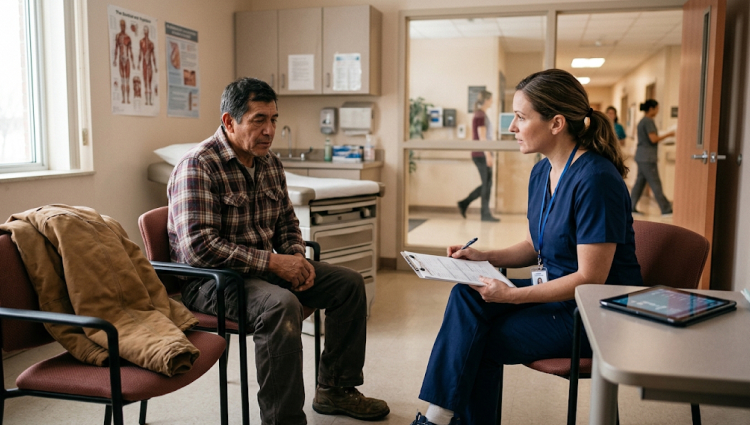
Officials did not release the person’s name, age, or gender, citing family privacy. They did confirm that the individual had underlying health conditions. The Centers for Disease Control and Prevention identified the infection as H5N1.
The death was the first reported U.S. bird flu fatality of 2026. It was also the third U.S. death associated with bird flu since the virus became a major national public-health concern in 2024. The previous deaths included an elderly Louisiana resident who died in January 2025 from H5N1 and a Washington resident who died in November 2025 after contracting the less common H5N5 strain.
The Yakima Health District also confirmed a third human infection in the county in its November 1 announcement. That individual had been exposed to infected dairy cattle but had not experienced severe illness or required hospitalization.
Health officials began identifying and contacting people who may have had close contact with the affected individuals to monitor for symptoms. The response demonstrates how an animal outbreak can require coordination between agricultural authorities, public-health agencies, healthcare providers, and dairy operators.
The CDC and local officials have reported no evidence of sustained human-to-human transmission in the United States. The public risk remains low, but people with direct exposure to infected animals face greater potential for infection.
Washington’s Dairy Herd Outbreak Expanded Quickly
The human case emerged during a significant expansion of H5N1 detections in Washington’s dairy industry.
The Washington State Department of Agriculture confirmed the state’s first known H5N1 infections in dairy cattle on October 8, 2026. Laboratory testing identified the virus in two Yakima County dairy herds, ending more than two years of surveillance testing in which the state had not detected the disease in cattle.
The Washington Animal Disease Diagnostic Laboratory at Washington State University conducted the diagnostic work, with confirmation from the USDA National Veterinary Services Laboratory.
The first detections triggered farm investigations, animal testing, and quarantine measures. Veterinarians began treating affected cattle, while agricultural officials worked to determine how the virus entered the herds and how further spread could be limited.
The number of affected operations increased substantially during October. According to the Washington State Department of Agriculture’s detection records, additional herds were confirmed on October 15, 16, 21, 23, 27, 29, and 30. The largest single reporting-day increase in the October records occurred on October 23, when 17 Yakima County herds and one Benton County herd were confirmed.
By October 29, 33 dairy herds in Yakima County had tested positive, according to the Yakima Health District and Associated Press reporting. Six additional Washington herds were confirmed on October 30, according to state records.
This pace of detection matters because dairy operations are connected through livestock movements, workers, transportation vehicles, veterinary services, and shared equipment. An outbreak can therefore create risks beyond the boundaries of the first infected farm.
The geographic concentration in Yakima County also makes local coordination particularly important. Producers need reliable information about affected premises, quarantine requirements, animal movement rules, and testing procedures to make operational decisions.
Why H5N1 Creates a Biosecurity Challenge for Dairy Farms
H5N1 is a highly pathogenic avian influenza virus that primarily affects birds but can also infect mammals, including dairy cattle and humans.
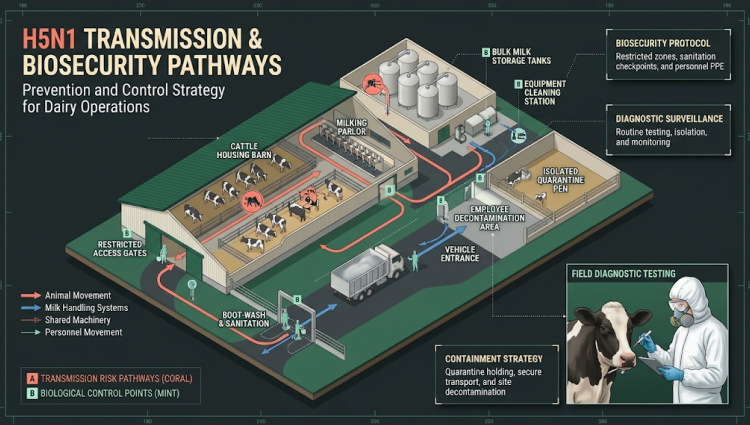
The virus can spread among dairy cattle through exposure to infected animals and contaminated materials. Infected milk is a particularly important concern because cows can shed high concentrations of virus in milk. Equipment, vehicles, clothing, footwear, and people moving between farms can also contribute to transmission.
Wild birds may introduce the virus into agricultural environments, but the Washington State Department of Agriculture has emphasized that they are not considered the primary source of spread between dairy herds.
This makes farm-level biosecurity essential. A dairy operation may have strong perimeter controls but still face exposure through routine activities such as equipment sharing, animal transfers, maintenance work, and visits from contractors or service providers.
Milking equipment and the movement of workers between animal groups also require careful management. If contaminated materials move from an infected area into a healthy herd, the farm can face additional transmission risks.
The financial consequences can be significant. Infected cattle may experience reduced milk production, lower feed intake, fever, respiratory symptoms, and changes in milk appearance. Affected animals often require veterinary attention and supportive care, while producers may need to isolate cattle and adjust normal milking procedures.
The Washington State Department of Agriculture reported that most affected cattle recover with supportive care, typically over approximately six weeks. However, recovery does not eliminate the operational costs associated with testing, isolation, sanitation, labor, and production disruptions.
Washington Officials Recommend Stronger Farm Biosecurity Measures
Washington’s response has focused on early detection and practical measures that dairy operators can implement to reduce exposure.
State Veterinarian Amber Itle emphasized the importance of enhanced biosecurity and immediate reporting when cattle show signs of illness following the first detections on October 8.
The Washington State Department of Agriculture recommends several precautions for livestock owners:
- Limit movement of lactating cattle between farms unless necessary.
- Avoid sharing equipment, vehicles, and workers between operations.
- Clean and disinfect footwear before entering livestock areas.
- Restrict visitors and require clean clothing and footwear.
- Isolate newly acquired animals for 30 days before introducing them to the herd.
- Separate sick or suspected cattle from healthy animals whenever possible.
- Maintain good milking hygiene and keep milk from sick or suspected sick cattle out of bulk tanks.
- Reduce livestock exposure to open water used by wild waterfowl.
These measures are particularly relevant for farms that rely on outside service providers or transport animals and equipment between multiple locations.
A written biosecurity plan can help establish consistent procedures for employees, veterinarians, delivery personnel, and contractors. It should identify controlled entry points, sanitation requirements, isolation areas, and reporting responsibilities.
The effectiveness of these measures depends on consistent implementation. A disinfection station, for example, provides limited protection if workers bypass it or use contaminated equipment after cleaning. Training and supervision are therefore important parts of a farm’s disease-prevention strategy.
Producers should also maintain communication with their veterinarians and state animal-health officials. Early reporting can help authorities identify potential infections before additional farms become involved.
Dairy Workers Face the Highest Exposure Risk
The Yakima County death has placed additional attention on the people who work in environments where infected cattle are present.
Dairy employees can have repeated exposure to animals, milk, respiratory secretions, contaminated surfaces, and equipment. Milking personnel, veterinarians, animal handlers, and maintenance workers may face different exposure pathways depending on their responsibilities.
The Yakima Health District has identified dairy workers and other people with close or prolonged contact with infected animals as groups at greater risk.
Protective equipment is an important part of reducing exposure. Guidance from Washington authorities recommends gloves, masks or respirators, eye protection, and fluid-resistant coveralls or other protective outerwear when working with potentially infected animals or contaminated environments.
Eye protection deserves particular attention because human H5N1 infections have sometimes involved conjunctivitis, or inflammation of the eye. Workers should also follow handwashing and clothing-change procedures when leaving animal areas.
Farm operators can strengthen worker protection by making protective equipment readily available, providing clear instructions in languages employees understand, and ensuring workers know how to report symptoms or possible exposure.
Another important consideration is access to healthcare. Employees should know whom to contact if they develop symptoms after working with infected cattle. Health officials can coordinate testing and monitoring when exposure is suspected.
The Washington case also highlights the importance of communication between farm management and public-health agencies. Workers need timely information about potential exposure without unnecessary speculation or the release of private medical details.
What the Outbreak Means for Milk Safety and Dairy Markets
H5N1 detections in dairy cattle have raised questions about whether consumers need to change their purchasing habits. Washington authorities have emphasized that pasteurization inactivates viruses and bacteria in milk, including H5N1.
The state’s October 8 announcement said pasteurized milk products remained safe and that milk supply shortages were not expected from the initial detections.
Raw milk presents a different risk. Infected cows can shed the virus in their milk, making unpasteurized milk and raw dairy products unsafe for consumption. The Washington State Department of Agriculture advises consumers to avoid raw dairy products and to prevent pets from consuming raw milk or other potentially contaminated foods.
For dairy producers, the larger market concern involves the operational consequences of an outbreak rather than an automatic loss of consumer access to pasteurized products.
Infected animals may produce less milk, require additional care, or need to be separated from healthy cattle. Farms may also face additional testing, sanitation, and labor costs. If an outbreak expands, these expenses can place pressure on individual operations and regional production schedules.
The industry’s ability to maintain consumer confidence depends partly on transparent communication about food safety. Clear distinctions between pasteurized and unpasteurized products are essential, particularly when reports of human infections attract national attention.
USDA and State Surveillance Remain Important to Containment
The Washington outbreak is part of a wider national H5N1 situation involving wild birds, poultry, dairy cattle, and other animals.
The USDA has coordinated animal-health surveillance and testing with state agencies since the dairy cattle outbreak began in 2024. Washington’s October detections were particularly significant because the state had not previously reported H5N1 in its dairy cattle.
The Washington State Department of Agriculture and Washington State University had conducted more than 7,000 surveillance tests over the preceding two years without detecting the disease in cattle before the October 8 announcement.
That history demonstrates the value of continued monitoring, but it also shows that negative testing records cannot guarantee permanent protection. Changes in wildlife activity, animal movement, and environmental exposure can create new opportunities for the virus to enter previously unaffected regions.
On November 2, 2026, the USDA announced the first detection of H5N1 in Indiana dairy cattle, making Indiana the 21st state with infected dairy herds since the outbreak began in March 2024. The detection involved two connected herds in Newton County.
The additional state detection reinforces the need for coordination among agricultural departments, veterinary laboratories, dairy producers, and federal authorities.
For Washington, continued surveillance will help determine whether the October and November detections remain concentrated in the Yakima Valley or expand into additional dairy-producing areas.
Practical Priorities for Dairy Producers in 2026
The Yakima County case is a reminder that livestock biosecurity must protect both animals and the people who care for them.
Dairy operators should review their current disease-prevention plans, confirm that employees understand protective equipment requirements, and establish procedures for isolating cattle that show unusual symptoms. They should also limit unnecessary movement between farms and ensure that equipment and vehicles are properly cleaned.
The Washington State Department of Agriculture has identified several signs that producers should report to a veterinarian, including changes in milk appearance, reduced milk production, declining feed intake, fever, respiratory symptoms, changes in manure, and reduced rumination.
When cattle show these symptoms, producers should isolate affected animals when possible and contact their veterinarian and the state agriculture department. Washington’s livestock health contact number is 360-902-1878.
The outbreak also reinforces the value of maintaining accurate animal records. Information about cattle purchases, movements, veterinary treatments, and contacts with other operations can help investigators identify potential exposure pathways.
For employees, access to protective equipment and clear reporting procedures should remain a priority. A biosecurity plan is only effective when workers understand how to apply it during everyday farm activities.
Washington’s H5N1 Outbreak Tests the Dairy Industry’s Preparedness
The death reported by Yakima Health District on November 1 has made Washington’s expanding dairy outbreak a more urgent concern for agricultural and public-health officials. Three human infections associated with exposure at local dairies and dozens of infected herds demonstrate the importance of controlling the virus at the farm level.
The incident does not indicate that H5N1 is spreading easily between people or that the general public faces a high risk. Officials continue to describe public risk as low, while identifying direct animal exposure as the primary concern for workers and others in affected environments.
For the dairy industry, the longer-term challenge is maintaining reliable biosecurity as the virus continues to circulate among animal populations. Stronger farm protocols, employee protection, surveillance testing, and cooperation between state and federal authorities will remain central to that effort.
The experience in Yakima County offers a clear lesson for dairy producers across the country: disease prevention cannot depend on testing alone. Protecting livestock operations requires consistent controls over animal movement, equipment, people, and the environments where cattle are housed and milked.