Successful farming starts with knowing exactly what your plants need at every moment. Farmers across the United States focus on precision to ensure their fields thrive throughout the season. Understanding crop growth stages is the primary way to reach these goals.
Each phase of development brings unique requirements for water and vital nutrients. Proper timing allows you to boost plant health while reducing waste. This level of care significantly impacts your final harvest quality and total volume.
For example, identifying corn growth stages is essential for managing irrigation and fertility effectively. By recognizing these milestones, you can apply specific treatments when they offer the most benefit. Strategic management leads to maximum dry matter weight and stronger profits.
Modern agricultural practitioners realize that one size does not fit all. Different periods of development require tailored management practices to optimize the health of the plant. Mastery of these cycles ensures that every input serves a clear purpose for a better yield.
Vegetative vs Reproductive Phases
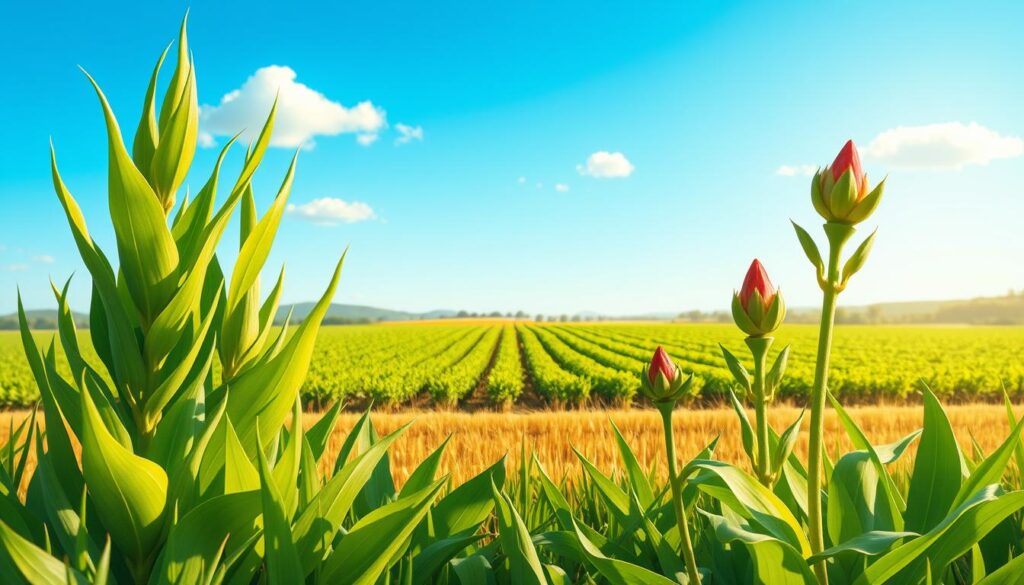
Knowing about the vegetative and reproductive phases is key for good crop management. These phases are vital in a crop’s life cycle. They affect how the crop grows and how much it yields.
Understanding the Phases
The vegetative phase is when plants grow fast. They focus on building their roots, stems, and leaves.
The reproductive phase is when plants start making flowers, fruits, and seeds. This is a big change from just growing.
| Characteristics | Vegetative Phase | Reproductive Phase |
|---|---|---|
| Primary Focus | Growth of roots, stems, and leaves | Formation of flowers, fruits, and seeds |
| Nutrient Uptake | High demand for nitrogen and phosphorus | Increased demand for potassium and phosphorus |
| Management Strategies | Pruning, irrigation, and fertilization | Support structures, pollination management |
Managing these phases well means knowing about nutrient needs. For example, plants need a lot of nitrogen and phosphorus when they’re growing. But when they’re making flowers and seeds, they need more potassium and phosphorus. Finding the right balance is key to getting the most from your crops.
By understanding these differences and adjusting how you manage your crops, farmers can make their crops grow better. This leads to more food for everyone.
Timing Inputs Correctly
Effective farming depends on the right timing of inputs. This ensures the best yield and quality. Matching farming activities with the crop’s growth stages is key.
Importance of Timing
Using fertilizers and irrigation at the right time is vital. Proper timing means crops get what they need when they need it. This boosts their growth and development.
For example, applying nitrogen fertilizers during the vegetative stage can increase yield.
Nutrient Management
Nutrient management is critical in farming and relies on timing. Crops need different nutrients at different growth stages. Phosphorus is important for root development early on, while potassium helps with overall health and disease resistance.
| Growth Stage | Nutrient Requirement | Input Application |
|---|---|---|
| Vegetative | Nitrogen | Fertilizers |
| Early Growth | Phosphorus | Phosphatic Fertilizers |
| Reproductive | Potassium | Potassic Fertilizers |
Using a farming biotech approach can improve timing. This leads to better crop yield and quality.
Common Management Mistakes
Effective farming timing is key, but many farmers make errors that hurt their crops. Managing crops well during their growth stages is vital. It helps get the best yield and quality.
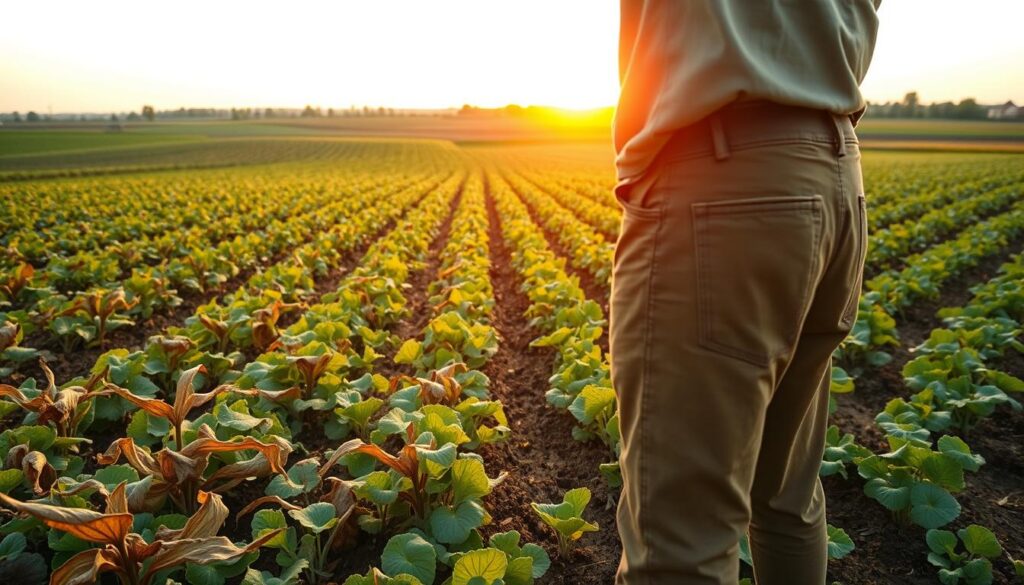
Crops are very sensitive to stress, like during the vegetative and reproductive stages. Stress at these times can greatly lower yield. Mistakes include not giving enough nutrients, wrong watering, and bad pest control.
Impact on Yield
Management mistakes can really hurt yield. For example, not enough nutrients in the vegetative stage can slow plant growth. Wrong watering can cause water stress, harming photosynthesis and plant health.
Also, bad pest management is a big mistake. Pests and diseases can harm crops, cutting yield and quality. It’s important to manage pests well to avoid these problems.
- Inadequate nutrient supply
- Improper irrigation
- Poor pest management
Knowing common mistakes and their effects on yield helps farmers improve. They can then better their farming and increase their crop yields.
Using Growth Stages to Improve Decisions
Knowing when to plant and harvest is key for good farming. Farmers need to understand the different growth stages of their crops. This helps them give the right nutrients when the plants are growing and protect them when they’re producing flowers.
This smart approach lets farmers make the right moves at the right time. It improves the quality and amount of crops they grow. It also helps avoid losses from pests, diseases, or bad weather.
Maximizing Productivity
Using the best practices at the right time boosts a crop’s performance. Farmers adjust their timing to meet the crop’s needs at each stage. This is how they get the most out of their farming.
Knowing about growth stages and how they affect farming timing is vital. It helps farmers produce more and better crops, leading to better results.